You just left the chair with a new bridge, the numbness is fading, and the instructions already feel fuzzy. You know you're supposed to keep it clean, but the first time you stand at the sink with regular floss, it's easy to wonder whether you're helping or making things worse. If you're looking for a dentist in Walnut Creek, CA who can show you exactly how to care for dental bridges and keep the rest of your mouth healthy, this guide will give you the practical version, not the vague one.
Why Bridge Care Feels Confusing After the Procedure
The hard part usually starts at home, not in the dental chair. A patient hears “floss under it,” then gets back to real life and discovers that a bridge does not clean like a natural tooth. The pontic, the replacement tooth in the middle, sits over the gum and creates a small space where plaque and food can collect even when the bridge looks perfectly fine.
That gap is why bridge care feels so different from standard brushing. The restoration can be solid, polished, and comfortable, yet still trap debris in places your toothbrush cannot reach. That's also why many people who search for a dentist near me are really looking for someone who can explain the daily mechanics, not just place the bridge and send them home.
The real problem is the hidden surface
A bridge behaves more like a small structure than a single tooth. The supporting teeth on either side, called abutments, need attention at the gumline, and the underside of the pontic needs attention every day too. Older bridge instructions often gloss over that reality, which leaves patients guessing with tools that were never designed for the job.
A bridge can look natural and still hold plaque in its underside. That's the part patients miss when they only get generic flossing advice.
The practical answer is simple, even if the technique takes a little practice. You need a routine that reaches the abutments, the margins, and the tissue under the pontic. If you have questions about bridge design, you can also review this overview of what are dental crowns and bridges before or after your next visit.
Practical rule: If the area under the bridge feels clean only when you avoid it, it probably isn't clean enough.
You can also watch a short visual overview here.
Understanding How a Dental Bridge Works
A dental bridge is a fixed restoration that replaces one or more missing teeth by attaching a false tooth, called a pontic, to the teeth on either side. Those support teeth are the abutments, and they're often covered with crowns so the bridge can anchor securely. In plain terms, the bridge fills the gap, but the teeth holding it up do most of the long-term work.
That structure changes home care in a few important ways. The crown margins at the abutments need to stay clean because plaque can collect along the edge of the restoration. Under the pontic, there is no natural tooth surface to brush the usual way, so debris can sit there unless you clean that space directly.
Why the design matters more than the appearance
Traditional fixed bridges, cantilever bridges, and Maryland bridges all solve the same problem in slightly different ways. The key point is practical, every design creates a spot where regular brushing may miss buildup. For a closer look at the parts involved, many patients start with this overview of dental crowns and bridges before a follow-up visit.
A bridge is not an implant. It does not fuse to the jawbone, and it does not clean itself just because the ceramic looks smooth in the mirror. It needs a routine built around the areas you cannot see well.
The trade-off is simple. A bridge can look fully at home and still trap plaque underneath it. If the supporting teeth stay healthy and the underside stays clear, the bridge has a much better chance of serving you well for years. The bridge may look like one unit, but the care happens at several contact points, not just one.
Building Your Daily Cleaning Routine
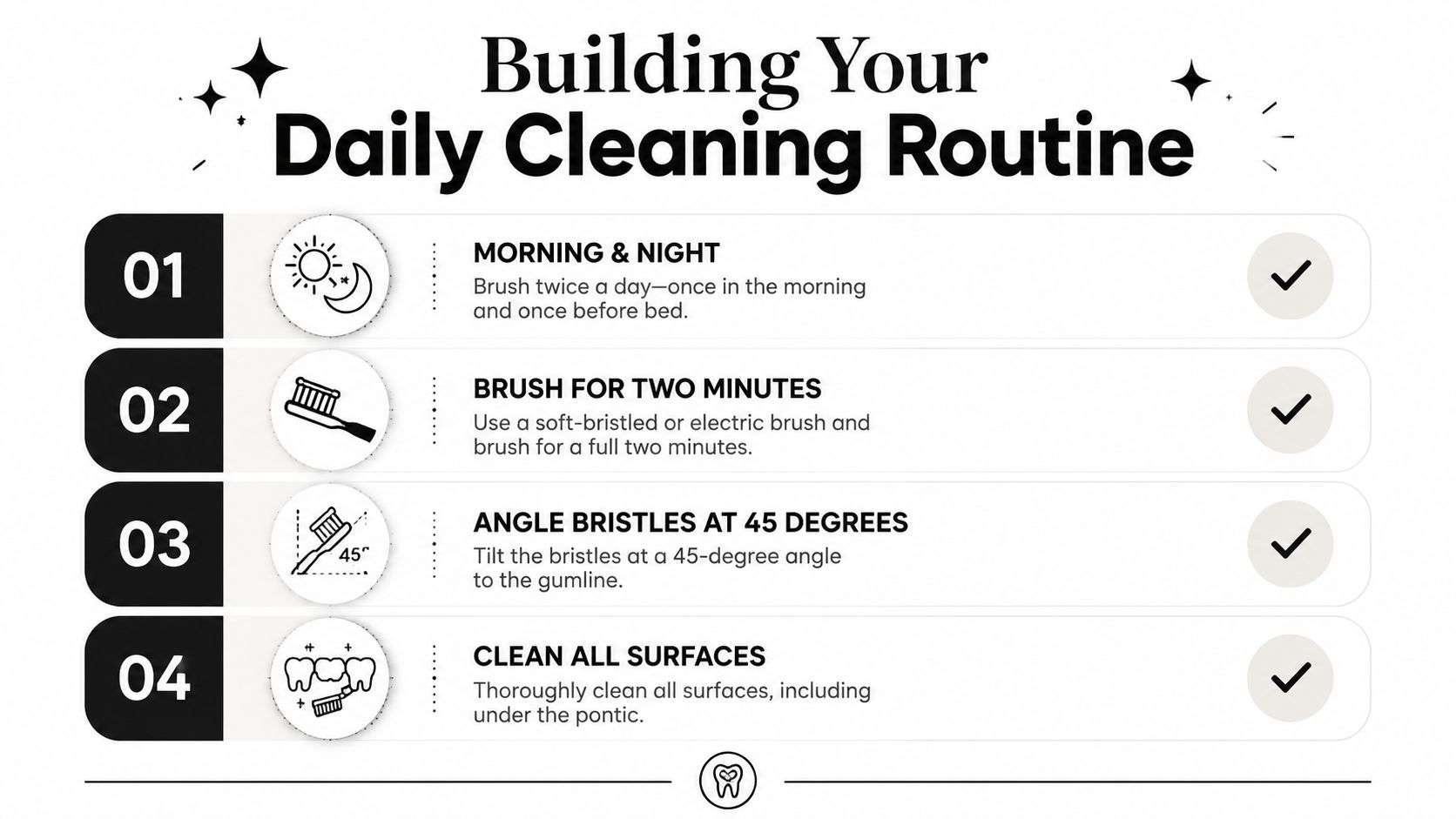
A bridge can look clean in the mirror and still hold plaque where the pontic meets the gums. The routine that works is plain and repetitive, and that is the point. Brush in the morning and at night with a soft-bristled toothbrush or an electric brush, and take your time over the teeth, gumline, and visible bridge edges. Hold the bristles at about 45 degrees toward the gumline so they reach the margin where the abutment crowns meet tissue instead of just skimming the chewing surface.
The under-bridge pass matters
Once a day, clean under the pontic with a tool that can reach it. A floss threader lets you pull regular floss beneath the bridge, then guide it gently along the underside of the pontic and around each abutment in a C-shape. An interdental brush can work when the space is open enough to fit without force. A water flosser can help rinse out loosened debris when you keep the pressure moderate.
Clinical guidance from East Carolina Health says daily flossing helps remove bacteria from between teeth, under the replacement tooth, and along the gumline, and it specifically recommends floss threaders for fixed bridges. That matches what I see in practice. The area under the bridge is easy to miss, and plaque often settles there long before the bridge itself looks dirty.
Clean the bridge the way it was built to be cleaned, not the way a natural tooth is cleaned.
An alcohol-free antimicrobial mouthwash can be a useful final step, especially if the tissues around the bridge feel irritated. It does not replace mechanical cleaning, but it can lower the bacterial load around the margins after brushing and under-bridge cleaning.
The routine that holds up over time is the one you can repeat without hesitation. Two minutes, twice a day, plus one deliberate pass under the bridge, does more than occasional perfect technique. If you want a crown-specific version of the routine, this bridge and crown cleaning guide is a helpful companion.
Choosing the Right Tools for the Job
Patients often buy one tool, try it for two nights, and assume the bridge itself is the problem. Usually, the issue is fit. A bridge with a wider underside needs a different approach than a tight fixed contact, and hand strength matters too. That's why it helps to think in terms of function, not brand.
| Tool | Best For | Where It Falls Short |
|---|---|---|
| Floss threader | Tight spaces and direct contact under the pontic | Slower to use and awkward until the motion feels natural |
| Interdental brush | Wider spaces under traditional bridges and along accessible margins | Won't fit every bridge space, and forcing it can irritate tissue |
| Water flosser | Rinsing debris, tender gums, and patients who need an easier routine | Works best as a supplement, not the only cleaning method |
What each tool actually does well
An interdental brush is useful when there's enough room to slide it under the bridge without pressure. Its small, soft nylon bristles can sweep plaque from surfaces a threader might miss. A floss threader is better when the gap is tighter, because it pulls regular floss exactly where you need it and lets you control the cleaning along the gumline.
Water flossers have a different role. They flush out loose debris and can be easier for people with arthritis, limited dexterity, or a low tolerance for threaders and small brushes. They're often more comfortable, but comfort isn't the same as complete plaque removal, so they work best after a mechanical tool has done the main cleaning.
Dr. Schneider's office can also size an interdental brush to the exact space under a bridge, which matters more than many realize. Too small, and it won't clean effectively. Too large, and it can bend, catch, or irritate the tissue.
Best approach: Use the tool that physically fits the bridge, then let the water flosser finish the job if you like that extra rinse.
The right setup is often a combination. For many Walnut Creek patients, that means a threader or interdental brush first, then a water flosser for the final rinse. That layered method usually feels more manageable than trying to force one tool to do everything.
Smart Eating and Habits to Protect Your Bridge
A bridge can handle normal chewing, but it doesn't appreciate repeated stress in the same places. Sticky foods like caramel and taffy can cling to the abutment crowns and tug at the seal. Hard foods can chip porcelain or create pressure that the restoration wasn't designed to absorb, especially when the bridge replaces a back tooth.
The safest habit is not strict avoidance, it's changing how you eat. Cut apples and carrots into slices instead of biting straight in. Skip chewing ice. If you suspect grinding at night, a nightguard is often the most practical protection because clenching loads the bridge and the supporting teeth over and over again while you sleep.
Small habits that create big repair bills
Teeth are not tools, and bridges definitely aren't. Opening packaging, biting pen caps, or using the bridge to crack hard foods all put sideways stress on the restoration. Smoking can also stain the porcelain and make the gumline harder to monitor, which is frustrating because discoloration can hide early problems around the margins.
A bridge that still feels fine can start signaling trouble in quiet ways. A little rocking, a faint shift when you bite, or a new taste that seems to come from one spot under the pontic deserves attention. Those changes often show up before real pain does.
A bridge that rocks or shifts may need recementation or an implant-supported component check if that's the type you have. A new sensitive spot on an abutment tooth can point to decay at the crown edge. Redness, swelling, or bleeding tissue under the pontic usually means the area needs a professional look, not just more brushing at home.
If a bridge tastes off from one specific spot, assume something is trapped until proven otherwise.
Visible dark lines at the gumline, chips in the porcelain, or a sudden change in the way your bite closes should be treated as urgent scheduling reasons. You don't need to panic, but you also shouldn't wait months to mention them. In a Walnut Creek office visit, a quick exam can often preserve options that disappear if the problem keeps moving.
Professional Maintenance and the Walnut Creek Visit
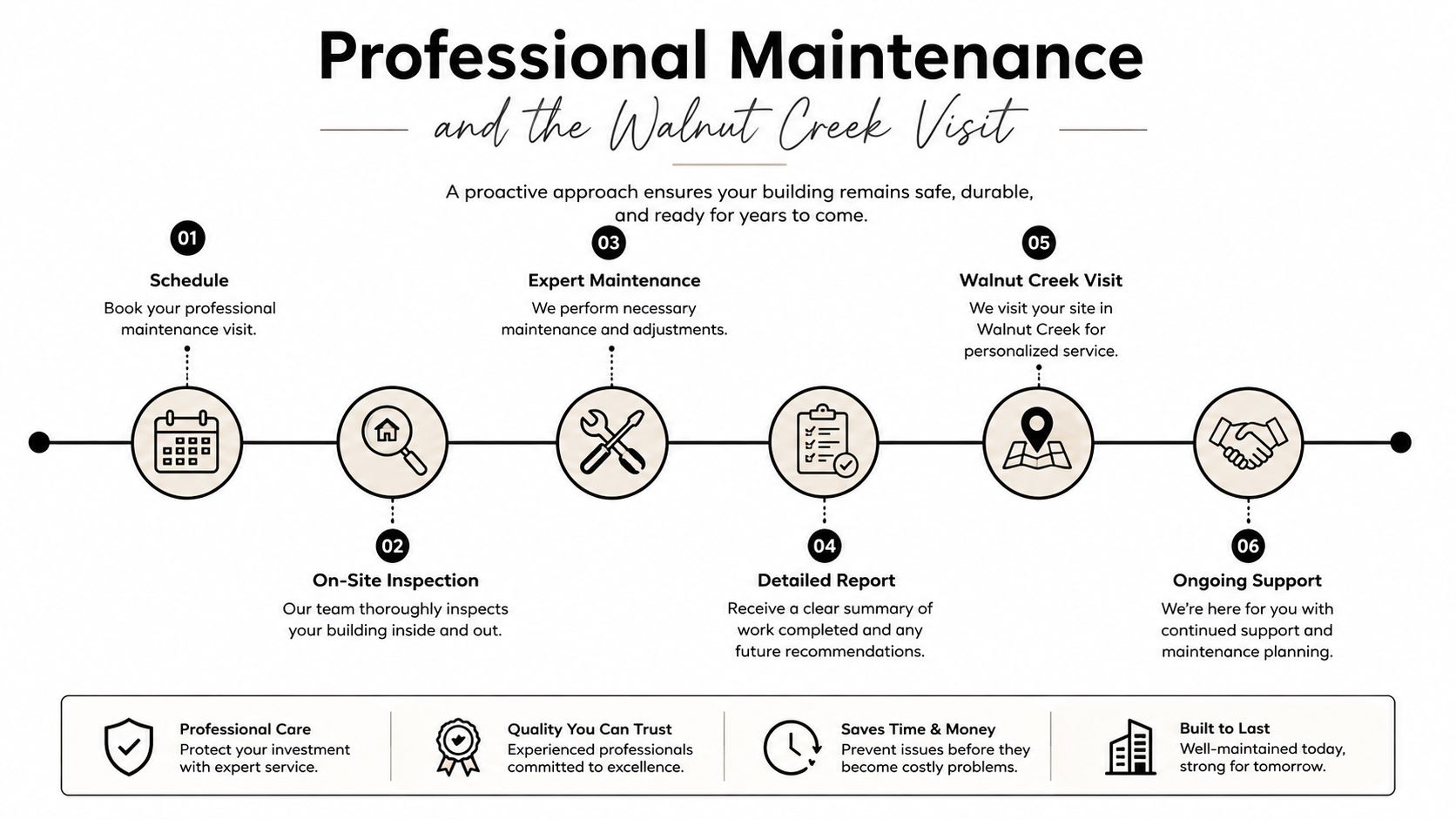
Home care does a lot, but it can't see what a trained hygienist can see under the pontic. Regular exams every six months help catch early decay, cement changes, or tissue irritation before they become bigger repairs. During hygiene visits, the team can probe carefully around the abutments, evaluate the tissue contour, and check for plaque retention or early bone loss that you can't assess at the sink.
Bite checks matter too. As the opposing teeth change over time, a bridge can start to meet the bite in a way it didn't before, and that can create pressure points or wear. Bitewing X-rays of the abutment teeth are used periodically based on risk, because the edges of the supporting teeth are one of the places where hidden issues can start.
What happens at a bridge follow-up
In Dr. Schneider's Walnut Creek practice, bridge follow-up is handled as part of broader restorative and preventive care. If a bridge needs recementation, that's addressed directly. If the bite has changed, the occlusion can be adjusted. If there's a concern that involves the nerve or the supporting tooth structure, the office can coordinate the next step.
The practical value of that continuity is simple. The team sees the bridge history, the bite history, and the X-ray baseline together, which makes subtle changes easier to spot. That's one reason patients who need cosmetic dentist near me searches often end up wanting restorative follow-up too. The two overlap more than people think.
Schedule the next visit before you leave the office. That's the easiest way to keep the bridge on track instead of waiting until something feels loose or sore.
Keeping Your Bridge Healthy for the Long Run
A bridge that lasts usually follows a simple pattern. Clean under the pontic every day, treat the abutment teeth like real teeth, notice small changes early, and keep regular professional visits. The bridge depends on the teeth supporting it, so home care and follow-up work together.
Long-term studies support that routine. In a 15-year follow-up study, caries lesions on abutment tooth surfaces were recorded in 3.3% at year 5, 10.0% at year 10, and 12.0% at year 15 PubMed. The same evidence linked poor oral hygiene to inflammatory changes beneath bridge pontics, which is why cleaning under the bridge is part of the treatment, not an optional extra.
Bridge longevity also depends on time and maintenance in general practice. A 10-year study reported 72% survival of conventional bridge abutments at 10 years PubMed. Population data from the UK Adult Dental Health Survey found that 7% of dentate adults had at least one dental bridge, rising from 3% in adults aged 16 to 44 to 14% in adults aged 55 to 64 and 65 to 74. That makes bridge care a common long-term issue, especially as people get older.
For Walnut Creek patients, continuity matters. A single practice that knows your bridge history can tell the difference between normal wear and a change that needs action. If you want that kind of steady follow-up, Dr. Schneider can evaluate the bridge, review your cleaning technique, and keep the plan simple enough to use.
If you've just had a bridge placed, or your current one has started to feel harder to clean, William M. Schneider, DDS can help you review the right tools, check the fit, and keep your supporting teeth healthy. Visit William M. Schneider, DDS to schedule a bridge maintenance visit in Walnut Creek and get a plan you can follow at home with confidence.