You may be holding back your smile in photos, covering your mouth during conversations, or searching for a dentist near me after noticing stains, crowding, a chipped tooth, or persistent gum irritation. The good news is that how to improve your smile rarely comes down to one dramatic procedure. A healthier, more confident result usually comes from sequencing care thoughtfully, starting with prevention and finishing with cosmetic improvements that fit your face and lifestyle.
For families and professionals seeking a dentist in Walnut Creek, CA, William M. Schneider, DDS provides general, cosmetic, and restorative dental care for patients throughout Walnut Creek and the East Bay. Dr. Schneider has more than 25 years of experience, and his practice combines clear explanations, modern technology, comfortable treatment, and personalized planning.
Why Your Smile Matters More Than You Think
You may sit in the consultation chair after years of avoiding photographs. Perhaps you keep your lips closed at work, turn away from cameras, or worry that stained, crowded, or uneven teeth are what people notice first. Those concerns affect more than appearance. They can change how freely you speak, how comfortable you feel socially, and whether you schedule care when something seems wrong.
A smile improvement plan should begin with health, not whitening or reshaping. The CDC reports that 65.5% of U.S. adults age 18 and older had a dental exam or cleaning in the past year in 2023 (CDC dental statistics). Examinations and cleanings remove plaque and surface stain while allowing your dentist to assess decay, gum inflammation, worn fillings, cracks, and other problems that affect comfort, function, and appearance.
The worldwide burden of oral disease supports that same order of care. The Global Burden of Disease Study 2021 estimated 2.24 billion prevalent cases of untreated caries in permanent teeth and 1.07 billion cases of severe periodontitis in 2021. Whitening or cosmetic reshaping cannot make untreated disease stable. Addressing those conditions first protects the result and helps prevent discomfort during later treatment.
Practical rule: Improve the condition of your mouth before improving its color or shape.
Treatment may involve a cleaning, gum therapy, a filling, alignment, whitening, or tooth replacement. Alignment often belongs before whitening because straightening changes which surfaces are visible and can make shade selection more consistent. The appropriate sequence depends on your examination, goals, budget, and comfort with treatment.
Dental anxiety also affects timing. A calm consultation can break care into manageable visits, explain each step before it begins, and identify ways to improve comfort. At a Walnut Creek consultation, you can review options without pressure and choose a subtle, healthy improvement rather than pursuing a dramatic change all at once.
Building a Strong Foundation with Daily Oral Care
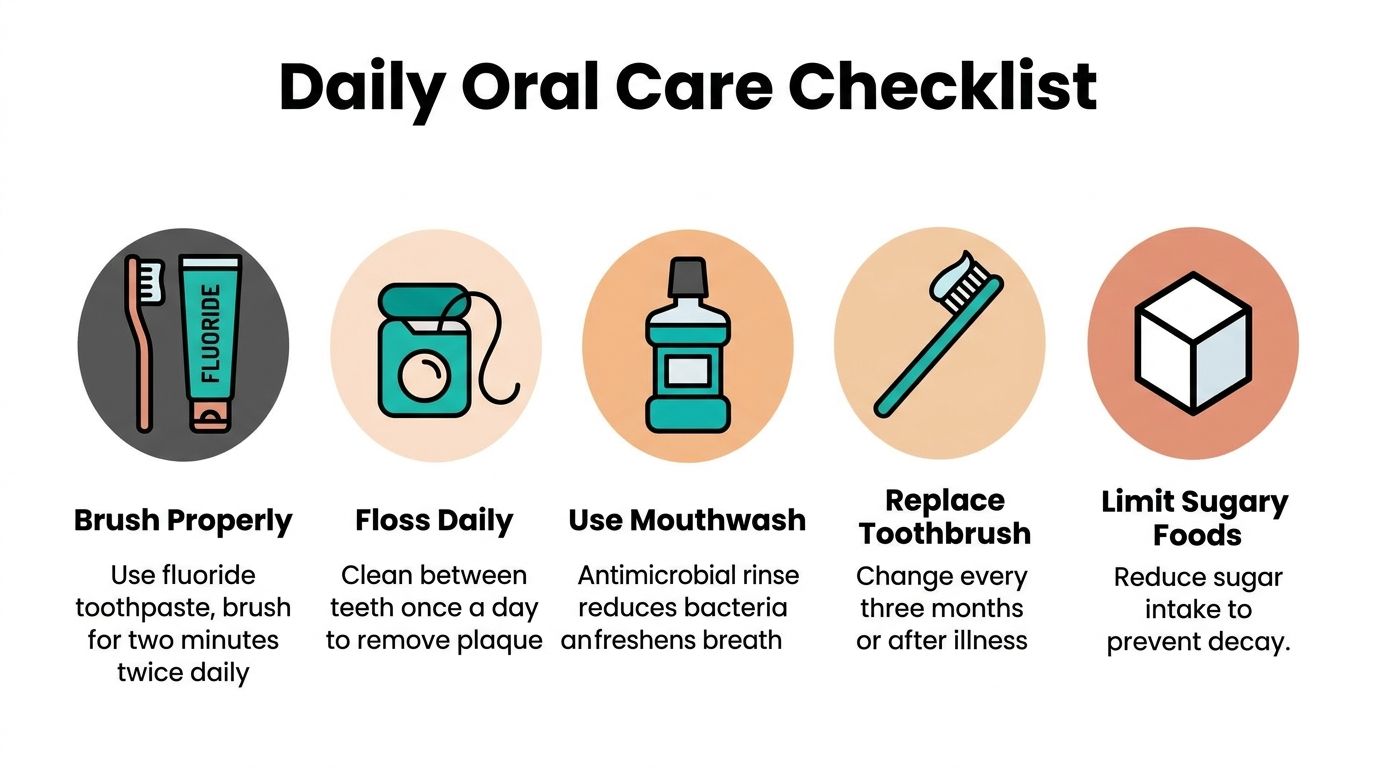
The most reliable answer to how to improve your smile starts at home. Brush twice each day with a soft-bristled toothbrush and fluoride toothpaste, placing the bristles along the gumline rather than scrubbing only the visible fronts of the teeth. Use gentle, small movements, and give attention to the chewing surfaces and the inside surfaces that are easy to miss.
Fluoride toothpaste helps strengthen enamel and reduce the risk of decay. A Cochrane review found clinically meaningful caries-preventive protection from toothpaste containing 1000–1250 ppm or 1450–1500 ppm fluoride, with 1450–1500 ppm providing slightly greater protection than 1000–1250 ppm (Australian Dental Association fluoride policy). Ask your dentist which formulation fits your oral health rather than choosing a product solely for whitening claims.
Flossing matters because a toothbrush can't clean the contact areas between teeth. Curve the floss around each tooth and slide it gently beneath the gumline, where plaque can contribute to bleeding, odor, and inflammation. If traditional floss is difficult, a water flosser or interdental brush may make consistent cleaning easier.
Why professional cleanings belong in the plan
Home care controls daily plaque, but professional cleanings remove hardened deposits and surface stain that brushing can't eliminate. A dental exam can also identify gum recession, cavities, failing restorations, and early inflammation before those conditions undermine a cosmetic result.
Keep these habits practical:
- Brush consistently: Use fluoride toothpaste and gentle gumline technique.
- Clean between teeth: Floss or use an interdental device once daily.
- Manage stain sources: Rinse with water after strongly pigmented foods and drinks.
- Book preventive care: Use cleaning and exams to maintain both appearance and health.
Bleeding gums shouldn't be treated as a cosmetic inconvenience. They may signal inflammation that needs attention before whitening, veneers, Invisalign, or restorative dentistry.
Professional Treatments That Transform Your Smile
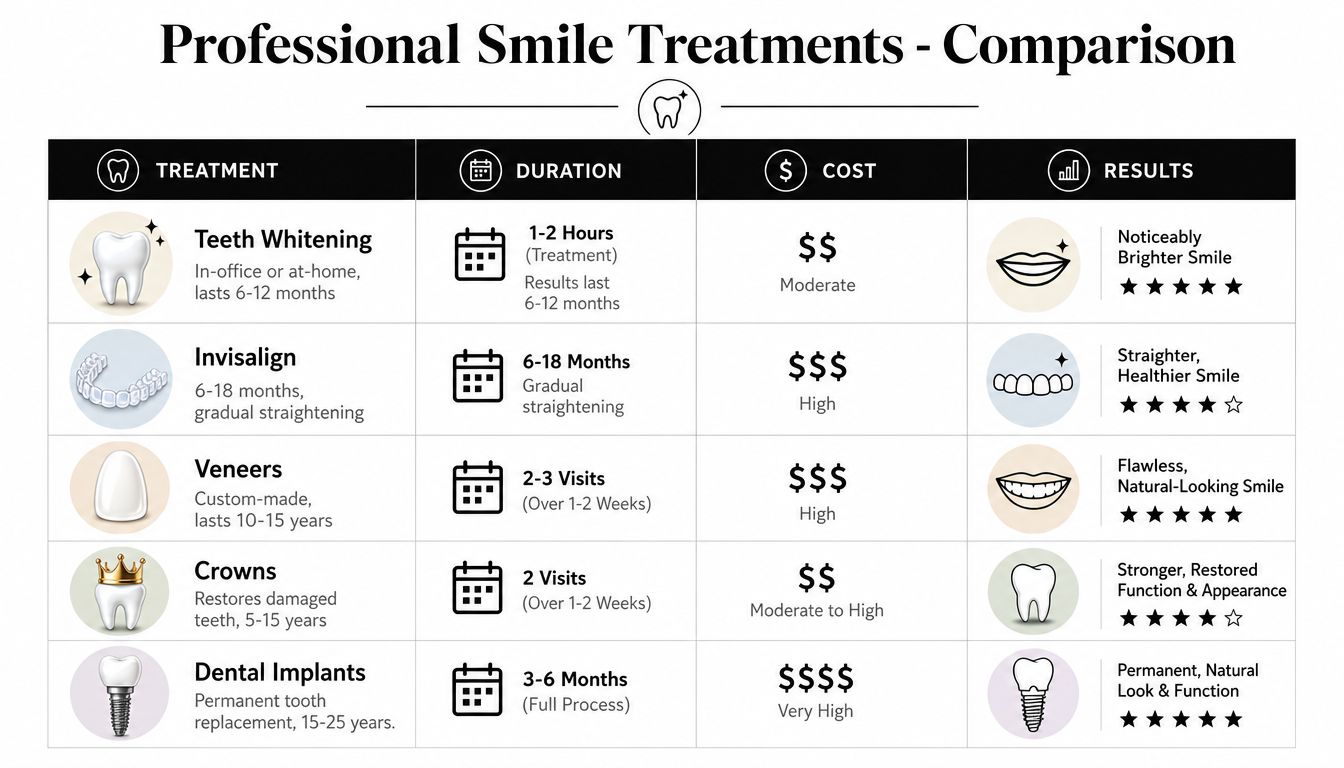
A smile consultation should start with the problem, not a procedure. Teeth whitening changes the shade of natural enamel. Invisalign clear aligners move selected teeth. Veneers reshape visible surfaces, crowns protect weakened teeth, and dental implants replace missing teeth with a supported restoration. Each option solves a different concern, and choosing the wrong sequence can create avoidable cost or disappointment.
Orthodontic treatment can produce a measurable aesthetic change. A 2023 systematic review found that orthodontic treatment with premolar extractions improved smile attractiveness by 22% compared with no treatment, while surgical correction of Class III cases improved it by 7.5% more than camouflage treatment in moderate-to-severe malocclusion (2023 systematic review). These findings do not mean every patient needs extraction or surgery. They reinforce the value of a diagnosis before selecting treatment.
Matching treatment to the problem
- Whitening: Used for certain forms of discoloration on natural teeth after an examination.
- Invisalign: Appropriate for selected crowding, spacing, or alignment concerns when removable trays fit the case.
- Veneers: Considered for carefully selected issues such as chips, uneven shape, or persistent discoloration.
- Crowns: Placed when a tooth needs structural protection, rather than for a brighter appearance.
- Dental implants: Used to replace missing teeth after reviewing bone, gums, bite, and overall health.
Treatment order often affects the final result. If teeth need alignment, complete that work before whitening. The shade will then be planned for teeth in their intended positions, rather than whitening teeth that may later move or become partly covered. A damaged tooth may need a crown or implant first, with its final shade and position coordinated with nearby cosmetic work.
Dental anxiety also affects treatment planning. A patient who is worried about procedures may do better with a staged plan, clear explanations, and shorter visits rather than several major treatments at once. Discussing fear early helps the dental team adjust the pace and choose a manageable starting point.
Patients searching for Dental implants near me may need more than one replacement tooth. A dentist can coordinate implants, crowns, bridges, root canals, gum disease treatment, and cosmetic services so the result supports chewing as well as appearance. A systematic review reported a 10-year implant-level survival estimate of 96.4%, with a 95% confidence interval of 95.2% to 97.5% (PubMed implant review).
Understanding Teeth Whitening Options and Results
A patient may want whiter teeth before addressing crowding, gum inflammation, or a damaged restoration. That order can create an uneven result. Whitening should follow a health assessment, and alignment or restorative work may need to come first so the final shade is planned for teeth in their intended positions.
Before bleaching, an examination should look for caries, cracks, gum recession, existing sensitivity, and failing restorations. Whitening changes the color of natural tooth structure. It does not reliably change an old crown, filling, or veneer, so those materials may need separate planning if their shade no longer matches.
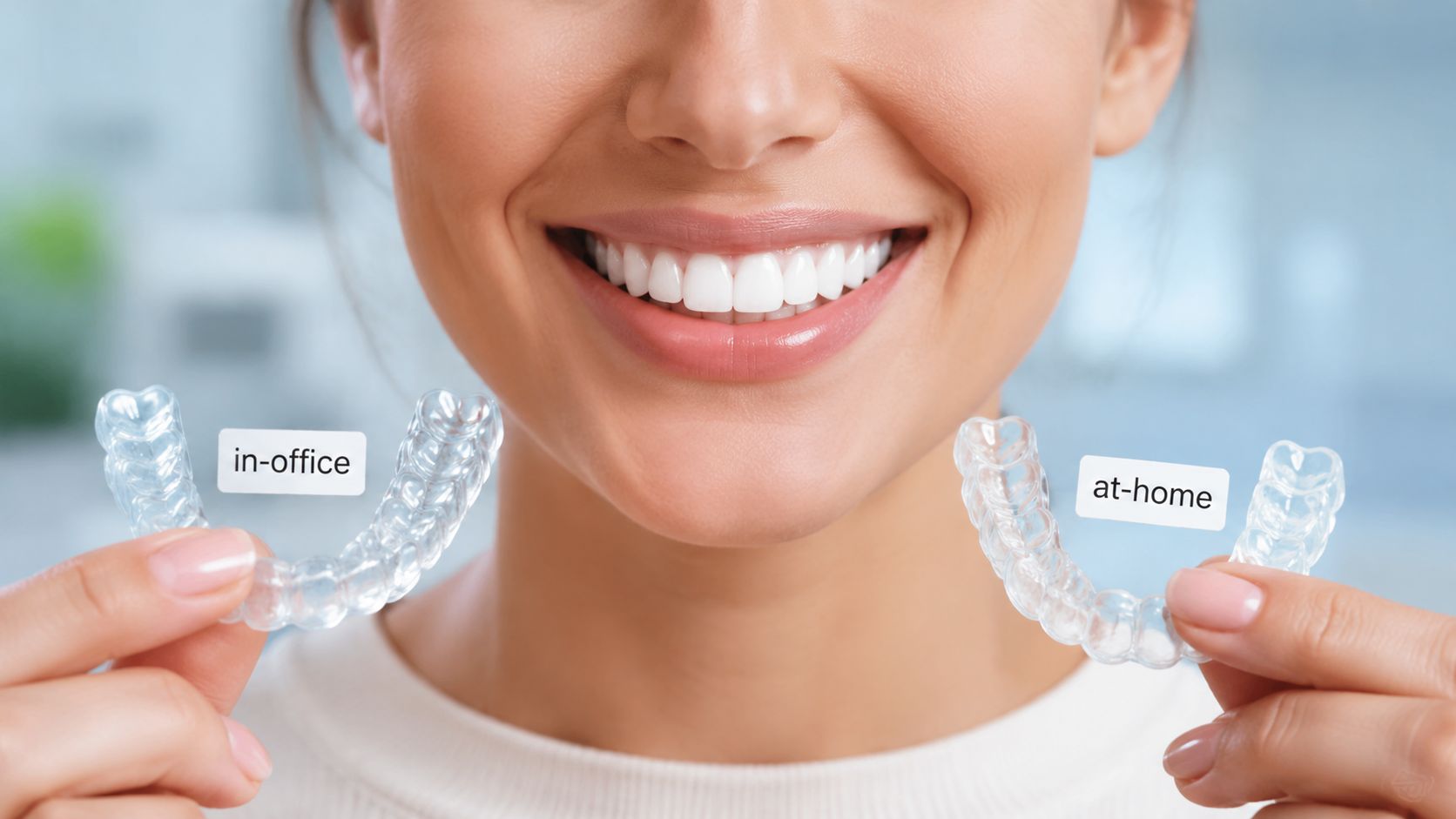
Supervised in-office and dentist-directed at-home bleaching can both work well for appropriate patients who have been examined first. In-office treatment suits someone who prefers a concentrated appointment. Custom at-home trays give more control over timing and gradual shade changes. At-home systems commonly use 10% to 38% carbamide peroxide, with schedules ranging from 2 to 10 hours daily over 6 to 28 days, depending on concentration and protocol (ADA-referenced whitening information).
Sensitivity is the main trade-off to discuss. A recent review reported incidence ranges of 37% to 90% for at-home bleaching and 17% to 100% for in-office bleaching (whitening sensitivity review). In-office treatment can feel more intense, while at-home sensitivity may be milder but return with repeated applications.
A dentist can reduce discomfort by selecting a lower-peroxide protocol, shortening exposure, recommending a desensitizing agent, or treating inflamed gums before whitening. Local rules also matter. In Australia, registered dental practitioners should supply or use products containing more than 6% hydrogen peroxide or more than 18% carbamide peroxide, according to the relevant Australian policy (Australian whitening policy).
For Walnut Creek patients, review information about professional teeth whitening treatment at the dentist and ask whether whitening fits the broader treatment sequence.
Overcoming Dental Anxiety to Get the Smile You Want
You may know a chipped tooth, gum problem, or missing tooth needs care and still postpone the visit. Fear of injections, sounds, pain, embarrassment, gagging, or losing control can make even a straightforward appointment feel overwhelming. Delaying care can turn a manageable concern into a more complicated problem.
Start with a consultation focused on communication, not cosmetic treatment. Tell the dental team what has made care difficult before. That information lets the dentist adjust the pace, explain each step, build in breaks, and discuss treatment choices before anything begins.
Research does not support one anxiety solution for every patient. A Delta Dental wellness report discusses dental anxiety and related oral-health experiences, but it is not a systematic review (dental anxiety systematic review). The practical point remains clear: cognitive behavioral therapy may suit some patients, while hypnosis or medication may be appropriate only in narrower situations. Music or virtual reality can make an appointment more comfortable for certain people, but neither works for everyone.
You don't need to arrive feeling calm. You need a dental team that knows how to work with your fear.
William M. Schneider, DDS provides clear explanations, a calm setting, comfortable injection techniques, and sedation options when appropriate. Review this guidance on overcoming dental anxiety before your appointment, then begin with a conversation. Establishing comfort and oral health first creates a safer foundation for alignment, whitening, or other smile improvements.
Choosing Subtle Enhancements for a Natural Look
Many adults don't want a dramatic makeover. They want teeth that look cleaner, more balanced, and healthier without appearing obviously treated. Recent 2026 coverage describes growing interest in low-intervention options such as Invisalign and restrained whitening, with patients favoring results that fit naturally into professional and social settings (Harper's Bazaar coverage of subtle smile treatments).
That preference changes the planning conversation. Instead of asking for the brightest possible shade or the most uniform shape, describe what you want people to notice, or not notice. You might want a softer color change, modest alignment, a repaired chip, or a restoration that blends with neighboring teeth.
A conservative sequence
Alignment can come before whitening when tooth position affects how evenly the final shade will show. Restrained whitening may be enough for natural enamel, while a carefully planned veneer or crown can address a localized shape or structural concern without changing every tooth.
Conservative dentistry also means protecting healthy tooth structure whenever possible. Invisalign may offer a discreet alignment option for appropriate cases, while restorative work should be selected because a tooth needs support or repair, not because a more invasive treatment is available.

A natural result comes from matching color, contour, gum appearance, facial proportions, and bite. During a consultation, bring examples of smiles you like and explain what you don't want. The goal isn't to erase your individuality. It's to help your smile look healthy, balanced, and recognizably yours.
What to Expect at Your Walnut Creek Smile Consultation
Your first visit should answer practical questions, not leave you guessing. At William M. Schneider, DDS in Walnut Creek, a new patient exam can include a review of your health history, a clinical assessment, dental X-rays when indicated, and discussion of your concerns. The dentist evaluates teeth, gums, bite, existing restorations, and any symptoms that could affect cosmetic or restorative treatment.
You'll then receive recommendations based on your priorities, timeline, comfort, and budget. If you need a tooth extraction, emergency dentist appointment, root canal, crown, or gum disease care before cosmetic work, that foundation takes priority. If your mouth is healthy, the conversation can focus on Invisalign, teeth whitening, veneers, or a broader smile makeover.
Ask how procedures should be sequenced, what alternatives exist, and how the final result will be maintained. Clear explanations help you compare in-office and at-home options, understand when dental implants are appropriate, and decide whether a subtle change or a more detailed plan fits your goals.
Online scheduling and payment options make it easier for new patients to begin care. You can request an appointment with a dentist in Walnut Creek, CA even if you're still deciding which treatment is right for you.
William M. Schneider, DDS provides preventive, cosmetic, restorative, emergency, and implant care for Walnut Creek and East Bay patients who want a healthy, natural-looking smile. Visit William M. Schneider, DDS to schedule a consultation, discuss your concerns, and take the first practical step toward improving your smile.