You notice that your teeth look a little longer in the mirror, or you feel a sharp twinge when cold water reaches the gumline. Maybe your gums bleed during brushing, or a family member has told you that recession runs in the family. These changes can feel alarming, but gum recession isn't something you have to ignore or passively accept.
If you're searching for a dentist near me or a dentist in Walnut Creek, CA, William M. Schneider, DDS can help you understand what's happening and what steps may protect your gums. Prevention starts with identifying the cause early, then building daily habits and professional care around your actual risk.
Your Trusted Walnut Creek Dentist for Gum Health
A patient may first notice recession while brushing. One tooth seems longer than its neighbors, the gumline looks uneven, or sensitivity appears when enjoying iced coffee. Often, the change is subtle enough to dismiss. Yet early evaluation gives your dental team a better opportunity to identify inflammation, brushing trauma, grinding, tobacco exposure, bite concerns, or naturally thin gum tissue before the problem progresses.
Gingival recession happens when gum tissue pulls away from the tooth, exposing more of the tooth surface and sometimes the root. It can affect appearance, create sensitivity, and make certain areas harder to keep clean. Existing tissue loss generally doesn't grow back on its own, so prevention focuses on controlling the cause and stopping further progression.
Why early attention matters
A 2026 systematic review and meta-analysis estimated that recession of at least 1 millimeter affected 81.1% of people across 22 studies worldwide, while recession of at least 3 millimeters affected 48.4% and recession of at least 5 millimeters affected 16.2%, as reported in the PubMed review of worldwide gingival recession. Those figures don't mean every person needs treatment, but they do show why small changes deserve attention.
Routine plaque control, gentle brushing, and professional cleanings form the foundation of prevention. A dental professional can measure gum levels, assess bleeding and inflammation, review your brushing technique, and look for signs that grinding, tooth position, or gum anatomy may be contributing.
Care that fits your life
At William M. Schneider, DDS in Walnut Creek, patients receive clear explanations and care designed around long-term oral health. Dr. Schneider's practice provides preventive cleanings and exams, dental x-rays when clinically appropriate, gum disease care, restorative dentistry, cosmetic dentistry, and solutions for patients who feel anxious about dental visits.
Whether you're looking for a family dentist, a cosmetic dentist near me, or a long-term dental home in the East Bay, the right first step is an evaluation. You don't need to diagnose the cause by yourself.
Understanding the Causes of Gum Recession
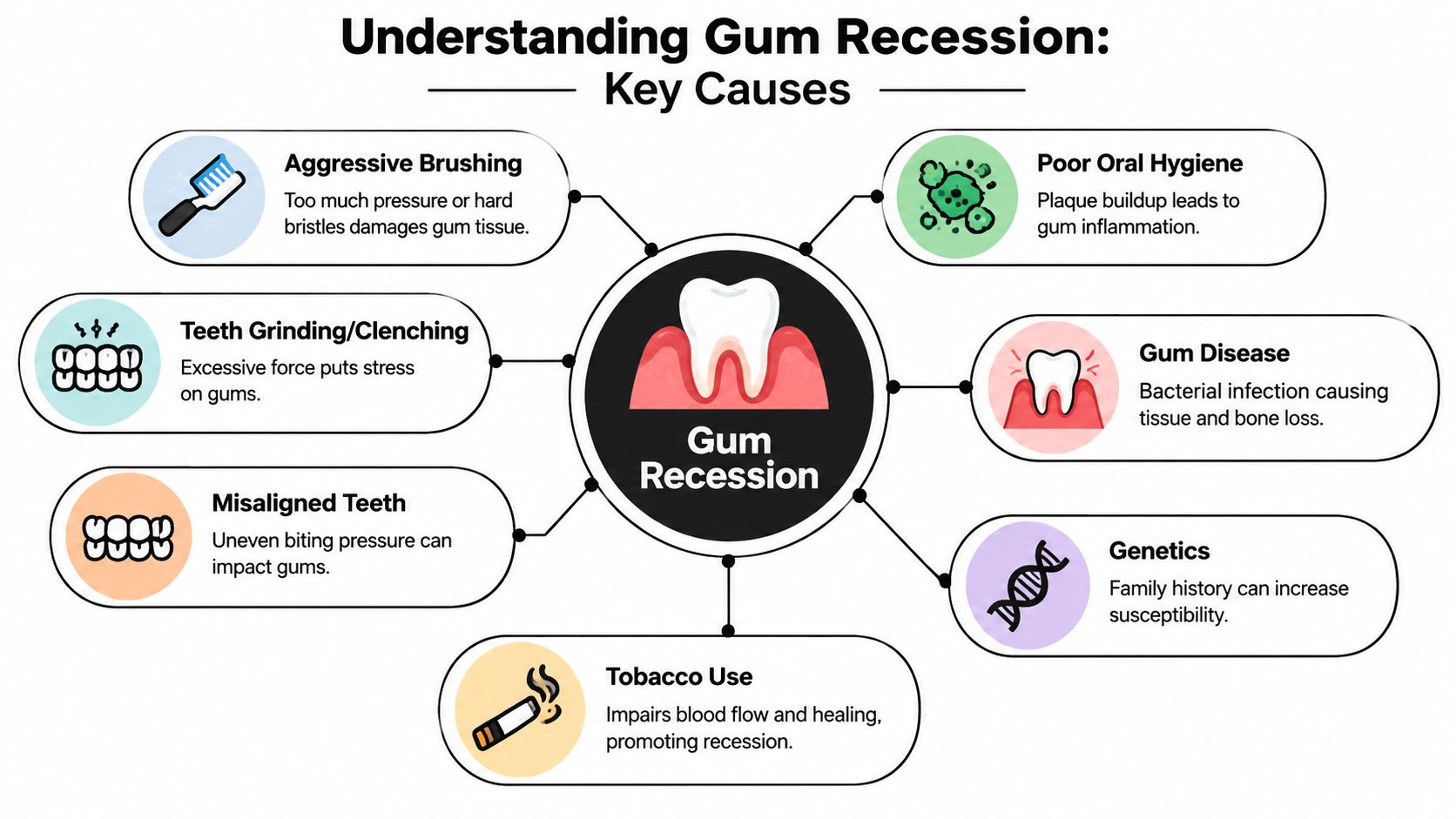
Gum recession usually has more than one possible contributor. Think of gum tissue as a protective border around each tooth. Plaque-related inflammation can weaken that border, while mechanical pressure, tobacco, grinding, tooth position, and inherited anatomy can make some areas more vulnerable.
The main contributors
- Plaque and inflammation: Plaque collecting along the gumline can trigger gingivitis. If inflammation develops into periodontitis, the infection can damage the tissues and bone supporting the teeth.
- Brushing pressure: Scrubbing a delicate fabric with force can fray it. Similarly, a hard-bristled brush or excessive pressure may irritate gum tissue and wear the area near the gumline.
- Thin gum tissue and genetics: Some people naturally have thinner gums or anatomy that offers less protection. You can't change your genetic makeup, but you can monitor vulnerable areas more carefully.
- Tobacco use: Tobacco affects gum health and can allow disease-related damage to progress with fewer obvious warning signs.
- Clenching and grinding: Repeated force places stress on teeth and their supporting structures. Bruxism may be especially relevant when thin tissue, inflammation, or brushing trauma is also present.
- Tooth position and bite: Misaligned teeth, orthodontic movement, restorations, or uneven biting forces may place tissue at greater risk.
- Missed plaque control: Inconsistent brushing or between-tooth cleaning leaves bacteria where a toothbrush may not reach.
The global systematic review of gingival recession prevalence found recession was widespread among the populations studied, including buccal recession. The practical lesson is simple: don't wait for dramatic symptoms before asking a dentist to examine your gumline.
Practical rule: Your prevention plan should address both inflammation and force. Brushing better alone won't correct a bite problem, active periodontal disease, or tobacco exposure.
A Walnut Creek dental evaluation can separate a harmless variation in gum shape from active disease or a pattern that needs closer monitoring. That distinction matters because the appropriate response may range from technique coaching and routine maintenance to periodontal treatment.
Your Daily At-Home Prevention Plan
The most useful home routine is gentle, consistent, and thorough. The American Dental Association's guidance on flossing and interdental cleaning recommends brushing twice daily and cleaning between the teeth once daily with floss or another interdental cleaner to remove plaque along the gumline.
Brush with control, not force
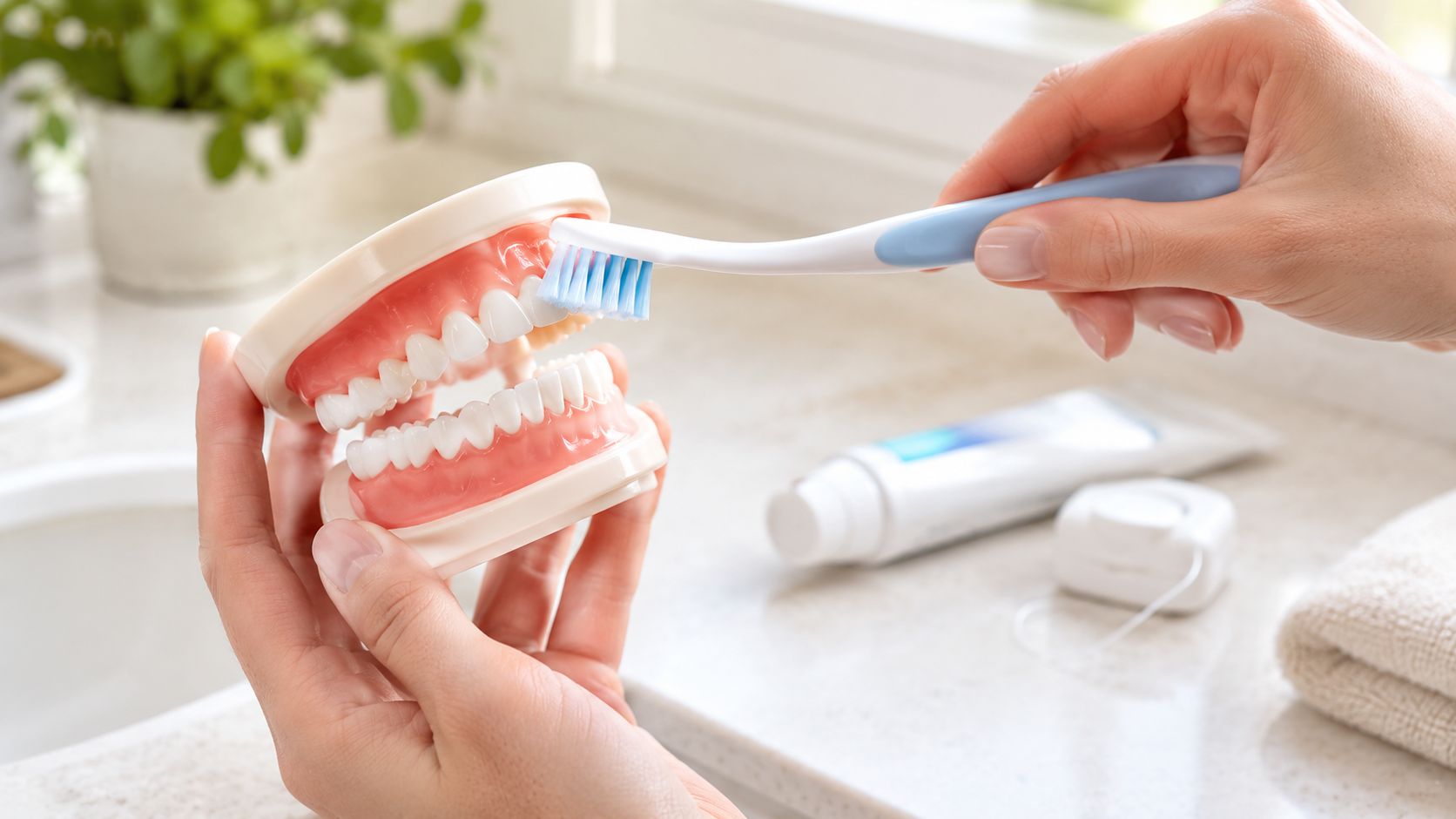
Choose a soft-bristled toothbrush. Manual and powered brushes can both be appropriate, but a powered brush with a pressure sensor may help people who tend to press too hard. Keep the brush angled toward the gumline and use small, controlled movements rather than vigorous back-and-forth scrubbing.
The goal is to remove plaque, not polish the gums. If the bristles bend noticeably as you brush, you're likely using more pressure than necessary. A dental hygienist can watch your technique and help you adjust the brush position, pressure, and coverage.
This Walnut Creek oral hygiene guide offers additional practical guidance for daily plaque control.
Clean between the teeth gently
Floss should slide beneath the contact between teeth without snapping into the gums. Curve it around each tooth in a C shape and move it along the side of the tooth, allowing the floss to reach just under the gum edge without forcing it.
If spaces are larger, an interdental brush may clean more effectively than string floss. A water flosser can also be useful for some patients, particularly when dexterity, orthodontic appliances, bridges, or other dental work makes traditional floss difficult. The best tool depends on your spaces and gum condition, so ask your dental team to demonstrate the size and technique.
Consider products for a reason
An antimicrobial rinse may help reduce bacteria or inflammation when a dentist recommends it, but mouthwash isn't a replacement for brushing, interdental cleaning, or professional diagnosis. Toothpaste can support tooth protection and sensitivity management, yet no toothpaste reverses existing gum recession. Products matter less than the technique and the reason recession is occurring.
Use the routine that you can maintain every day. If brushing causes bleeding, persistent soreness, or worsening sensitivity, schedule an examination instead of responding by brushing harder.
Watch this brushing demonstration for a visual reminder of gentle technique:
Lifestyle Changes to Protect Your Gums
Daily cleaning addresses plaque, but some risks sit outside the bathroom routine. Tobacco cessation is one of the most direct actions you can take for gum health. The CDC identifies tobacco use, including cigarettes, cigars, and smokeless tobacco, as a cause of gum recession and bone loss in its oral-health tobacco guidance.
Quitting can be difficult, and patients deserve practical support rather than criticism. Talk with your physician, dentist, or cessation program about a plan that fits your health history. Reducing exposure protects more than the appearance of the gumline, it also supports the tissues that hold teeth in place.
Address grinding and clenching
Some people grind during sleep. Others clench while concentrating, exercising, or managing stress. You may notice morning jaw fatigue, worn tooth edges, headaches, chipped restorations, or tenderness around certain teeth, although symptoms aren't always obvious.
A custom night guard may be appropriate when bruxism is contributing to excessive force. A peer-reviewed review of preventive mouthguard use explains that night guards are commonly used to protect teeth from hyperocclusal forces. A guard doesn't treat every cause of recession, and an over-the-counter appliance may not fit your bite correctly, so assessment should come first.
Force management isn't about avoiding normal chewing. It's about identifying repeated, unnecessary stress and reducing it safely.
Review other contributors
Your dentist should know about recent orthodontic treatment, a new crown or filling, bite changes, oral jewelry, dry mouth, and medications that affect saliva. These details can reveal why one area is changing even when your brushing seems careful.
Lifestyle prevention also includes keeping regular meals, staying attentive to dry-mouth symptoms, and avoiding habits that place concentrated force on individual teeth. The right adjustment isn't always obvious from a mirror, which is why personalized monitoring adds value.
How Professional Dental Care Prevents Recession
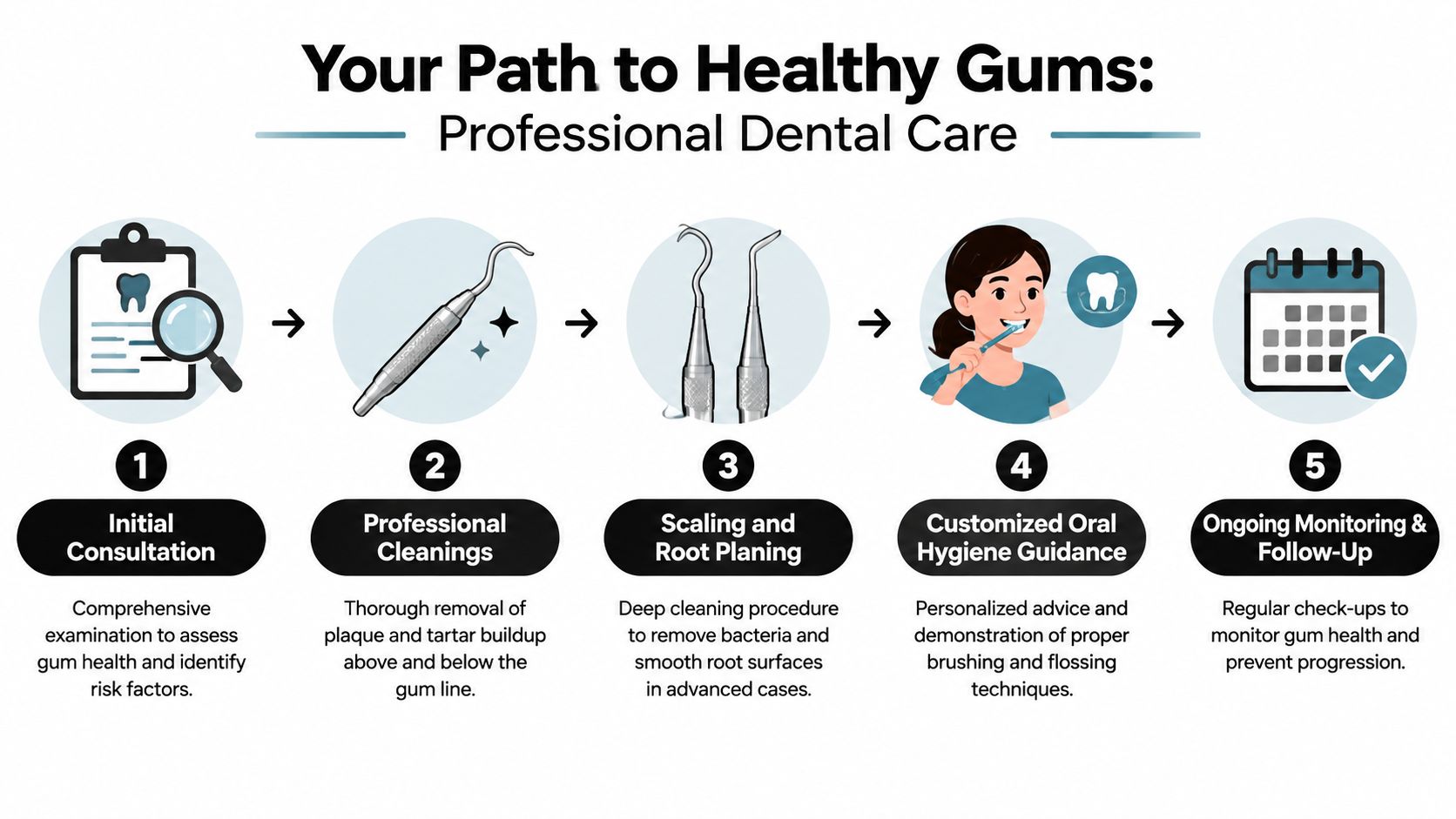
Home care removes daily plaque, but hardened tartar requires professional instruments. During a cleaning and exam, the dental team can assess gum bleeding, measure recession and periodontal pockets, inspect the bite, and identify areas where your toothbrush or floss isn't reaching effectively.
A useful prevention plan combines those findings rather than treating every patient the same. Someone with stable gums and excellent plaque control may need routine maintenance, while someone with bleeding, deeper pockets, tobacco exposure, or a history of periodontal disease may benefit from closer follow-up.
What an individualized plan may include
- Professional cleaning: Hygienists remove plaque and tartar from areas that home instruments can't safely reach.
- Periodontal measurements: Comparing gum levels and pocket findings over time helps the team recognize progression early.
- Technique coaching: You may receive specific guidance on brush pressure, interdental tools, and cleaning around crowns, bridges, or implants.
- Scaling and root planing: When periodontal inflammation is present, scaling and root planing care can remove deposits below the gumline and smooth root surfaces as part of disease management.
- Risk review: The team can discuss tobacco use, clenching, tooth position, restorations, and other factors that may need attention.
The CDC's gum disease guidance identifies poor oral hygiene, smoking, and bruxism among risk factors linked with gum disease, and recommends daily brushing and flossing, regular professional cleanings, and at least annual dental checkups to help prevent or manage it.
When recession has already started
Prevention doesn't always mean making the gumline look exactly as it did before. It may mean stopping inflammation, reducing sensitivity, improving plaque access, and keeping the exposed area stable. Depending on the findings, care may include periodontal maintenance, treatment for gum disease, bite management, or referral for advanced periodontal procedures.
If recession, decay, or periodontal disease contributes to tooth loss, restorative options such as crowns, bridges, or dental implants near me may become part of a broader plan. Those services should follow a careful assessment of gum and bone health, not replace it.
Schedule Your Gum Health Consultation in Walnut Creek
You don't need to arrive with a diagnosis or know which service to book. A new patient exam at William M. Schneider, DDS can begin with your concerns, followed by a careful evaluation of the teeth, gums, bite, and existing restorations. Dental x-rays may be recommended when they can answer questions that an examination alone can't.
Patients often want to know whether sensitivity is caused by recession, decay, a cracked tooth, or another problem. They may also need help choosing between a manual and powered brush, finding an interdental cleaner that fits, or deciding whether clenching deserves a night guard. Clear explanations make those decisions easier.
What to expect at the Walnut Creek office
The practice at 1855 San Miguel Dr., Suite 31, Walnut Creek, CA provides preventive, cosmetic, and restorative care for patients in Walnut Creek and the broader East Bay community. Dr. Schneider brings more than 25 years of experience, and the office offers comfortable injections, transparent expectations, sedation options when appropriate, and personalized treatment planning.
Your visit may involve:
- A conversation first: Share sensitivity, bleeding, cosmetic concerns, grinding, tobacco use, or dental anxiety.
- A detailed examination: The team reviews gum health, tooth condition, bite, and risk factors.
- A practical plan: You'll receive clear next steps, whether that means home-care adjustments, cleaning and exams, periodontal treatment, or ongoing monitoring.
- Related care when needed: The practice also provides teeth whitening, Invisalign, crowns, root canals, dental implants, and other restorative or cosmetic services.

A visit is especially important if you notice a newly longer-looking tooth, persistent sensitivity, bleeding, swelling, a change in your bite, or a loose tooth. If severe dental pain, swelling, trauma, or a broken tooth develops, contact the office promptly to ask about emergency dentist services rather than waiting for a routine appointment.
William M. Schneider, DDS offers gentle preventive exams, professional cleanings, periodontal care, and personalized guidance to help Walnut Creek patients protect vulnerable gumlines. Schedule a consultation through William M. Schneider, DDS to discuss your symptoms, learn how to prevent gum recession, and build a practical plan for long-term oral health.