You catch your smile in a car mirror outside work, or on a video call before you click “join,” and the first thing you notice isn't your teeth. It's the coffee stains, the dullness, or the way your smile looks older than you feel. Many who ask about whitening aren't chasing an artificial look. They want to look rested, healthy, and confident.
That's a reasonable goal. Approximately 19% of Americans have undergone teeth whitening, and when it's done correctly, either professionally or at home with custom trays, it's considered safe and effective. Professional treatment can often reach optimal results in about a month, according to this report on whitening safety and use.
If you're searching for a dentist near me, a dentist in Walnut Creek, CA, or a cosmetic dentist near me, the most important point isn't which whitening gel is strongest. It's whether your teeth and gums are good candidates in the first place. Safe whitening starts with diagnosis, not marketing.
A Brighter Smile Starts with a Trusted Local Dentist
A brighter smile can change the way you carry yourself. Patients often describe the same pattern. They smile less in photos, cover their mouth when they laugh, or keep asking whether whitening strips from the drugstore are “good enough.” The concern usually isn't vanity. It's wanting their smile to match how healthy and put-together they feel.
In Walnut Creek, that question comes up often during routine dental care visits, new patient exams, and cosmetic dentistry consultations. Whitening seems simple from the outside, but stained teeth don't all behave the same way. Some discoloration responds beautifully to peroxide-based whitening. Some doesn't. And some situations call for treatment before any whitening product touches the teeth.
Why a local exam matters first
The safest path is personal, not generic. A patient with healthy enamel, no untreated decay, and no gum inflammation may be a strong candidate for whitening. Someone with worn enamel, exposed root surfaces, or older front-tooth bonding may need a different plan.
Practical rule: Whitening should begin with a dentist's evaluation, because the same product that works well for one person can cause unnecessary sensitivity or uneven color in another.
That's one reason many people who start with a search for a dentist in Walnut Creek, CA or cosmetic dentist near me end up asking broader questions about cleaning and exams, dental x-rays, and long-term smile planning. A brighter smile isn't separate from oral health. It depends on it.
Whitening should look healthy, not overdone
The best whitening result is one that still looks natural in daylight. Most patients don't need the brightest possible shade. They need an even, refreshed smile that fits their skin tone, age, and existing dental work.
That's where an experienced local dentist helps. A cosmetic dentistry plan may involve whitening alone, or whitening paired later with restorative dentistry if a crown, filling, or veneer no longer matches. In some cases, a patient who initially asks about whitening also benefits from a cleaning, replacement of worn restorations, or treatment for sensitivity first.
Is Teeth Whitening the Right Choice for You?
The biggest whitening mistake happens before treatment starts. People assume that if a product is sold online or in a store, it must be right for them. It might be. It might also be the wrong choice for the exact condition of their teeth.
Who usually does well with whitening
Patients tend to do best when their teeth are healthy, their gums are stable, and the stains are on natural tooth structure. Yellow-toned staining often responds better than gray or internally altered teeth. If your goals are realistic and your smile is otherwise healthy, whitening can be a very good cosmetic option.
A checkup matters because whitening doesn't treat disease. It only changes the color of natural teeth.
When you should pause first
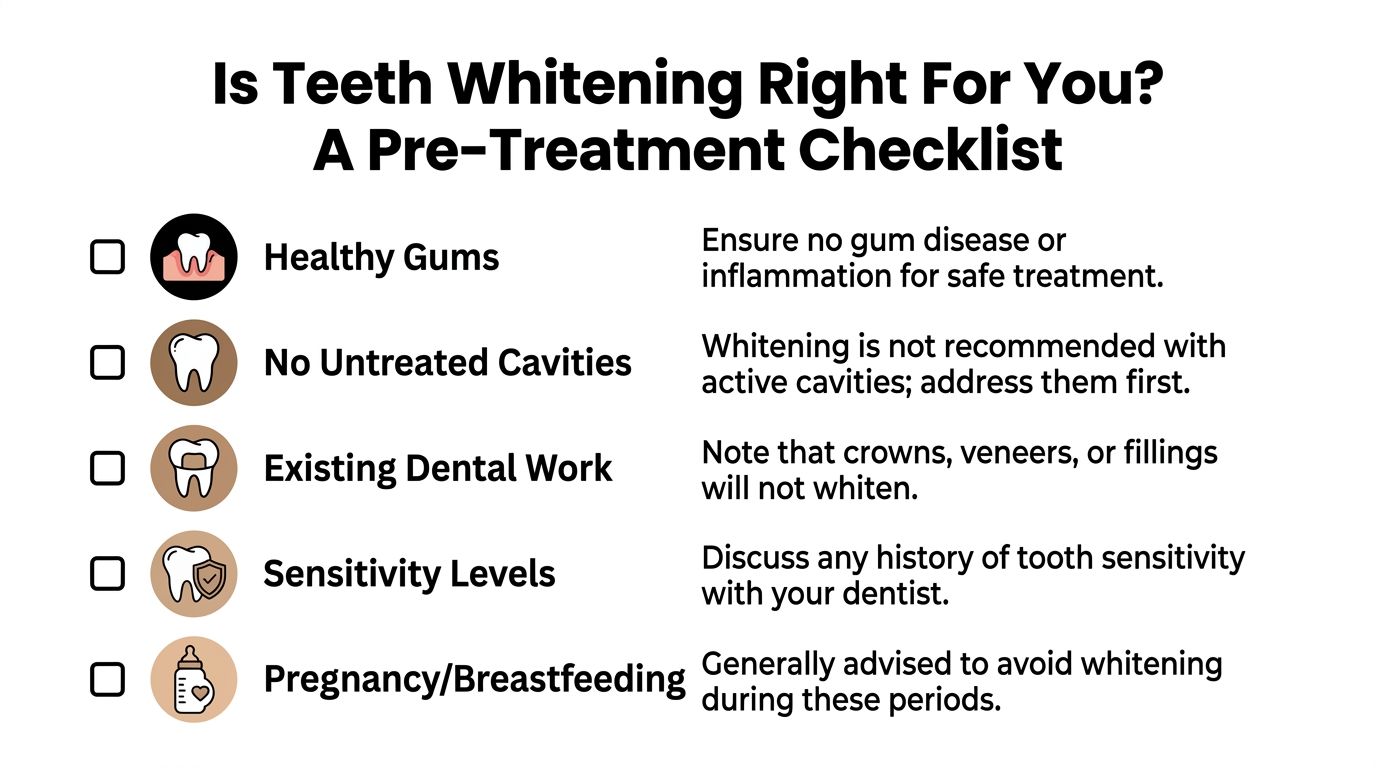
A pre-whitening exam is the right move if any of these apply:
- Untreated cavities: Bleaching agents can increase discomfort if decay is present.
- Gum inflammation or gum disease: Irritated tissue is more likely to react during treatment.
- Noticeable enamel wear or erosion: Damaged enamel increases the risk of sensitivity and structural problems.
- Crowns, veneers, bridges, or tooth-colored fillings in visible areas: These materials won't whiten, so color mismatch can become more obvious after treatment.
- A history of strong sensitivity: You may still be a candidate, but the method and pace need adjustment.
- Pregnancy or breastfeeding: Many dentists prefer to postpone elective whitening during this time.
Healthy teeth whiten more predictably. Unhealthy teeth react more unpredictably.
Product strength matters more than most people realize
Another reason professional guidance matters is concentration. European guidelines limit hydrogen peroxide in at-home whitening products to 6.0%, and products above that level are considered unsafe without prior dental consultation and professional supervision, as outlined in this whitening concentration guidance.
That doesn't mean every lower-concentration product is ideal. It means concentration should be matched to the patient, the method, and the tissues involved. A careful exam with cleaning and exams, plus dental x-rays when needed, can reveal issues that change the recommendation entirely.
For many people in Walnut Creek looking for a dentist near me, this is the moment where cosmetic dentistry overlaps with preventive care. If a patient has a cracked filling, active decay, or gum disease, the safest answer isn't faster whitening. It's treating the problem first.
Professional vs At-Home Whitening Treatments
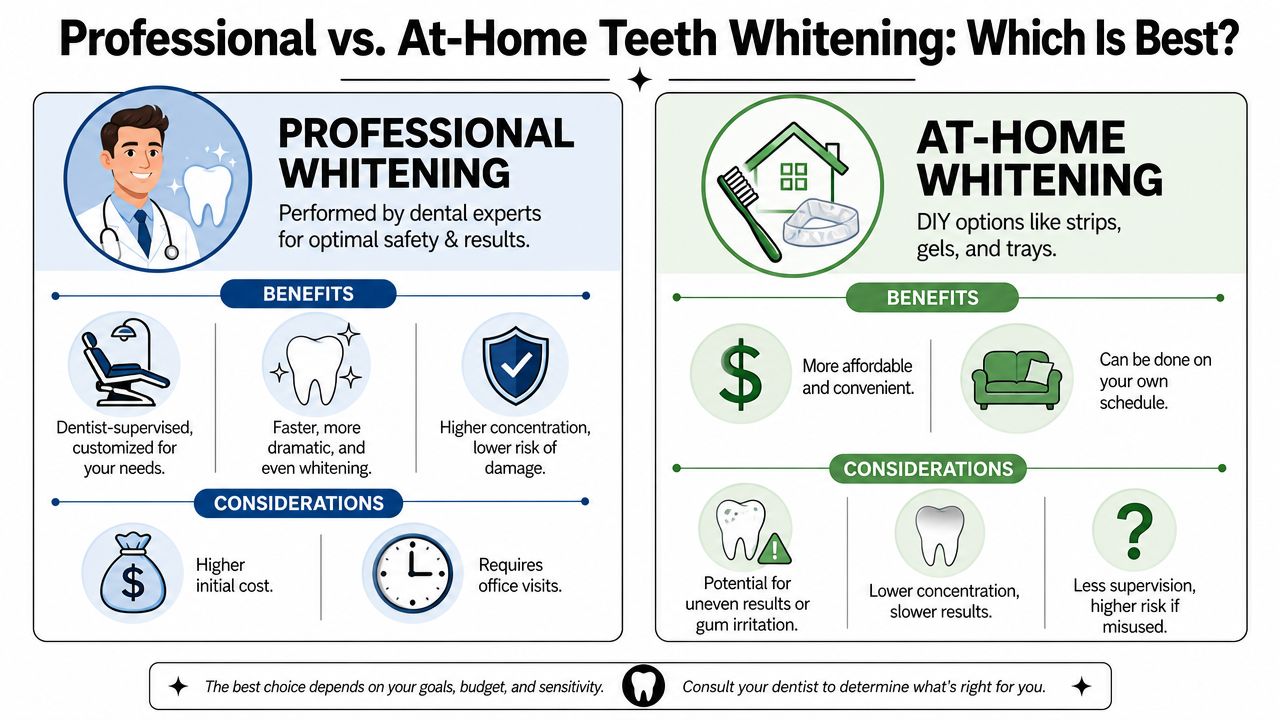
Most whitening choices fall into three groups. In-office professional whitening, dentist-supervised take-home trays, and over-the-counter products like strips, pens, and one-size trays. All three can play a role, but they don't offer the same level of customization, comfort, or predictability.
In-office whitening
In-office whitening is the fastest professionally controlled option. It's useful for patients who want visible change quickly, have an upcoming event, or prefer treatment in a monitored setting. The gums and soft tissues are protected, the gel is applied carefully, and the process can be adjusted in real time.
Clinical evidence shows that in-office bleaching with moderate hydrogen peroxide concentrations of 25% to 35% can achieve results comparable to higher concentrations with a significantly lower risk of tooth sensitivity, according to this clinical review of in-office whitening protocols. That's an important trade-off. Stronger isn't automatically better.
A related point often surprises patients. Intense light activation with LEDs or lasers usually isn't the deciding factor in comfort or outcome. Gel formulation and controlled technique matter more.
Here's a helpful overview before comparing options further:
Custom take-home trays from a dentist
This is often the best balance between convenience and safety. Custom trays fit your teeth closely, which helps the gel stay where it belongs and reduces unnecessary contact with the gums. The treatment is gradual, which many patients prefer.
A dentist-supervised home system also gives you flexibility. If sensitivity begins, the schedule can be slowed down. If one area is whitening faster than another, adjustments can be made. That's harder to do with one-size-fits-all products.
Over-the-counter whitening products
Store-bought strips and gels can help with mild surface staining, but they come with trade-offs. The fit is less precise. Coverage may be uneven. Directions are often simple, but real mouths aren't.
The biggest issue isn't that these products are always unsafe. It's that they're unsupervised. A person with enamel erosion, receding gums, or old bonding on front teeth may not know they're a poor candidate until irritation starts or the result looks patchy.
A practical comparison
| Option | Best for | Main advantage | Main limitation |
|---|---|---|---|
| In-office whitening | Faster results with professional monitoring | Controlled treatment in one visit | Requires office time |
| Custom trays | Gradual whitening with strong customization | Better fit and safer gel placement | Needs daily follow-through |
| Over-the-counter products | Mild whitening convenience | Easy access | Less precise, more room for misuse |
For patients searching for a cosmetic dentist near me, this comparison usually comes down to one question. Do you want the cheapest product, or the safest route to a result that looks even and healthy?
Your Guide to Safe and Effective Teeth Whitening
Once you know you're a good candidate, the process becomes much simpler. Safe whitening is about using the right material, in the right place, for the right amount of time. Problems usually come from guessing, overusing products, or trying home shortcuts that weren't designed for teeth.
If you're using a professional take-home system
A commonly used at-home protocol starts with 10% carbamide peroxide applied for one hour daily for 7 to 10 days, according to this review on peroxide whitening safety and technique. The details matter. The tray should fit correctly, the gel amount should be measured, and the gums should not be flooded with excess material.
The usual rhythm is straightforward:
- Place a small measured amount of gel into the custom tray.
- Seat the tray fully so the gel contacts the teeth, not the gums.
- Wear it for the prescribed time, which depends on the material used.
- Remove the tray, rinse well, and clean the tray before the next use.
If a patient tells me they plan to “just leave it in longer for better results,” that's where I step in. More time doesn't automatically mean a better smile. It often means more irritation.
A safe whitening plan should feel controlled from day one. If it feels improvised, it probably is.
If you're having whitening done in the office
In-office treatment is more structured. The teeth are examined first. Soft tissues are protected. The whitening material is applied carefully, and the response is monitored throughout the appointment. After treatment, patients are usually advised to avoid staining foods and drinks for a short period while the teeth rehydrate and settle.
This route can be a strong choice for people who want cosmetic improvement without managing trays at home. It's also useful when a dentist wants closer supervision because of existing sensitivity or uneven staining.
What not to do at home
The biggest mistakes are usually DIY trends, not professional systems. Avoid these:
- Undiluted hydrogen peroxide: Household peroxide isn't a whitening protocol. Used improperly, it can cause chemical burns.
- Activated charcoal: It may seem “natural,” but abrasive products can wear enamel and make long-term discoloration worse.
- Baking soda scrubbing as a routine: Occasional use is one thing. Repeated aggressive use is another.
- Whitening over damaged enamel: If the tooth surface is already compromised, bleaching can make sensitivity much worse.
Safe whitening overlaps with broader dental care. If a tooth has a crack, an old filling, or signs that restorative dentistry is needed, whitening should wait until the foundation is healthy.
Managing Sensitivity and Maintaining Your New Smile
The most common side effect of whitening is sensitivity. That's real, and patients deserve a clear explanation instead of a sales script. Tooth sensitivity can affect up to 78% of patients during whitening, but it's usually mild and temporary, and higher peroxide concentrations raise that risk, according to this summary of whitening effectiveness, cost, and sensitivity incidence.
How to handle sensitivity without panicking
Most sensitivity feels like short zings to cold air, cold drinks, or sweets. It usually settles after treatment ends. If it doesn't, the whitening plan needs to be adjusted.
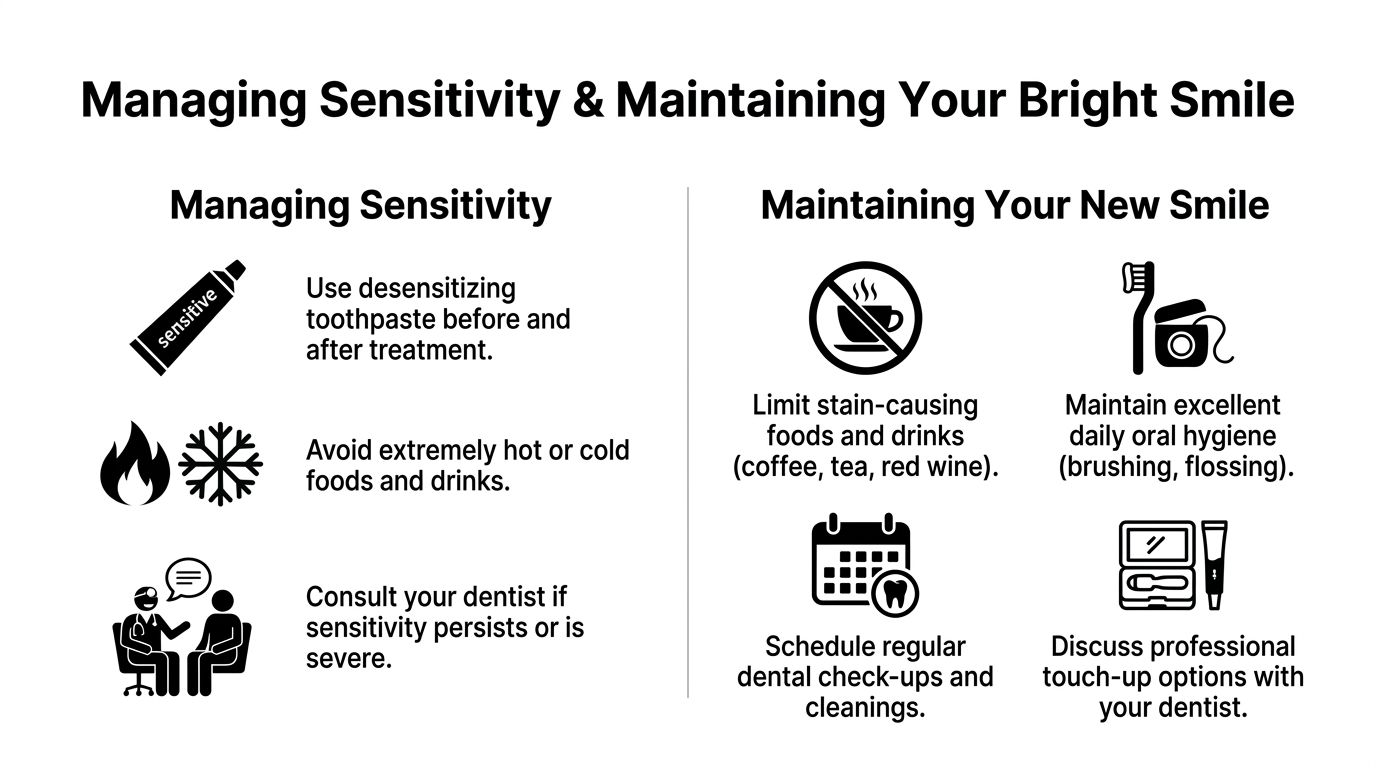
Helpful steps include:
- Use a desensitizing toothpaste: Start before whitening if you already know your teeth are reactive.
- Take a break when needed: Skipping a day can help if the teeth start to feel overstimulated.
- Avoid very hot and very cold foods: Give the teeth a calmer environment while they recover.
- Check in if pain feels sharp or persistent: Whitening sensitivity should fade, not escalate.
For more guidance, patients can review tips on reducing tooth sensitivity after whitening.
What I want patients to know: temporary sensitivity is common. Lingering pain is a reason to call, not to push through.
Keeping your results longer
Freshly whitened teeth can pick up new stains more easily right after treatment. That's why aftercare matters.
A simple maintenance plan looks like this:
- Be selective with dark drinks: Coffee, tea, and red wine are common culprits.
- Brush and floss consistently: Daily home care protects the brightness you paid for.
- Stay current with cleanings and exams: Surface stain and tartar can make teeth look darker than they are.
- Plan touch-ups professionally: Done thoughtfully, touch-ups keep results stable without overdoing the process.
Whitening can brighten a smile beautifully, but maintenance is what keeps it looking polished instead of temporary.
Begin Your Whitening Journey in Walnut Creek
The safest whitening consultation doesn't begin with a shade chart. It begins with listening. What bothers you about your smile? What have you already tried? Do you have old fillings, past sensitivity, or dental anxiety? Those answers shape the plan.
In Walnut Creek, a proper whitening visit should include an exam, a review of your dental history, and a conversation about whether whitening is the best cosmetic choice for you right now. Sometimes it is. Sometimes a cleaning, restoration, or another cosmetic option creates a better result first. That kind of honesty protects your teeth and usually leads to a better-looking outcome.
Patients looking for a long-term dentist near me, a dentist in Walnut Creek, CA, or help with cosmetic dentistry often want more than one service. They may need routine dental care, cleaning and exams, dental x-rays, or restorative treatment before whitening. Others may also be comparing broader services like dental implants near me, tooth extraction, or an emergency dentist after years away from care. A good dental home can guide all of that, not just a single procedure.
If your goal is a brighter smile, start with a professional opinion and a personalized plan. Learn more about professional teeth whitening in Walnut Creek, CA.
A brighter smile should never come at the expense of healthy enamel, comfortable teeth, or peace of mind. If you're ready to find out the safest way to whiten your teeth, schedule a consultation with William M. Schneider, DDS.