That persistent, throbbing toothache isn't just an inconvenience—it's a sign that you need help. Severe tooth pain is often your body’s alarm bell, signaling a deep infection that needs immediate attention from a trusted dentist. Fortunately, a modern non-surgical root canal treatment is a comfortable procedure that gets to the source of the problem, relieves your pain, and saves your natural tooth, often in a single visit.
If you are looking for an emergency dentist or a skilled local provider in Walnut Creek, CA, to finally find relief from tooth pain, you’ve come to the right place.
Your Trusted Walnut Creek Dentist for Root Canal Relief

Here at the office of William M. Schneider, DDS, we specialize in providing gentle, effective non-surgical root canal treatments for our community here in Walnut Creek and the surrounding East Bay area. We understand that the phrase "root canal" can make people anxious, which is why our practice is built around a patient-first, reassuring approach. Our primary goal is to make your treatment a source of relief, not stress.
With over 25 years of experience serving patients in Walnut Creek, Dr. Schneider uses modern techniques and his famously painless injections to ensure you are comfortable from start to finish. We’re here to show you firsthand that a non-surgical root canal is a positive step toward ending your pain, restoring your oral health, and keeping your smile intact for years to come.
A Common and Reliable Tooth-Saving Procedure
Non-surgical root canal therapy is one of the most frequently performed dental procedures worldwide, saving millions of teeth from extraction every year. Its widespread use speaks to how effective and reliable it is in modern dental care. A major systematic review found that over 55% of people globally have at least one tooth that has had root canal treatment, showing just how routine this procedure has become. For our patients in Walnut Creek, that statistic should be reassuring. At our practice, Dr. Schneider’s deep experience ensures you get precise, comfortable care that saves your tooth without the worry. You can explore more about these global trends and see the full research on root canal prevalence.
When you choose our Walnut Creek dental office, you’re not just getting a procedure—you’re getting a partner in your long-term oral health. We prioritize conservative care, which means we always aim to save your natural teeth whenever possible. A non-surgical root canal accomplishes this by:
- Eliminating severe pain by removing the infected tissue at its source.
- Stopping the spread of infection to other teeth or your jawbone.
- Preserving your natural smile and keeping your bite properly aligned.
- Avoiding the need for more complex restorative dentistry down the road, such as a tooth extraction followed by dental implants or bridges.
We welcome new patients from all over Walnut Creek, CA, whether you need a routine cleaning and exam or have an urgent dental emergency like a toothache. Our team is committed to providing a calm, supportive environment where your questions are answered and your concerns are heard. We’ll perform a thorough new patient exam with dental X-rays to diagnose the issue and create a clear, personalized treatment plan for you.
Don't let tooth pain control your life. Contact our Walnut Creek office today to schedule a consultation and take the first step toward lasting relief.
Recognizing the Signs You Might Need a Root Canal
How can you tell if that nagging toothache is just a minor issue or a red flag that your tooth is in serious trouble? When the soft tissue at the center of your tooth—the pulp—becomes infected due to deep decay or injury, the resulting pressure on the nerve causes significant pain. Understanding the signals your body sends is the first step toward getting the right care from your local dentist and finding relief.
Ignoring these symptoms can lead to a more severe infection, a painful abscess, or even the need for a tooth extraction. If you’re in the Walnut Creek area and are experiencing any of these issues, it’s time to call our dental office for an evaluation.
Telltale Signs of a Tooth Infection
- Severe, Persistent Toothache: This isn't a minor ache. It's often a deep, throbbing pain that can keep you up at night. Lying down or chewing can make it worse.
- Extreme Sensitivity to Temperatures: If your tooth hurts for more than a few seconds after consuming something hot or cold, it’s a strong sign the nerve inside is damaged.
- Swollen and Tender Gums: An infection inside the tooth can form a pocket of pus (an abscess) near the root, causing noticeable swelling and tenderness in the surrounding gums.
- A Pimple on the Gums: A small, recurring bump on your gums, known as a fistula, is a drainage tunnel for the infection and a definite sign that you need professional dental care.
- Discoloration of the Tooth: A dead or dying tooth can sometimes turn a grayish or dark color as the pulp inside breaks down.
For more details, you can check out these 5 signs you may need a root canal.
Important Takeaway: The entire purpose of a root canal is to get you out of pain by removing the infection causing it. Modern techniques make this a comfortable and highly successful procedure for saving your natural tooth.
Sometimes, an infected tooth has no symptoms at all, especially if the nerve has already died. This is why regular dental care, including dental X-rays and exams at our Walnut Creek practice, is so vital. These tools allow Dr. Schneider to spot hidden infections before they cause pain. You can find more on this in our guide on how to know if you need a root canal. If any of this sounds familiar, don't wait for the pain to get worse. Scheduling an appointment is the best thing you can do for your health.
Your Root Canal Procedure Step by Step
Knowing what to expect can make all the difference when it comes to any dental treatment. While the idea of a non-surgical root canal might seem daunting, our goal at our Walnut Creek office is to walk you through exactly what happens, showing you just how smooth and focused on your comfort the entire process is. We’ve found that a clear understanding helps our patients feel calm and confident about their care.
Getting You Completely Numb
Our first and most important job is to make sure you won’t feel anything during the treatment. Dr. Schneider will gently administer a local anesthetic, completely numbing the tooth and the surrounding area. Many of our patients from across the East Bay tell us they barely feel the injection, thanks to Dr. Schneider's gentle and practiced technique. We always take the time to ensure the anesthetic has fully taken effect before we begin.
Removing the Source of the Pain
Once you’re totally comfortable, Dr. Schneider creates a tiny, precise opening in the top of your tooth. This gives him access to the inner pulp chamber, which holds the infected or inflamed nerve tissue that’s causing the pain. Using highly specialized instruments, he’ll carefully remove this damaged pulp. This step immediately stops the infection from progressing and kickstarts the healing process.
Your Root Canal Journey at Our Walnut Creek Office
| Stage | What Happens During Your Visit | The Purpose of This Step |
|---|---|---|
| 1. Accessing the Tooth | A small opening is made in the tooth after it's completely numb. | To create a clear path to the infected inner pulp chamber without affecting the rest of the tooth. |
| 2. Cleaning the Canals | The infected pulp is removed, and the inner canals are meticulously cleaned and disinfected. | To eliminate all bacteria and damaged tissue, which is the source of the pain and infection. |
| 3. Filling the Canals | The clean, empty canals are filled with a biocompatible material called gutta-percha. | To seal the inside of the tooth and prevent any bacteria from re-entering in the future. |
| 4. Sealing the Tooth | A temporary or permanent filling is placed over the opening. | To protect the interior of the tooth while it heals. |
| 5. Placing the Crown | A custom-made dental crown is placed over the treated tooth at a follow-up visit. | To restore the tooth's strength, function, and appearance, protecting it from fracture. |
Each stage is thoughtfully planned to ensure the best possible outcome, allowing you to keep your natural tooth for years to come.
Cleaning and Shaping the Canals
With the infected pulp gone, the next phase is a deep, thorough cleaning. The tiny channels running down your tooth’s roots—the actual "root canals"—are carefully shaped and disinfected to prepare a perfectly clean slate for a strong, lasting repair. This disinfection stage is absolutely critical to the long-term success of your root canal. Recent studies on expert-backed trends in root canal procedures show that 96% of dentists rely on advanced irrigating solutions to achieve a perfectly disinfected canal system. Here in Walnut Creek, Dr. Schneider uses these same proven methods and technology to deliver exceptional dental care.
This infographic gives a great visual summary of the main steps: cleaning out the infection, filling the sanitized canals, and protecting the tooth with a crown.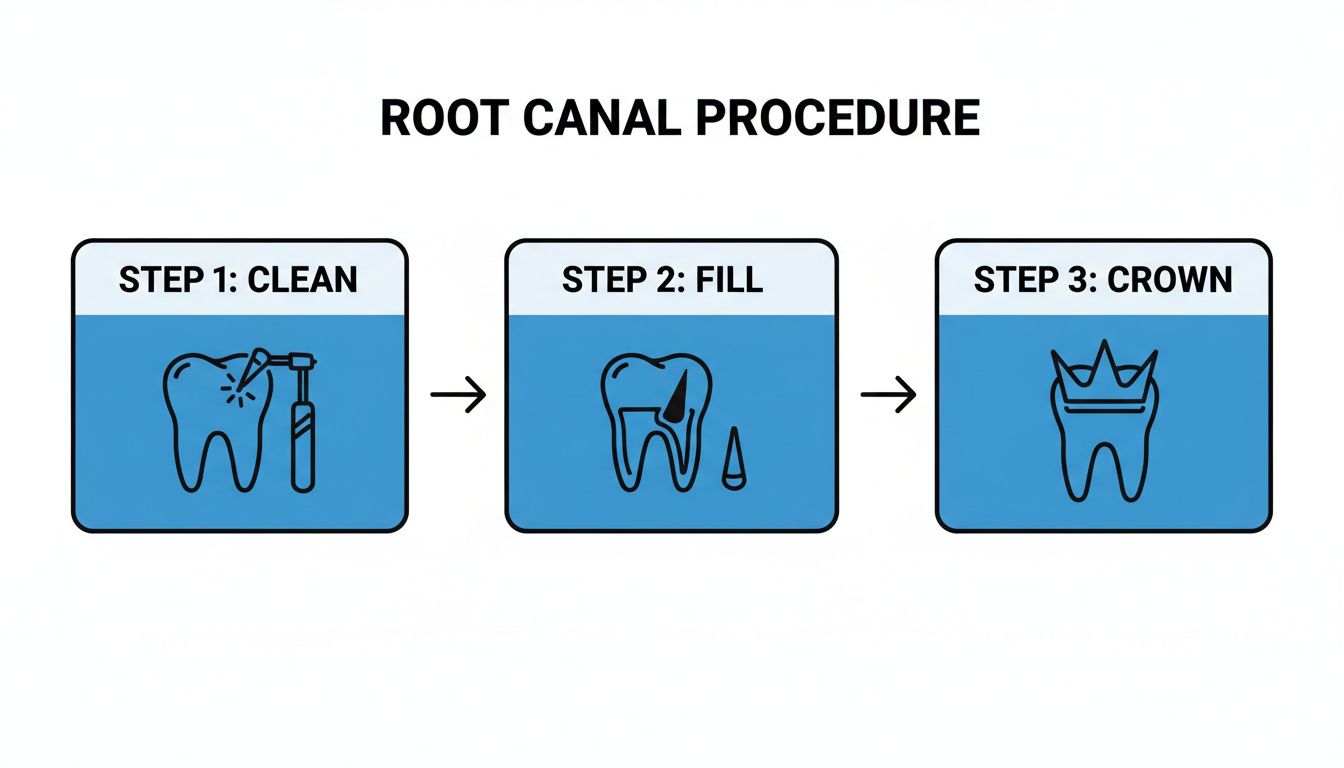
Every step is designed to methodically clear the infection and rebuild a healthy foundation for your tooth.
Filling and Sealing the Tooth
Once the canals are spotlessly clean, we use a biocompatible, rubber-like material called gutta-percha to fill them. This creates a tight seal that walls off the tooth from any future infection. A temporary filling is then placed on top to protect the tooth as it begins to heal.
Protecting Your Tooth with a Crown
Because the nerve and blood supply have been removed, the tooth is no longer "vital" and can become brittle over time. To restore its chewing strength and protect it from fracture, the final step is placing a custom-made dental crown. This protective cap gives your tooth the strength it needs to function just like any other, blending seamlessly into your smile.
The Long-Term Benefits of Saving Your Natural Tooth
When you’re facing a severe tooth infection, you have a choice: save the tooth with a non-surgical root canal treatment, or have it pulled. While a tooth extraction might seem like a quick fix, the long-term benefits of saving your natural tooth are significant for your overall oral health. A root canal ends the pain and, more importantly, keeps the natural structure of your mouth intact for years to come.
Preserving Your Natural Bite and Smile
One of the biggest advantages of a root canal is keeping your natural tooth right where it belongs. When a tooth is pulled and not replaced, the neighboring teeth often start to shift into the gap. This can throw your bite out of alignment, leading to other problems:
- Difficulty Chewing
- Increased Wear on Other Teeth
- Jaw Pain and TMJ Issues
By saving your tooth, you preserve the natural harmony of your smile, ensuring everything continues to work as it should.
Avoiding More Complex and Costly Procedures
Pulling a tooth often leads to more complicated and expensive dental work later on. An empty space in your smile is a functional problem that needs a solution.
By preserving your natural tooth, you are choosing the most conservative and effective long-term solution. A root canal prevents the domino effect of problems that can arise from a missing tooth, ultimately protecting both your health and your wallet.
Options for replacing a missing tooth, like a dental bridge or a dental implant, are excellent restorative dentistry solutions, but they are also more involved and costly than saving your original tooth. Here at our Walnut Creek practice, we always advocate for preserving your natural teeth because it’s the best path to long-term health.
The success rates for non-surgical root canals are remarkably high. Studies show that the survival rate for a tooth after a root canal is around 87% even at the 8–10 year mark. These numbers should give families in the East Bay total confidence that a root canal performed by an experienced dentist near them like Dr. Schneider is a sound investment. You can read more about the long-term success rates of root canal therapy to feel even more certain about your decision.
A dental crown is almost always placed after a root canal to restore the tooth’s full strength. You can learn more about how dental crowns work in our detailed guide. This final step ensures your saved tooth can function just like any other, allowing you to eat, speak, and smile with complete confidence.
What to Expect at Our Walnut Creek Dental Office

When you're in pain, the last thing you want is a stressful dental visit. When you arrive at our office at 1855 San Miguel Dr. in Walnut Creek, you’ll be greeted by a team that genuinely cares about making you feel at ease. We know that dental work—especially a non-surgical root canal treatment—can cause anxiety. That’s why we’ve created a friendly, welcoming space to help you relax from start to finish.
Your Initial Consultation and Exam
Your first visit for a potential root canal begins with a conversation. Dr. Schneider will take the time to listen to your symptoms and concerns. From there, we’ll proceed with a thorough new patient exam, which includes precise digital dental X-rays. These images let Dr. Schneider see exactly what’s happening inside your tooth and the surrounding bone. He will show you the images, explain everything in plain language, and answer all your questions.
We believe an informed patient is a confident one. Our promise is total transparency, ensuring you understand every part of your diagnosis and treatment plan before we ever move forward with dental care.
A Focus on Comfortable and Gentle Care
If a root canal is the right step, your comfort will be our top priority. Here’s what sets our patient-focused approach apart:
- Painless Anesthesia: Dr. Schneider is known throughout Walnut Creek, CA, for his gentle injection technique. He takes great care to make sure the area is completely numb before treatment begins.
- Clear Communication: Our team will keep you informed throughout your appointment, explaining what we’re doing and checking to make sure you’re comfortable.
- Sedation Dentistry Options: For patients with dental anxiety, we proudly offer sedation dentistry to ensure a completely stress-free and relaxed procedure.
Our goal is for you to leave our office feeling relieved and confident in your smile. We are proud to be a trusted dentist in Walnut Creek, CA, for families all across the East Bay.
Common Questions About Non-Surgical Root Canals
It's normal to have questions about root canals. We've gathered some of the most common questions our Walnut Creek patients ask about non-surgical root canal treatment to provide the straightforward information you need.
Is a Non-Surgical Root Canal Actually Painful?
This is the biggest myth in dentistry. The procedure is not painful. The purpose of a non-surgical root canal is to get you out of the pain caused by a tooth infection. With modern anesthetics and Dr. Schneider’s gentle touch, the process is comfortable, often feeling like a simple filling. For anxious patients, we offer sedation dentistry for a calm and stress-free visit.
The pain people associate with root canals is almost always from the infection before the procedure. The treatment itself is what brings the relief.
What Is the Cost of a Root Canal in Walnut Creek?
The cost of a root canal depends on which tooth needs treatment and how complex its root system is. Front teeth typically have one root and are less costly to treat, while molars have multiple roots and require more time and precision.
Here at our Walnut Creek office, we are committed to transparency. After your new patient exam and dental X-rays, we’ll provide a clear breakdown of the cost. We work with many dental insurance plans and offer flexible payment options to ensure you can get the dental care you need.
What Happens After My Root Canal Is Finished?
After a root canal, the tooth is no longer "alive" and can become brittle. To protect it from fracturing and restore its chewing power, a dental crown is the final, critical step. You might have some minor sensitivity for a day or two, but you can get right back to your daily life.
How Long Will My Root Canal-Treated Tooth Last?
When a root canal is completed with a proper restoration like a dental crown and you maintain good oral hygiene, your tooth can last a lifetime. The procedure has a very high success rate—often over 95%—making it a reliable way to save your natural tooth. Regular cleanings and check-ups at our Walnut Creek office are key to keeping your entire smile healthy for decades.
Don't let dental pain or anxiety keep you from a healthy smile. The team at William M. Schneider, DDS is here to provide the gentle, expert care you deserve. If you're looking for a dentist near you in the Walnut Creek, CA area, schedule your consultation today by visiting https://www.wcfamilydentist.com.