You may be searching for a dentist near me after postponing care for weeks, months, or longer. Perhaps a cracked tooth is making it hard to sleep, you need a tooth extraction, or you're interested in dental implants near me but feel uneasy about the procedure itself. Dental anxiety can make even a routine cleaning and exam feel overwhelming, but it shouldn't prevent you from receiving the care your mouth needs.
Sedation dentistry in the East Bay offers a practical way to reduce fear while preserving a careful, personalized treatment experience. At William M. Schneider, DDS in Walnut Creek, patients can discuss comfort options alongside preventive care, restorative dentistry, cosmetic treatment, root canals, dental implants, and emergency dental services. The right approach depends on more than anxiety alone. Recovery time, medical history, procedure length, and whether someone can escort you home all matter.
Overcoming Dental Anxiety in the East Bay
A common pattern begins with a small concern. You notice sensitivity while drinking something cold, a rough edge on a tooth, or bleeding during brushing. You plan to schedule a new patient exam, but the thought of the dental chair brings back an unpleasant memory. Days pass, discomfort increases, and the appointment becomes harder to arrange.
That response is understandable. A 2021 systematic review of more than 72,000 adults found that 15.3% experienced some level of dental fear or anxiety, 12.4% experienced high dental fear or anxiety, and 3.3% experienced severe dental fear or anxiety according to the review indexed by PubMed. A separate 2025 U.S. survey of 1,003 adults reported that 72.6% were afraid of going to the dentist, including 45.8% with moderate fear and 26.8% with severe fear as reported by ADA News.
Fear can affect treatment decisions
Anxiety doesn't mean you're difficult or unwilling to care for your health. It can make sounds, smells, injections, loss of control, or uncertainty feel threatening. When fear leads someone to delay an examination, a manageable issue may require more involved care later. That can mean a filling becomes a crown, a damaged tooth requires a root canal, or a tooth that might have been restored needs extraction.
Sedation can help interrupt that cycle. Nitrous oxide may make a cleaning or filling feel less intimidating. Oral or IV sedation may be considered for longer procedures, severe anxiety, or treatment that would otherwise be difficult to complete. Sedation supports the procedure, but it doesn't erase the need for communication, local anesthesia, and a thoughtful treatment plan.
A practical first step: Tell the dental team that you're nervous before the visit. That information helps the office plan pacing, explanations, breaks, and sedation discussions around you.
For patients comparing a dentist in Walnut Creek, CA with other options throughout the East Bay, comfort should be part of the consultation, not an afterthought. The purpose is to help you complete necessary care while you remain informed and treated with respect.
Understanding Sedation Dentistry and How It Works
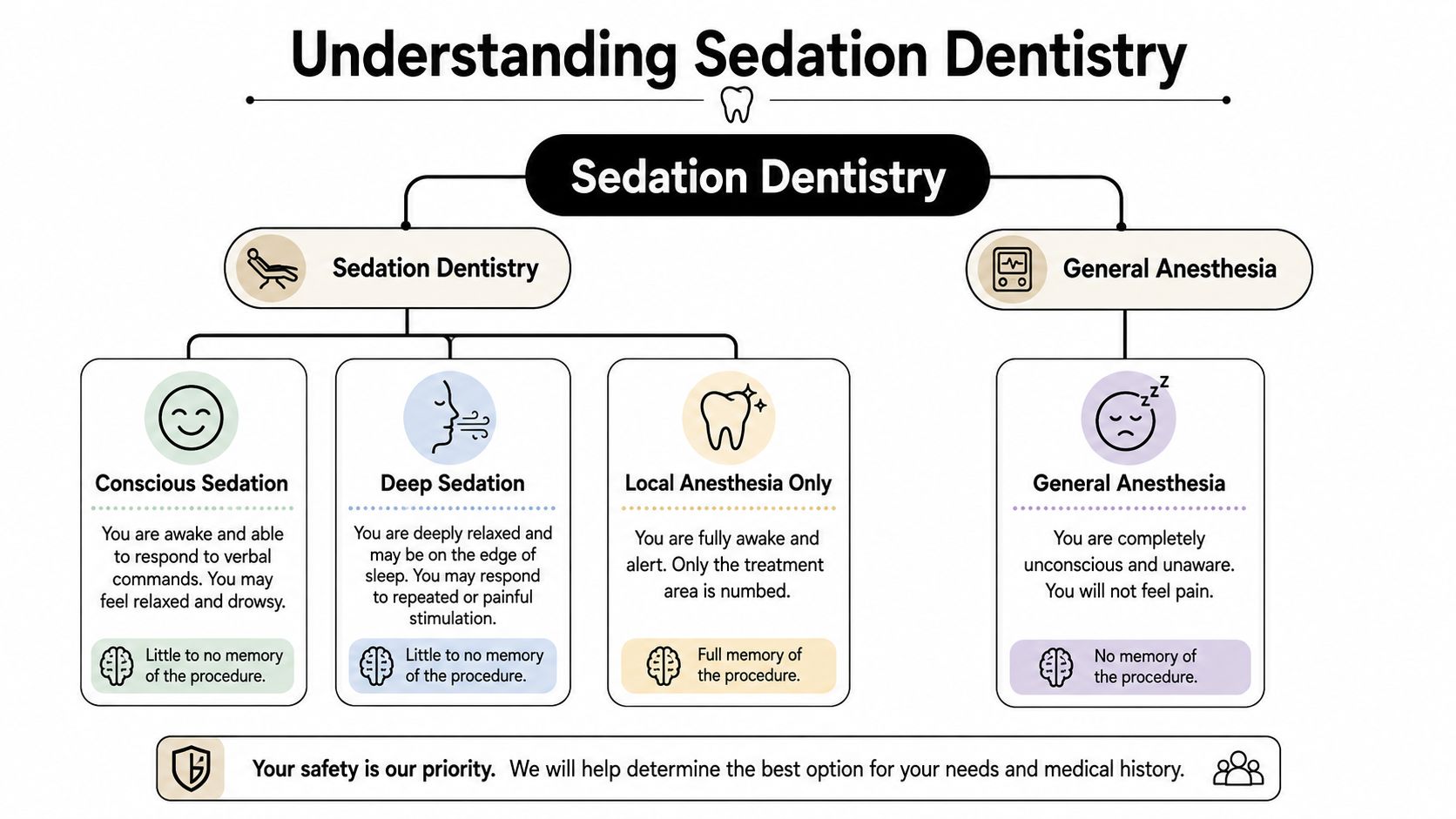
Sedation dentistry is a range of techniques that reduce anxiety and increase relaxation during dental treatment. It isn't the same as general anesthesia. With most dental sedation, patients remain able to respond to simple instructions, while general anesthesia produces unconsciousness and requires a different level of medical management.
A useful comparison is a dimmer switch rather than an on-and-off button. Minimal sedation may take the edge off nervousness while leaving you fully alert. Moderate sedation creates deeper relaxation, although you can usually respond when spoken to. Deep sedation approaches an unconscious state, while general anesthesia is a separate category with more extensive airway and anesthetic support.
The medication or gas doesn't replace local anesthetic. Your dentist still numbs the treatment area to control pain. Sedation primarily reduces fear, tension, and the emotional intensity of the appointment. That distinction matters for patients considering restorative dentistry, cosmetic dentistry, root canal therapy, dental implants, or emergency treatment.
What sedation can and cannot do
Sedation can make it easier to sit still, tolerate treatment, and complete care that anxiety might otherwise interrupt. Some patients also experience limited memory of the appointment, depending on the medication and depth selected. It isn't a guarantee that you'll feel nothing, and it shouldn't be presented as a permanent cure for dental phobia.
The evidence is mixed. Recent reviews indicate that inhalational or conscious sedation can help during dental procedures, but they don't consistently establish lasting anxiety reduction between visits. Some reviews found behavioral therapy more effective than inhalational sedation for reducing dental anxiety in children as summarized in this PubMed review. For adults, that supports using sedation as a procedural-enablement tool, combined with clear explanations, staged appointments, agreed signals for pauses, and follow-up support.
Patients who want a plain-language explanation can review how dental sedation works before discussing options with their dentist. The most useful consultation connects the sedation level to the procedure and to your own priorities.
Comparing Sedation Options Available to East Bay Patients
There is no single best sedative for every patient. Someone hoping to drive after a routine visit has different needs from someone planning dental implants, multiple crowns, a bridge, or extensive restorative treatment. A useful comparison considers how the medication is given, the level of relaxation, recovery time, medical factors, and whether a responsible escort can stay with you afterward.
Sedation options at a glance
| Sedation Type | How It Is Given | Recovery Time | Best For |
|---|---|---|---|
| Nitrous oxide | Inhaled through a nasal mask with oxygen | Rapid recovery after it's stopped | Mild to moderate anxiety, cleanings, fillings, and shorter care |
| Oral sedation | Prescribed medication taken before treatment | Longer recovery, with supervision afterward | Moderate or significant anxiety and patients who want deeper relaxation |
| IV sedation | Medication delivered through a vein by a trained clinical team | Recovery is monitored and an escort is required | Longer or more involved procedures when a more adjustable level is appropriate |
| Deep sedation | Medication produces a much deeper level of relaxation | Requires careful monitoring and recovery planning | Selected complex cases after detailed medical assessment |
Nitrous oxide, often called laughing gas, is the lightest option listed here. A dentistry review reports that nitrous oxide and oxygen are eliminated from the body within 3 to 5 minutes after the gas is stopped. It also recommends a short oxygen period and confirming that communication and psychomotor function have returned before discharge as described in this dentistry review. That recovery pattern may suit a nervous patient having a cleaning, filling, crown, Invisalign fitting, or teeth whitening appointment, especially when driving afterward matters.
Oral sedation usually causes more noticeable drowsiness and can affect memory. It may fit patients whose main barrier is anticipatory fear or whose treatment will take longer. The practical cost is reduced independence for the rest of the day. Someone responsible must accompany you, and you should not plan to work, drive, or make important decisions afterward.
IV sedation allows the clinical team to adjust medication during treatment. Recent evidence supports careful, patient-specific selection. A 2025 prospective cohort study of remimazolam in dental IV conscious sedation reported a 100% procedural success rate without rescue sedatives, with rapid recovery and minimal cardiovascular and respiratory impact. A separate adult trial found that oral midazolam produced fewer side effects than IV sedation as reported in this PubMed-indexed evidence summary. These findings do not make IV sedation appropriate for everyone. Age, medical complexity, desired recovery time, procedure length, and escort availability all affect the decision.
Deep sedation creates a much deeper level of relaxation and is reserved for selected circumstances. It may be considered for extensive restorative care or profound anxiety, but it requires more detailed assessment and recovery planning than minimal sedation. Ask whether treatment can be divided into shorter visits, particularly if arranging an escort or managing other medical conditions will be difficult.
Safety Standards and Monitoring During Your Visit
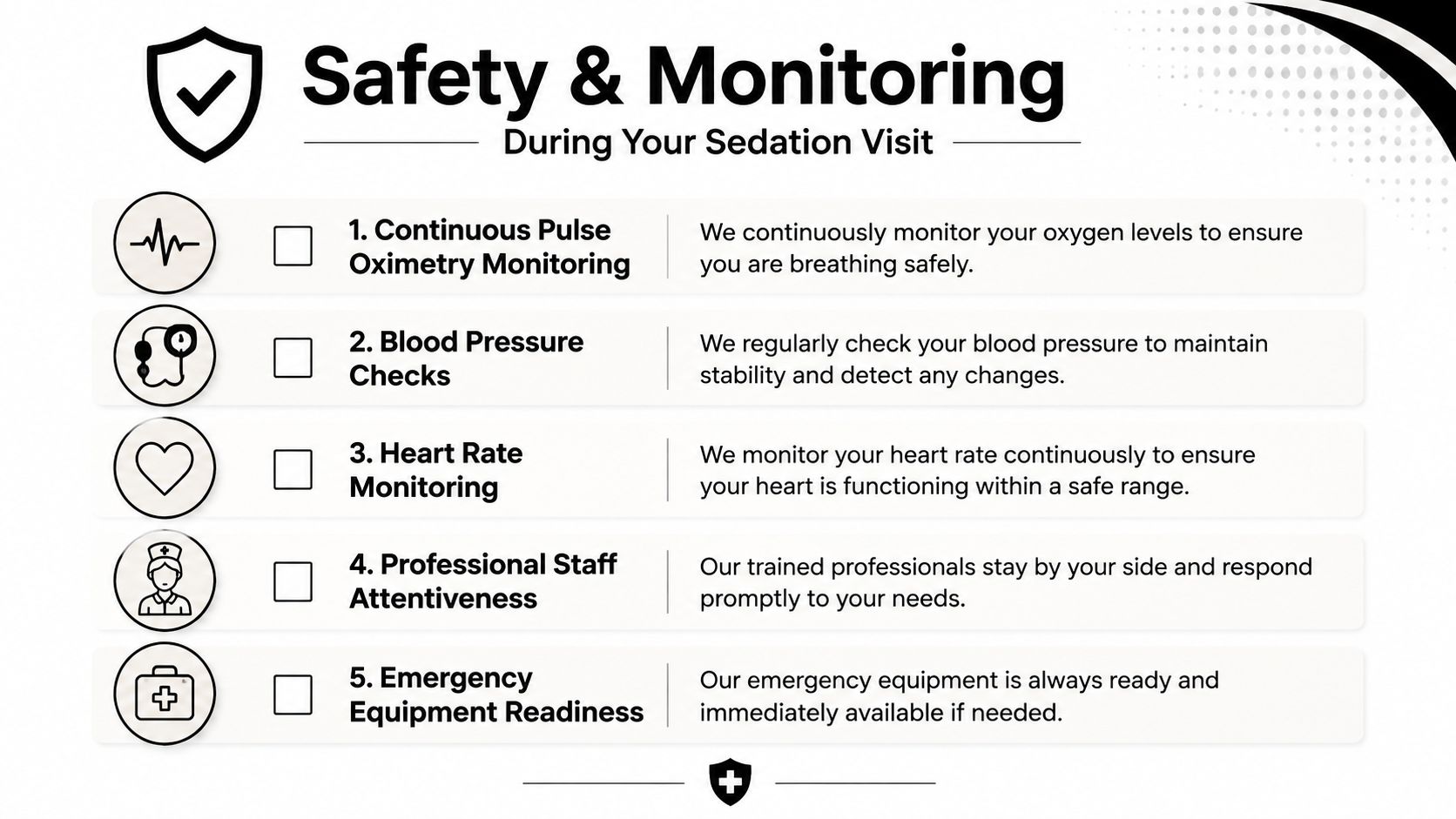
Sedation isn't a set-and-forget service. The main safety concern is recognizing changes in breathing, oxygenation, responsiveness, or circulation promptly. That's why the dental team should document your health history, select medication carefully, monitor you throughout treatment, and confirm that you meet discharge criteria before leaving.
During moderate or minimal sedation, authoritative guidance calls for continuous supervision and physiologic monitoring. That includes ongoing assessment of responsiveness, pulse oximetry for oxygenation, airway and ventilation checks, and blood pressure and heart-rate surveillance at clinically appropriate intervals. Some standards specify blood pressure checks at least every 15 minutes, or more often when clinically indicated as outlined in this sedation-services guidance.
What the updated framework emphasizes
The ADA's updated sedation and anesthesia guidance incorporates American Society of Anesthesiologists physical-status and fasting recommendations. It also calls for more precise documentation of weight-based dosing, adds body mass index to baseline vital signs, recommends supplemental oxygen during moderate sedation through general anesthesia, and emphasizes documented emergency protocols with regular training drills as reported in the ADA's updated guidance.
These details affect the patient experience directly. A careful office should assign trained staff to observation rather than divide attention casually. The record should show what was monitored over time, how you responded, what medications were given, and why you were ready for discharge.
The safety question to ask: Who will monitor me throughout treatment, what will be recorded, and what instructions will I receive before I leave?
Medical history also matters. Your dentist should know about current medications, allergies, sleep-related breathing problems, pregnancy, prior reactions to sedation, and significant medical conditions. Infection-control procedures, accessible communication, and accommodations for mobility or sensory needs should be part of the overall visit, not separate concerns.
Preparing for Your Sedation Appointment
Preparation depends on the sedation level. Nitrous oxide may involve fewer restrictions than oral or IV sedation, but you should follow the specific instructions provided by your dental team. For moderate or intravenous sedation, Columbia's advanced general dentistry guidance states that adults and children older than 36 months should avoid solids and non-clear liquids for 6 to 8 hours before treatment, while clear liquids may be allowed up to 2 hours beforehand according to Columbia's patient guidance.
Before you arrive
Confirm the fasting instructions, medication directions, appointment time, and transportation plan. Wear comfortable clothing that allows easy access for monitoring, and bring your medication list and any relevant medical information. If you're receiving oral or IV sedation, arrange a responsible adult to take you home and remain available according to the office's instructions.
Don't assume you can drive just because you feel alert. Cleveland Clinic's sedation dentistry guidance advises that patients may need to avoid food and drink for several hours before treatment and shouldn't drive for 24 hours afterward. The same guidance recommends contacting the dentist if grogginess lasts beyond 24 hours or if nausea and vomiting occur.
During and after the appointment
On arrival, the team reviews your health information, confirms the planned treatment, records baseline vital signs, and answers last-minute questions. You should know what level of sedation is planned, how you'll communicate during treatment, what monitoring will occur, and what recovery will involve.
Afterward, you'll rest in a monitored recovery area until you meet the office's discharge criteria. Patients using nitrous oxide often recover quickly once the gas is stopped, but the team should still confirm normal communication and coordination. Patients receiving oral or IV sedation need an escort and should avoid driving, work requiring judgment, and other demanding activities the same day.
A short video can also help you visualize the general appointment flow before your consultation:
Determining If Sedation Dentistry Is Right for You
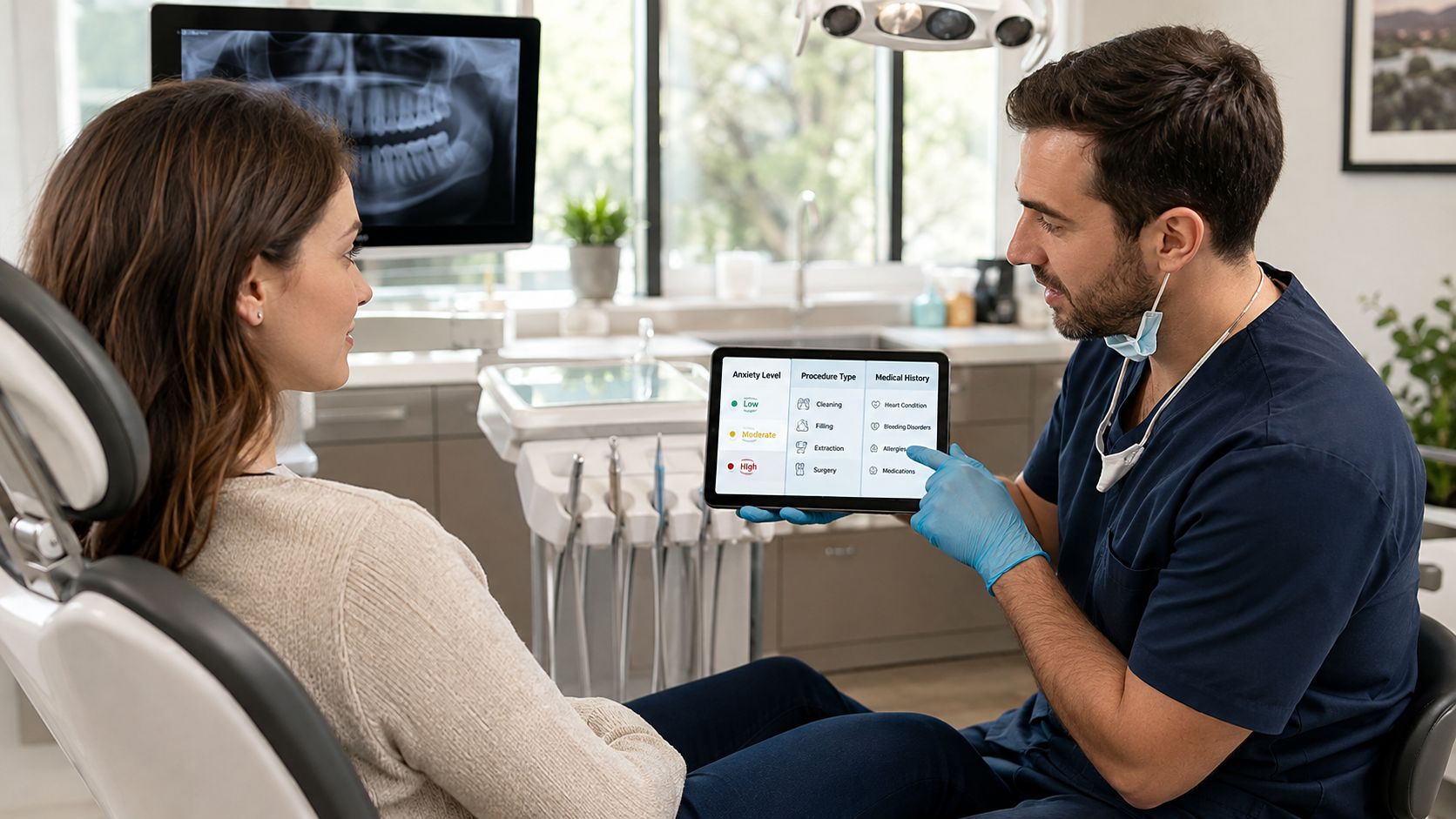
The right sedation plan depends on your anxiety, health history, treatment, recovery needs, and transportation arrangements. Mild anxiety during a cleaning may respond well to nitrous oxide. Dental implants, root canal treatment, tooth extraction, or multiple crowns can require a longer appointment and a different level of support.
Your dentist should review these factors with you:
- Anxiety pattern: Can you remain comfortable enough to communicate and proceed, or does fear prevent you from entering the office or tolerating treatment?
- Procedure demands: An exam, teeth whitening visit, Invisalign fitting, and full-mouth restoration differ in length, stimulation, and comfort requirements.
- Medical complexity: Medications, breathing conditions, cardiovascular concerns, previous sedation reactions, and other health details may affect which option is appropriate.
- Recovery priorities: Some patients need to return to normal activities quickly. Others prefer deeper relaxation and can arrange additional recovery time.
- Escort logistics: Oral and IV sedation generally require a responsible adult to provide transportation and support afterward. That requirement may make a faster-recovery option more practical for a shorter visit.
Matching comfort to the treatment plan
Sedation should address a specific barrier to care. A patient who tolerates cleanings but fears injections may need careful communication, topical anesthetic, and a slow local anesthetic technique, with or without minimal sedation. A patient who has delayed root canal treatment because of panic may need more preparation, extra appointment time, and deeper relaxation.
Medical history deserves equal attention. Patients with complex conditions should not select sedation from a generic online checklist. The consultation should consider recovery time, possible cardiovascular or respiratory effects, side effects, and whether the patient can leave safely with an escort. For children, nitrous oxide with oxygen is generally considered a well-tolerated option when the dentist determines it fits the child's needs, cooperation, and procedure.
Review who qualifies for sedation dentistry before your consultation so you can prepare relevant questions. William M. Schneider, DDS offers nitrous oxide, oral sedation, and IV sedation when clinically appropriate. Recommendations are based on the patient, procedure, medical review, expected recovery, and available transportation rather than a one-size-fits-all package.
Your Path to Comfortable Dental Care in Walnut Creek
Comfortable care involves more than medication. William M. Schneider, DDS brings more than 25 years of experience to general, cosmetic, and restorative dentistry in Walnut Creek and the broader East Bay. Dr. Schneider's advanced training in General Dentistry supports care that combines clear explanations, careful treatment planning, painless injections, modern technology, and a calm office environment.
Whether you need cleaning and exams, dental X-rays, a new patient exam, Invisalign, teeth whitening, crowns, bridges, root canal therapy, a tooth extraction, or dental implants, the consultation should begin with your concerns and goals. Sedation may be part of that plan when anxiety, procedure complexity, medical considerations, and transportation logistics support it.
You can request an appointment online, discuss your comfort needs in advance, and ask what to expect before committing to treatment. The Walnut Creek office also provides transparent expectations, accessibility accommodations, and meticulous infection-control practices for patients seeking a long-term dental home.
William M. Schneider, DDS provides anxiety-aware general, cosmetic, and restorative care, including sedation options when appropriate for procedures such as dental implants, root canals, and tooth extraction. If you're looking for a dentist near me in Walnut Creek, CA, visit William M. Schneider, DDS to request a consultation and discuss a comfortable plan for your next appointment.