Laser teeth whitening is a professional cosmetic dental procedure that uses a concentrated bleaching gel activated by a laser to quickly break down stains and lighten teeth several shades in a single visit. In a dental office, the treatment usually takes 30 to 60 minutes or 60 to 90 minutes depending on the protocol, and professional laser whitening typically uses a 30% to 35% hydrogen peroxide gel that's much stronger than over-the-counter products (clinical overview of peroxide concentration, appointment timing and treatment flow).
If you're reading this in Walnut Creek, there's a good chance you're looking in the mirror and noticing the same thing many people do. Coffee stains that never seem to brush away. A smile that looks a little dull in photos. Teeth that are healthy, but not as bright as you'd like them to be for work, social events, or everyday confidence.
That feeling is common, and it doesn't mean you've done anything wrong. Teeth naturally pick up discoloration over time from coffee, tea, wine, tobacco, and simple daily wear. Professional whitening exists because surface stains and deeper discoloration often need more than a whitening toothpaste or a drugstore strip.
A Brighter Smile is Possible in Walnut Creek
A lot of people start with the same question. They type dentist near me or cosmetic dentist near me because they want a clearer answer than ads and before-and-after promises can give them.
In Walnut Creek, that often looks like a busy professional getting ready for a presentation, a parent wanting to feel better in family photos, or a new resident searching for a dentist in Walnut Creek, CA who can handle both routine dental care and cosmetic concerns. Staining doesn't always hurt, but it can still affect how you feel when you smile.
When discoloration starts to feel personal
One patient concern I hear often sounds like this: “My teeth are healthy, but they don't look clean no matter what I do.” That's a real frustration. Brushing and flossing protect your oral health, but they don't always remove years of color from dark drinks, tobacco, or age-related changes in enamel.
Laser whitening appeals to people in that situation because it offers a professionally supervised option with faster visible change than most at-home systems. It's not magic, and it's not right for every type of stain, but it can be a strong choice when you want an in-office cosmetic treatment with close attention to comfort and safety.
A brighter smile should feel achievable, not confusing.
Why patients look for professional whitening nearby
Choosing local care matters. When you're comparing options for teeth whitening, cleaning and exams, new patient exams, or even larger services like restorative dentistry, tooth extraction, or dental implants near me, convenience is only part of the decision. You also want guidance from a dentist who can tell you whether whitening makes sense for your teeth before treatment starts.
That's especially important with cosmetic dentistry. Some discoloration responds well to whitening. Some doesn't. Fillings, crowns, and veneers don't whiten like natural teeth do, so a thoughtful exam matters.
If you'd like to explore local cosmetic options, this teeth whitening page for Walnut Creek patients gives a helpful overview of professional care available in the area.
Understanding Laser Teeth Whitening Technology
Laser teeth whitening works by pairing a whitening gel with a focused dental light source so the stain-lifting reaction happens more efficiently under a dentist's supervision.
For many Walnut Creek patients, the technology sounds more intimidating than it really is. The laser does not scrape the teeth, drill the enamel, or bleach the smile on its own. The whitening effect comes from the gel. The laser helps that gel work in a more controlled, targeted way during an in-office visit.
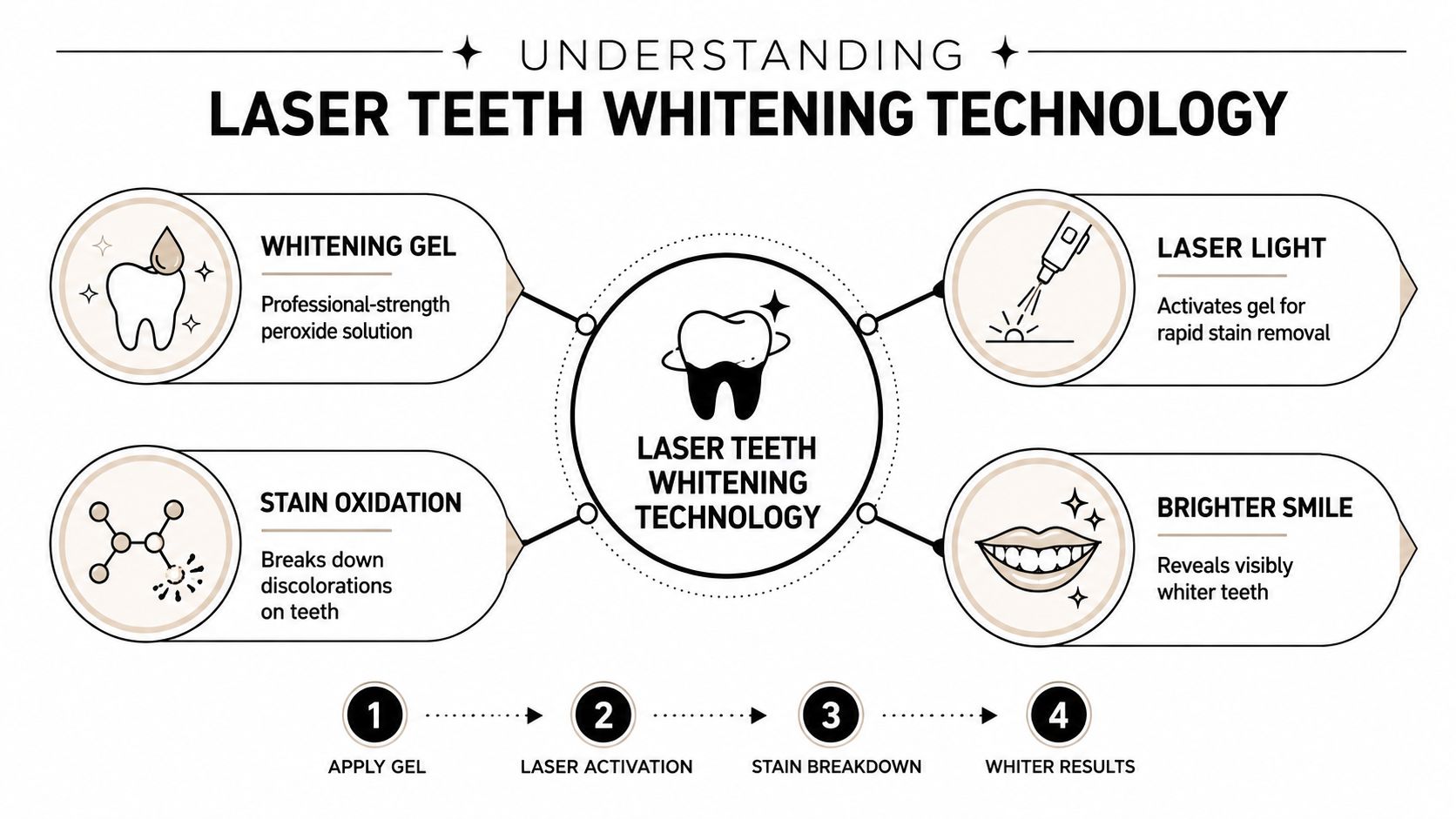
A simple comparison helps. The whitening gel is like the active cleaning ingredient. The laser is the tool that speeds that ingredient up. One does the chemical lifting. The other helps direct and intensify the reaction so treatment can be completed in the office instead of over many days at home.
How the technology works in plain language
Here is the process broken down clearly:
A professional whitening gel is applied to the front surfaces of the teeth. This gel contains peroxide, which is the ingredient that breaks apart stain molecules trapped within the enamel and dentin.
The laser or curing light is aimed carefully at the treated teeth. Its energy supports the whitening reaction in a controlled setting.
The stain molecules are altered so they reflect less color. That is why the teeth look lighter after treatment.
Patients often ask whether the “laser” is doing the whitening. The more accurate answer is that the gel does the bleaching, while the light helps the gel perform more efficiently. That distinction matters because it explains why professional oversight is such a large part of the treatment.
Why professional technology matters
Store-bought products use a similar general idea, but the patient experience is very different in a dental office. At our Walnut Creek practice, we are not placing a stronger gel and hoping for the best. We are checking whether your enamel is healthy enough, whether your gums need protection, whether your discoloration is likely to respond, and whether existing dental work could limit how even the final shade looks.
That evaluation changes the quality of the result.
For example, yellowing from coffee, tea, or age often responds better than gray discoloration, internal staining, or color changes linked to trauma. Crowns, veneers, and tooth-colored fillings also keep their current shade. If a patient does not know that before whitening, the result can feel uneven or disappointing even if the natural teeth whiten well.
What patients are really paying for
The technology matters, but judgment matters just as much. A safe whitening appointment depends on choosing the right candidate, protecting the soft tissues, controlling sensitivity, and setting a realistic shade goal before treatment begins.
That is why laser whitening should feel less like buying a product and more like receiving a cosmetic dental service suited to your smile. In a well-run Walnut Creek office, the equipment is only one part of the process. The planning behind it is what helps produce a brighter result that still looks natural.
The Laser Whitening Procedure Step by Step
Many people feel better once they know exactly what happens in the chair. Laser teeth whitening is a controlled, structured appointment. Nothing about it should feel mysterious.
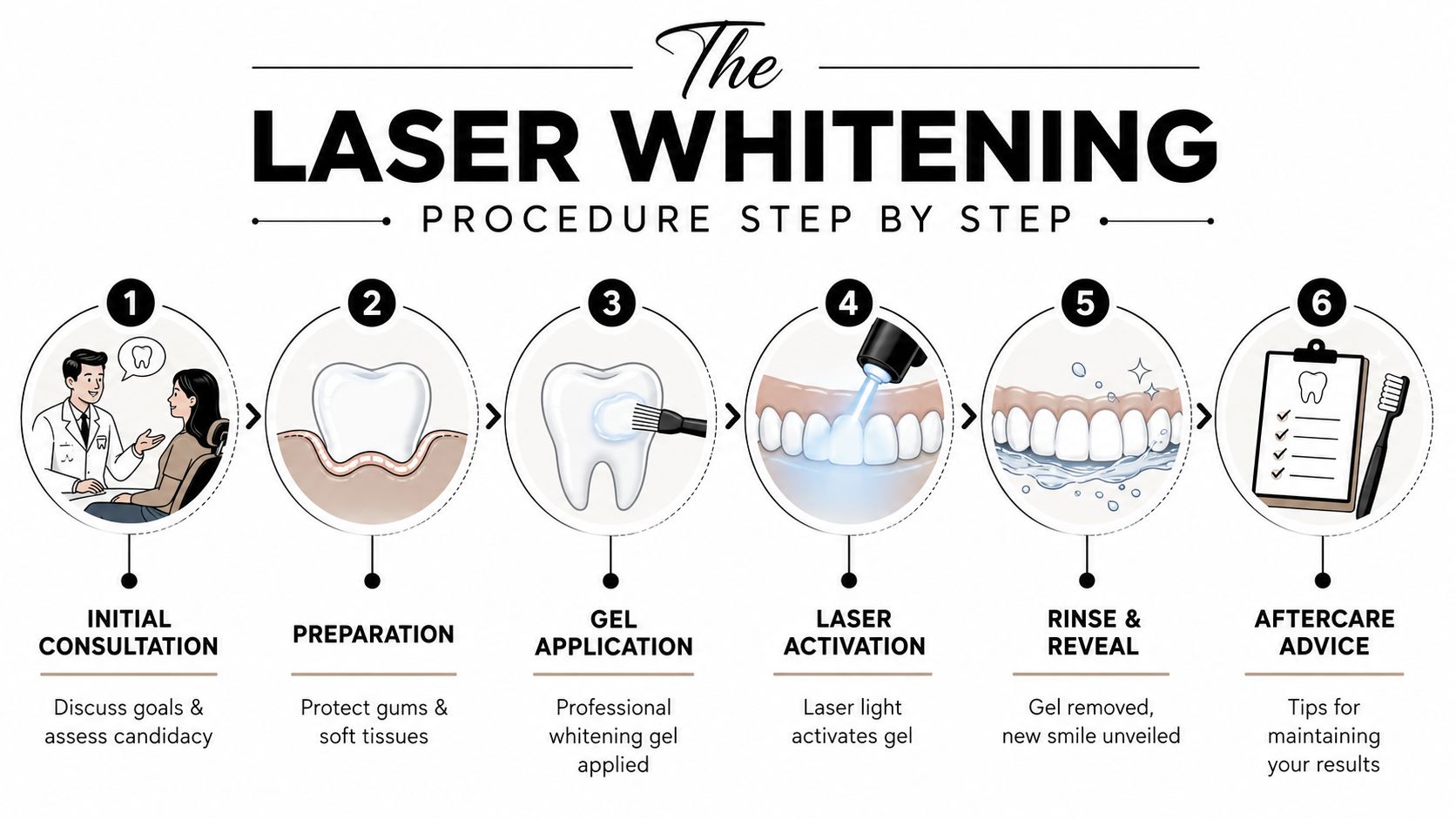
Here's the visual overview first.
What happens at the appointment
The visit begins with an exam and a conversation about your goals. If you have untreated decay, gum irritation, or a different cause of discoloration, the dentist may recommend addressing that first. This is one reason patients who are also looking for dental x-rays, cleaning and exams, or an emergency dentist often benefit from starting with a full evaluation rather than booking whitening blindly.
Next comes preparation. Your teeth are cleaned if needed, and the dental team places protective material over the gums and surrounding soft tissue. This keeps the strong gel where it belongs and helps make the visit safer and more comfortable.
Then the whitening gel is applied to the visible tooth surfaces.
How the laser is used
After the gel is in place, the laser is positioned carefully. In one documented clinical protocol, the dental laser handpiece is held about 1 mm from each tooth quadrant without touching the gel, delivering 200 Joules of laser energy per quadrant for about 30 seconds (laser positioning and energy protocol).
Patients often expect this part to feel intense, but many describe it as just sitting still while the team monitors each stage. Depending on the system used, whitening may happen in repeated cycles with careful rechecking between rounds.
When the treatment is complete, the gel and barriers are removed, your teeth are rinsed, and you get a first look at the result. That final reveal is one reason in-office whitening is so appealing. You don't have to wait days to see whether anything changed.
If you're nervous about whitening, ask the office to walk you through each step before the appointment starts. Knowing the sequence helps a lot.
Benefits and Comparisons to Other Whitening Methods
A patient in Walnut Creek often asks a practical question at this point. “If I can buy whitening strips at the store, what am I really paying for with laser whitening?”
The short answer is speed, chairside supervision, and a more controlled cosmetic plan. Laser whitening is a premium option, so the right comparison is not just “Which one whitens?” It is “Which approach fits your timeline, comfort level, dental history, and budget?”
At our practice, that conversation is part of the experience. Some patients want a brighter smile before a wedding, interview, or reunion and care most about seeing change in one visit. Others are happy with a slower result if the cost is lower. Both are reasonable goals.
What patients usually compare
Four factors usually matter most:
- Speed of results
- Level of professional supervision
- Comfort and convenience
- Overall cost
Cost is usually where the differences become easiest to see. Laser whitening is often around $1,500 per session, standard in-office whitening averages about $500 to $650, and at-home kits are generally under $100, based on the figures summarized here (teeth whitening cost comparison and statistics).
That price gap matters. A whitening treatment should feel clear and predictable, not confusing. In a Walnut Creek consultation, we would talk through what you are hoping to improve, how quickly you want to see it, and whether a premium same-day treatment makes sense for you or whether a simpler in-office or take-home option would give you a better return.
Teeth Whitening Options Compared
| Feature | Laser Whitening | Standard In-Office | At-Home Kits/Strips |
|---|---|---|---|
| Professional supervision | Yes | Yes | No or limited |
| Whitening agent strength | Higher professional-strength gel | Professional-strength gel | Lower-strength consumer product |
| Speed | Fast, often visible in one visit | Visible in-office improvement, but depends on protocol | Slower, gradual |
| Convenience | Single office appointment | Office appointment | Home use over time |
| Cost | Around $1,500 per session | About $500 to $650 on average | Generally under $100 |
| Best fit | Patients seeking premium, fast cosmetic change | Patients wanting professional whitening at lower cost | Patients prioritizing budget and convenience |
The honest trade-off
Laser whitening can feel like choosing express service instead of standard service. The destination may be similar, but the route is faster and more closely monitored.
That said, patients deserve a straight answer about the light itself. The American Dental Association explains that light activation shows no added benefit in whitening amount, persistence, or sensitivity reduction compared to bleaching alone, and it may increase tooth sensitivity when 25% to 35% hydrogen peroxide is used (ADA guidance on whitening lights and sensitivity).
So why do some patients still choose it? Usually because they value the in-office experience. They want a dentist to evaluate the shade, protect the gums, watch for sensitivity, and help them make a cosmetic decision with real-time guidance. For the right patient, that reassurance is part of the service.
The best whitening method is the one that matches your teeth, your schedule, and your expectations. In our Walnut Creek office, the goal is not to push the most expensive option. It is to help you choose the safest and most satisfying one.
Is Laser Teeth Whitening Right for You
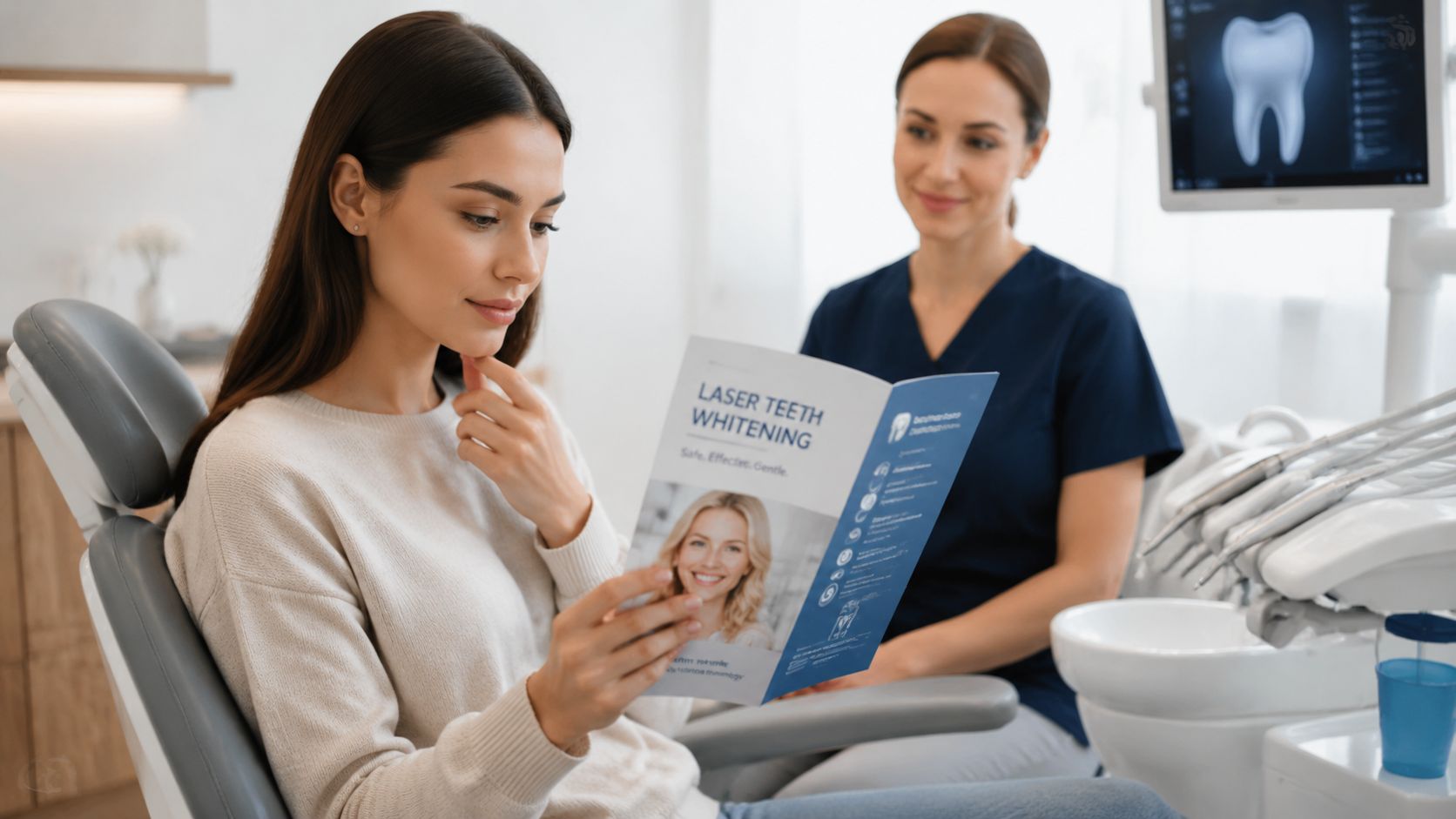
Laser whitening isn't a one-size-fits-all service. The best candidate is someone with healthy teeth and gums, realistic expectations, and stain patterns that are likely to respond well.
People who often do well with treatment
Laser whitening is often a better fit for patients with external staining from everyday habits. Coffee, tea, tobacco, and similar surface stains are common reasons people seek cosmetic whitening. Patients also tend to do better when their enamel is in good condition and they don't have untreated gum disease or active decay.
A consultation matters because not all discoloration is the same. Some internal stains respond less predictably. Existing crowns, fillings, and veneers won't whiten the same way natural enamel does, which can create uneven color if that isn't discussed ahead of time.
The question most patients ask first
Usually, it's not “Will it work?” It's “Will it hurt?”
Temporary tooth sensitivity is the most common side effect. Research on whitening sensitivity reports that post-treatment dental hypersensitivity affects 30% to over 78% of patients during whitening procedures (reported sensitivity range in whitening research).
That range is broad because sensitivity depends on the patient, the gel, the protocol, and the condition of the teeth before treatment. The important point is that sensitivity is common enough that a dentist should talk about it openly, not treat it like an afterthought.
If your teeth are already sensitive to cold air, ice water, or sweet foods, mention that before any whitening appointment.
When another option may be smarter
Laser whitening may not be the first recommendation if you have:
- Untreated dental problems such as cavities, gum inflammation, or exposed root surfaces
- Visible restorations like crowns or fillings on front teeth that won't change color
- Deep intrinsic discoloration that may respond better to another cosmetic plan
- A lower tolerance for sensitivity and a preference for slower, gentler whitening
A full exam is beneficial. Patients who searched dentist near me often come in wanting whitening and leave with a better plan overall. Sometimes that includes preventive care first. Sometimes it includes cosmetic treatment. Sometimes it means addressing restorative concerns before whitening so the final smile looks even and natural.
Maintaining Your Results with Your Walnut Creek Dentist
Whitening doesn't end when you leave the office. What you do afterward has a big effect on how long your smile stays brighter.
Laser whitening results can last from several months up to three years, depending on oral hygiene and dietary habits, which is why professional maintenance matters (how long whitening results may last).
The first few days matter most
Right after whitening, your teeth can be more prone to picking up new stains. A simple aftercare plan helps protect your result.
- Choose lighter foods and drinks at first. If something is known to stain a white shirt, it can also stain recently whitened teeth.
- Brush and floss consistently. Daily home care helps keep new surface stains from settling in.
- Rinse after dark beverages. Even if you still enjoy coffee or tea, rinsing with water afterward can help.
- Keep regular cleanings on schedule. Professional cleanings remove buildup that can dull the appearance of your smile over time.
Maintenance is part of the investment
A common mistake is treating whitening like a one-time event instead of part of ongoing dental care. The healthiest, most attractive long-term results usually come from pairing cosmetic treatment with regular exams, cleanings, and a maintenance plan that fits your habits.
That's also why patients looking for a dentist in Walnut Creek, CA often benefit from choosing a practice that can handle more than whitening alone. If you ever need preventive care, restorative dentistry, evaluation for a painful tooth, or even guidance about future options like tooth extraction or implants, it helps to have one dental home that already knows your smile.
Good whitening results last longer when your routine dental care is steady.
For practical tips on protecting a brighter smile after treatment, this guide to maintaining teeth whitening results is a useful next read.
A brighter smile should never come at the expense of comfort, safety, or trust. The best whitening experience starts with an honest conversation, a careful exam, and a treatment plan built around your teeth, not a generic sales pitch.
If you're ready to explore whether laser teeth whitening fits your goals, schedule a consultation with William M. Schneider, DDS. Patients in Walnut Creek and nearby East Bay communities can get thoughtful cosmetic guidance, clear expectations, and personalized dental care in a welcoming office that also supports everything from routine cleanings and exams to restorative treatment and long-term smile maintenance.