You're sitting in the Walnut Creek parking lot, putting off a crown because the thought of the injection feels worse than the tooth itself. That reaction is common, understandable, and nothing to be embarrassed about. For many adults searching for a dentist near me or a dentist in Walnut Creek, CA, the needle is the primary barrier to booking care.
At William M. Schneider, DDS, comfort begins before treatment starts. Modern painless dental injection techniques combine surface-numbing gel, buffered anesthetic, careful communication, and controlled delivery so many patients notice pressure rather than a sharp sting. The important detail is that an injection has two separate discomfort points, and each one needs a different solution.
When the Shot Is the Hardest Part of Going to the Dentist
An anxious patient may postpone a crown, filling, root canal, or tooth extraction for months because of one remembered moment. The fear often isn't about the entire appointment. It's the image of a syringe approaching the gum, followed by the expectation of burning, pressure, or a sudden jolt.
That's the moment Dr. Schneider's Walnut Creek practice is designed to address. A patient who needs restorative dentistry shouldn't have to choose between living with a dental problem and reliving an unpleasant injection. With careful preparation, topical gels, buffered anesthetic, and controlled flow, routine dentistry can feel much closer to pressure-only than many people expect.
The goal isn't to promise that every injection will feel identical for every patient. Local anesthesia remains widely used, safe, and effective, while newer delivery approaches refine the experience rather than replace established dental care, as explained in the 2022 systematic review of computerized dental anesthesia.
Comfort starts with understanding
Most patients want to know exactly what will happen. The clinician dries the tissue, applies topical anesthetic, waits for it to work, and then places the needle carefully. The anesthetic solution is delivered slowly, often with buffering or computer-controlled regulation when appropriate.
A useful expectation: You may feel touch, movement, or pressure. Tell the dental team immediately if you feel anything sharp.
This distinction matters for people seeking a cosmetic dentist near me, a provider for dental implants near me, or an emergency dentist in Walnut Creek. Whether the appointment involves a crown, teeth whitening consultation, implant planning, or urgent pain relief, the team can discuss injection comfort before treatment begins.
The rest of the experience becomes easier to understand once you separate the brief needle entry from the slower movement of anesthetic into the tissue.
Why Dental Injections Hurt and What Really Drives the Discomfort
A dental injection isn't one sensation. It has two main phases, and they produce discomfort for different reasons.
Phase one is needle insertion
The first phase occurs when the needle passes through the gum or other oral tissue. Patients may notice a quick pinch or sharp sensation. Tissue tension, the sharpness and design of the needle, and the location of the injection all influence what you feel.
The mouth also contains areas that are naturally more sensitive. The palate, for example, has firm tissue with limited room beneath it, so even a carefully placed injection requires thoughtful technique. A topical anesthetic can reduce surface sensation, but it doesn't solve every source of discomfort at deeper levels.
Phase two is anesthetic deposition
The second phase happens as the anesthetic solution enters the tissue. A rapid injection can stretch tissue faster than it can accommodate the fluid, creating pressure and a burning sensation. The acidity of an anesthetic solution can add to the sting, particularly when the medication is delivered quickly.
Anxiety can intensify both phases. A nervous patient may tighten facial muscles, hold the breath, and focus closely on every movement. That heightened attention can make a small sensation feel more threatening, even when the clinical procedure is proceeding safely.
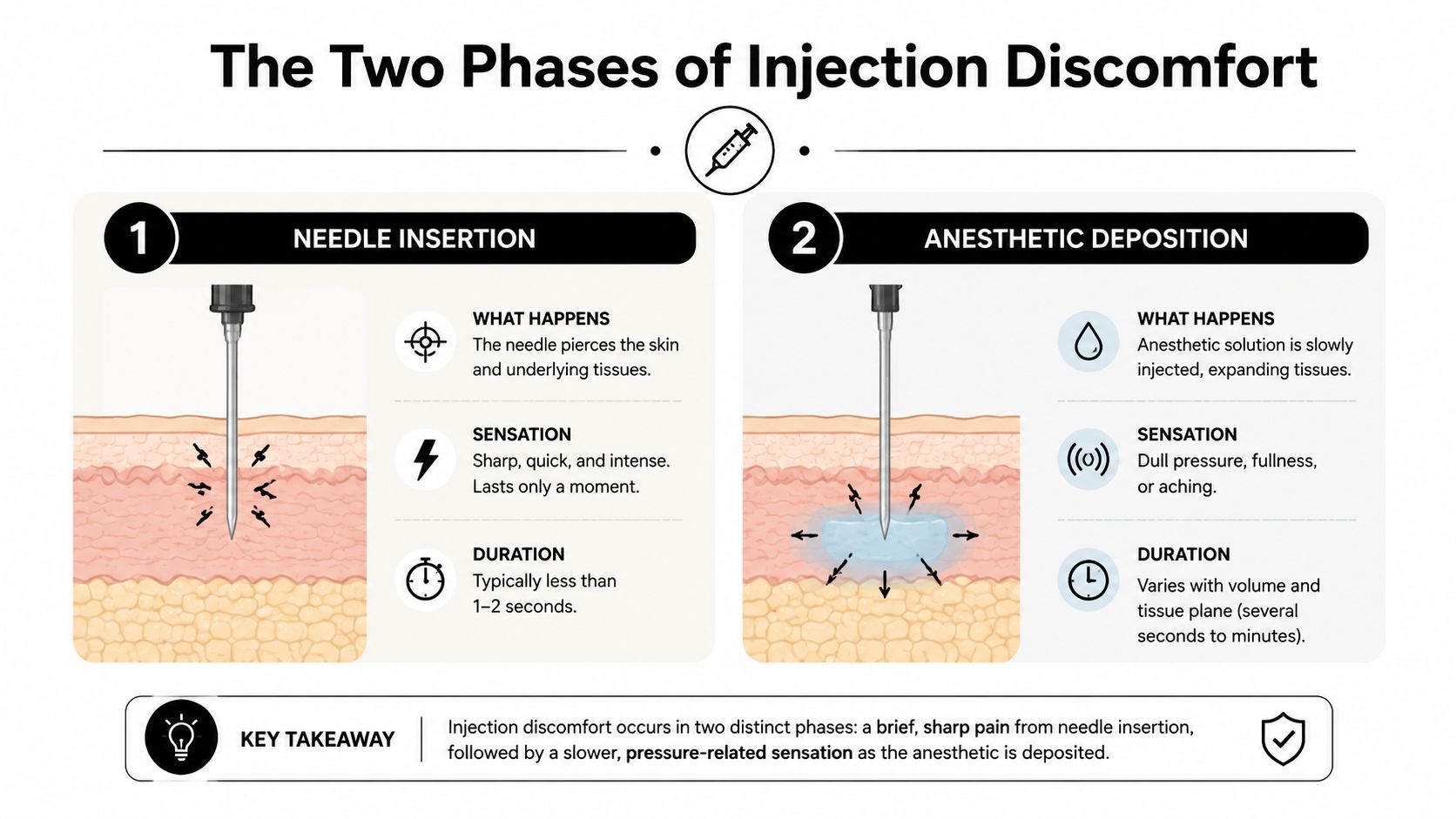
This two-phase model explains why no single comfort trick makes every injection painless. Topical anesthetic primarily addresses surface entry, while slow delivery and buffering target the solution's movement through tissue. Computer-controlled systems can help regulate that second phase, though evidence suggests the effect may be more consistent during deposition than during insertion, especially for palatal injections, as discussed in this review of computerized local anesthesia and injection pain.
Topical Anesthetics and Buffered Lidocaine for a Gentler Start
Topical anesthetic and buffered lidocaine work differently, so they shouldn't be treated as interchangeable.
Topical benzocaine or lidocaine gel is placed directly on the gum before needle insertion. The tissue should be dried first, because saliva can dilute the medication or create a barrier. Guidance for reducing injection discomfort recommends allowing topical anesthetic to work for about one to two minutes, as described in this clinical discussion of painless local anesthetic injections.
Clinical trials support the value of topical anesthesia for needle penetration. One randomized trial found that a microneedle patch combined with 5% topical lidocaine gel reduced visual analogue scale pain during dental infiltration, with the largest reported mean difference being 12.7 points palatally after repeated challenges, with p < 0.001. Other comparisons were also statistically significant, including p = 0.014 and p = 0.025, depending on the challenge and injection site, according to the clinical trial review of topical anesthesia before dental injections.
Buffered lidocaine addresses a different issue. Sodium bicarbonate raises the anesthetic's pH, reducing the acidity associated with stinging and potentially helping the anesthetic take effect sooner. Recent clinical data reported lower pain scores of 2.8 ± 0.7 versus 4.2 ± 0.9 and onset of 2.3 versus 4.7 minutes in one comparison, although another randomized extraction study found no clear advantage. The results may depend on the procedure, inflammation, and exact formulation, as reported in this study of buffered lidocaine.
| Feature | Topical Anesthetic | Buffered Lidocaine |
|---|---|---|
| Main target | Surface needle insertion | Acidity and discomfort during solution delivery |
| Typical role | Helpful before superficial, anterior, or sensitive-site injections | Useful when deeper anesthesia or a longer procedure is planned |
| Patient experience | Less surface prick sensation | Less burning and potentially faster onset |
| Important limitation | Doesn't numb deep tissue by itself | Doesn't replace slow, controlled delivery |
For nervous patients, Dr. Schneider's Walnut Creek team can discuss using both approaches as part of a personalized comfort plan.
Slow Infiltration and Computer-Controlled Delivery Systems
The speed and pressure of an injection often matter more than the needle alone. A sharp needle placed carefully may cause only a brief sensation, while anesthetic pushed rapidly can create pressure and burning as the tissue stretches.
Why slow infiltration helps
Slow infiltration means releasing anesthetic at a pace the surrounding tissue can accept. The clinician advances gradually, waits for the medication to take effect, and adds more only when the tissue has adapted. This approach is especially important in firm areas, including the palate, where there is less room for fluid expansion.
Manual slow injection can work well when the dentist maintains a steady hand and gives the tissue time to respond. A computer-controlled device adds another layer of consistency by regulating plunger movement and flow. The patient may still feel pressure, but the sudden bolus sensation associated with a fast manual push is less likely.
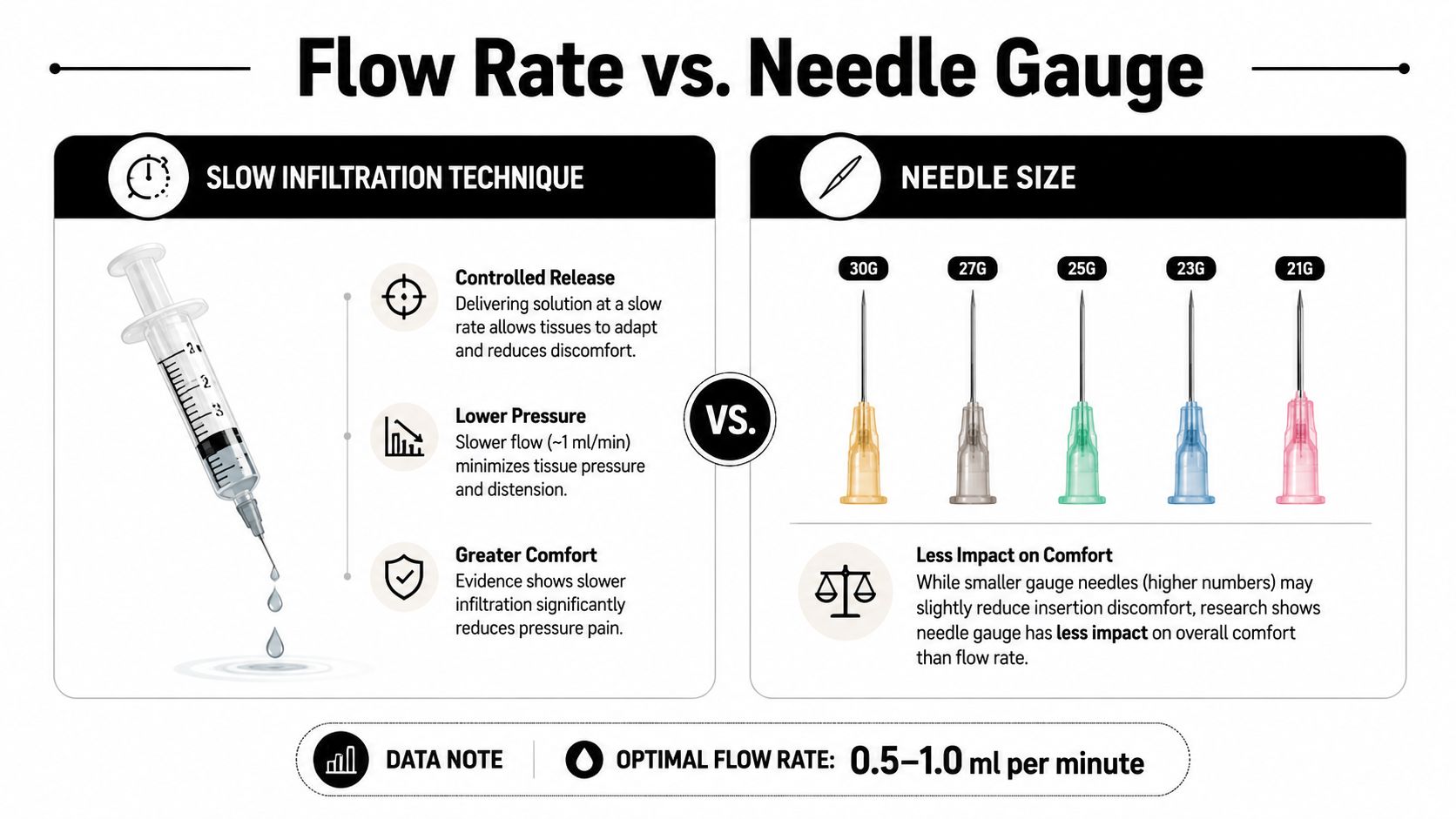
How computer-controlled delivery differs
Systems such as The Wand and CompuDent use microprocessor-guided delivery to regulate plunger speed and maintain a controlled flow despite changes in tissue density. The technology doesn't eliminate the needle, but it can give the clinician more predictable control over deposition.
A systematic review found that computer-controlled local anesthetic delivery generally performed better than conventional syringe techniques for pain, psychological comfort, and predictable anesthesia. A later review also concluded that CCLAD was significantly less painful than traditional anesthesia in many clinical settings, particularly when needle insertion was slow and anesthetic deposition was controlled, as summarized in this systematic review of computer-controlled local anesthetic delivery.
| Delivery approach | Flow control | Patient may notice | Typical consideration |
|---|---|---|---|
| Traditional syringe | Depends heavily on manual technique | Pinch, pressure, or rapid fullness | Familiar and widely available |
| Manual slow injection | Controlled by the clinician | Gradual pressure | Requires patience and careful pacing |
| Computer-assisted delivery | Microprocessor-regulated | Often gradual pressure | Useful where consistent flow is important |
In Walnut Creek, Dr. Schneider can adjust the delivery approach to the injection site and procedure. The aim is not to rush toward numbness. It's to build numbness gradually while keeping you informed.
Vibrating Devices Jet Injectors and Other Emerging Options
Patients often hear the phrase needle-free dentistry and assume every newer device works the same way. It doesn't. These technologies differ in depth, comfort, availability, and evidence.
Vibration and counter-stimulation
Vibrating attachments place movement near the injection site. The basic explanation is called gate-control theory. Non-painful signals from vibration compete with pain signals as they travel toward the brain, which may make the needle sensation less noticeable.
The evidence is mixed. Some patients find vibration distracting and helpful, while reviews report inconsistent benefits across studies. A vibrating device may be a reasonable add-on, but it shouldn't be presented as a universal replacement for topical anesthetic, slow insertion, or controlled deposition.
Jet injectors and nasal options
Jet injectors deliver anesthetic through a high-pressure stream rather than a conventional needle. They can provide useful soft-tissue anesthesia in selected situations, but the stream may create its own pressure sensation and may not reach the depth needed for every molar procedure.
Intranasal sprays represent another situational option. They may be useful for selected upper-jaw procedures, but they aren't suitable for every tooth or patient. Emerging peptide-delivery research is interesting from a scientific perspective, yet it remains a developing area rather than a routine option patients should expect at a general dental appointment.
| Technology | Mechanism | Evidence strength | Best use |
|---|---|---|---|
| Vibrating attachment | Counter-stimulation near the injection site | Mixed | Patients who benefit from sensory distraction |
| Jet injector | High-pressure anesthetic stream without a conventional needle | Uneven and situational | Selected superficial or soft-tissue anesthesia |
| Intranasal spray | Anesthetic delivered through the nasal route | Limited for broad dental use | Carefully selected upper-jaw situations |
| CCLAD | Regulated flow and pressure through a conventional needle | Better supported, with study variation | Patients concerned about deposition pain |
Recent reviews describe these options as a growing menu, while also emphasizing uneven evidence and the need for better randomized trials. The 2022 review of computerized dental anesthesia is useful for understanding why a technology can be promising without being appropriate for every procedure.
The practical question isn't, “Which device is newest?” It's, “Which phase of discomfort is most concerning for me, and which approach fits the planned treatment?”
What to Ask For Before Your Appointment in Walnut Creek
You don't need to arrive with technical knowledge. A short conversation with the front desk or clinical team can help the dentist prepare for your specific concerns.
Ask these questions before treatment
- Buffered anesthesia: Does the practice use sodium bicarbonate buffering when appropriate for the anesthetic and procedure?
- Computer-controlled delivery: Can the dentist use a computer-controlled system for sensitive areas or for a patient with a difficult injection history?
- Topical anesthetic: Will the team dry the tissue and allow topical gel enough contact time before needle insertion?
- Communication signals: Can you agree on a hand signal that means “pause” before treatment begins?
Scheduling early in the day can reduce the time available for anticipatory worry. A light meal may help you feel steadier, unless your dentist has given different instructions. Avoiding caffeine may also be sensible if it makes you feel more alert, tense, or sensitive.
Tell the team what happened last time. “The anesthetic burned,” “I felt the needle,” and “I couldn't get numb” are useful clinical details, not complaints.
Nitrous oxide, often called laughing gas, helps many patients feel calmer while remaining responsive. Oral conscious sedation creates a deeper level of drowsiness and requires more planning, including transportation arrangements. The appropriate option depends on your health history, medications, procedure, and anxiety level. You can learn more about available approaches through the practice's sedation dentistry options.
Use the appointment call to explain whether your concern is needle entry, burning during the injection, difficulty getting numb, or fear of losing control. Dr. Schneider's Walnut Creek team welcomes that discussion before any injection, and asking for comfort measures is a normal part of modern dental care.
What a Comfort-Focused Visit With Dr. Schneider Looks Like
A comfort-focused appointment starts at arrival, not when the syringe appears. The intake conversation can identify triggers such as the sight of a needle, a previous painful injection, a strong gag reflex, or fear of not being heard.
In the operatory, the team can offer simple ways to reduce sensory overload, such as dimmer lighting, music, or noise-canceling headphones. Before any injection, the gum is dried and topical benzocaine gel is allowed to sit for about two minutes so the surface has time to respond.
The injection is paced around you
For a palatal or block injection, Dr. Schneider may use buffered articaine when clinically appropriate. In a particularly sensitive area, a computer-controlled pen can regulate delivery while the anesthetic is introduced at a slow, tolerable rate.
You may notice pressure, movement, or a feeling of fullness. You shouldn't feel expected to tolerate sharp pain. A pause signal lets you stop the process, ask a question, or allow more time for the area to become numb.
For longer appointments or substantial anxiety, nitrous oxide or oral sedation may be discussed as an additional layer. Sedation doesn't remove the need for careful local anesthesia, and the team still monitors you, provides breaks, and explains each stage. The practice's Walnut Creek sedation dentistry care can help you review whether sedation fits your appointment and medical history.
Before dismissal, post-operative instructions are provided verbally and in writing. That matters after a crown, root canal, tooth extraction, or implant procedure because patients should know what sensations are expected, when to protect numb lips and cheeks, and whom to contact with a concern.
The experience should feel visible rather than mysterious. You know which comfort steps are being used, why they're being used, and how to request a pause.
Book Your Visit and Common Questions About Painless Injections
If injection anxiety has kept you from a needed cleaning and exam, dental x-rays, crown, root canal, implant consultation, or tooth extraction, you can start with a comfort conversation. Contact Dr. William M. Schneider, DDS in Walnut Creek by phone or through the practice's online appointment request, and let the team know that you'd like to discuss painless injection techniques before treatment.
How long will numbness last, and can I shorten it?
The duration depends on the anesthetic, injection site, procedure, and individual response. Protect your cheek and tongue until normal sensation returns, and avoid chewing or drinking anything hot while you're numb. Ask the dentist before trying any method intended to reverse numbness.
Do these techniques work for root canals and extractions?
They can be incorporated into treatment for root canals, extractions, crowns, implants, and other procedures that require local anesthesia. The dentist may choose a different injection site or supplemental technique depending on infection, inflammation, anatomy, and how completely the tooth becomes numb.
Are painless injection techniques safe during pregnancy or with complex medical conditions?
Local anesthetic selection and sedation planning should be individualized during pregnancy and for patients with medical conditions or medication considerations. Tell the dental team about pregnancy, allergies, prescriptions, supplements, and previous reactions before treatment so the dentist can make an appropriate plan.
Will insurance cover buffered anesthetic or sedation?
Coverage varies by plan and by the service being provided. Ask the practice to explain whether buffering, computer-controlled delivery, topical anesthetic, nitrous oxide, or oral sedation is included, separately billed, or subject to your plan's limitations.
You can pause treatment at any time. Comfort upgrades aren't a luxury add-on at a patient-focused practice. They're part of a careful plan that helps anxious patients receive preventive dental care, cosmetic dentistry, restorative treatment, dental implants, emergency dental services, and ongoing oral health support.
William M. Schneider, DDS offers personalized local anesthesia planning, topical numbing, controlled delivery, and sedation discussions for Walnut Creek patients who feel nervous about injections. Visit William M. Schneider, DDS to request an appointment or comfort consultation before your next dental treatment.