A child wakes up with a swollen cheek before school. A baseball takes a bad hop. A back tooth starts hurting after dinner and the tears come fast. In those moments, most parents aren't searching for a lecture. They need a calm answer to three questions right away. What do I do first, who do I call, and does my child need the ER?
If you're looking for an emergency dentist for kids in Walnut Creek, CA, the first step is to slow the moment down. Many pediatric dental emergencies look dramatic, but the right first move can protect the tooth, reduce pain, and help you get to the right kind of care faster. Some situations need an emergency dentist. A smaller number need the hospital.
Families in Walnut Creek and the East Bay also want practical guidance from a dental office they can trust for more than one urgent visit. That matters whether you're searching for a dentist near me, a dentist in Walnut Creek, CA, help with a painful tooth extraction, or long-term care like cleaning and exams, dental X-rays, restorative dentistry, cosmetic dentistry, teeth whitening, or even dental implants near me later in life. In a true dental emergency, though, the priority is simple. Keep your child safe, protect the tooth if possible, and get expert help without delay.
Your Guide to Handling a Child's Dental Emergency in Walnut Creek
It is 7:30 on a school morning. Your child slips in the bathroom, starts crying, and now there is blood in the sink. Or dinner stops halfway through because a back tooth suddenly hurts so much they will not chew on one side. In Walnut Creek, those moments usually force one fast decision. Call a pediatric dentist now, head to the ER, or watch closely at home for a short window.
Parents often worry more about making the wrong call than about the injury itself. That is understandable. Some dental problems look dramatic and can wait a few hours for a dental visit. Others look mild at first and need same day treatment to prevent infection, damage to a permanent tooth, or worsening pain. The first job is to sort the problem by urgency, not to diagnose everything on your own.
The American Academy of Pediatric Dentistry advises prompt evaluation for dental trauma, facial swelling, uncontrolled bleeding, and pain that interferes with eating or sleeping, as outlined in its guidance on management of acute dental trauma and urgent dental conditions in children.
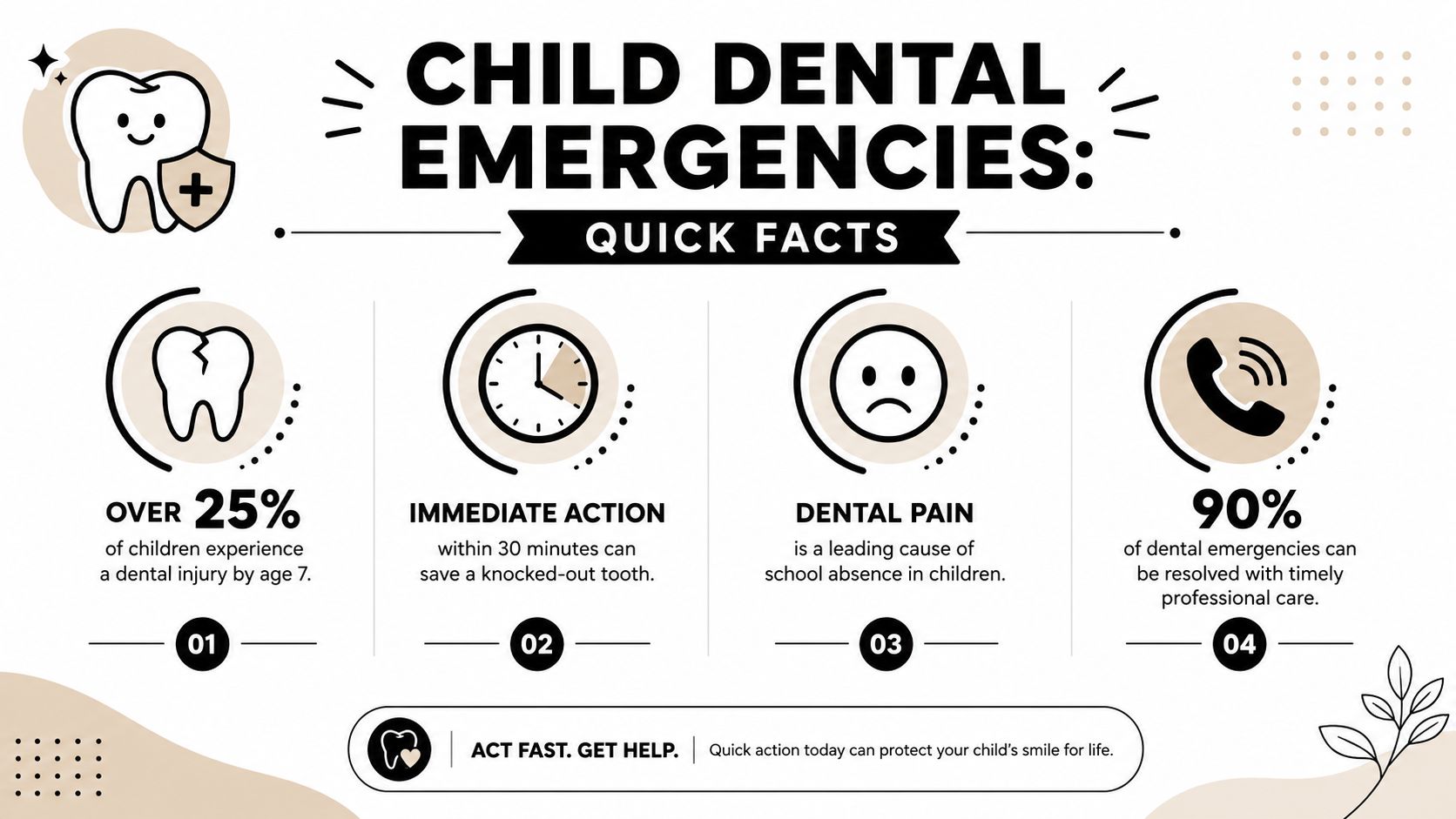
The first decision is usually the hardest
Most parents ask the same question first. “Can this wait until tomorrow?”
Sometimes yes. A tiny enamel chip with no pain, a mild lip bite that stops bleeding, or brief cold sensitivity after a bump may be watched while you call for advice. A child with strong tooth pain, facial swelling, a permanent tooth that feels loose after a hit, or a broken tooth with a sharp or exposed center should be seen quickly.
A simple Walnut Creek playbook helps. Call a pediatric dentist first for tooth injuries, mouth pain, broken fillings, dental swelling, or a knocked out or displaced tooth. Go to the ER first for trouble breathing, heavy bleeding that does not stop with pressure, a possible jaw fracture, a deep cut that may need stitches, or signs of concussion such as vomiting, confusion, or loss of consciousness. That division saves time and gets your child to the right team.
Start with three quick checks
Before you get in the car, do these checks in order:
- Check your child's overall condition first: Breathing trouble, fainting, vomiting, severe drowsiness, or neck injury symptoms put medical care ahead of dental care.
- Look inside the mouth with good light: Check whether a tooth is cracked, pushed sideways, missing, bleeding from the gums, or surrounded by swelling.
- Ask a few direct questions: Does it hurt to bite? Is the pain throbbing on its own? Is the cheek or gum getting bigger? Those answers help decide how quickly your child needs to be seen.
The first 15 minutes set the tone. Keep your child upright. Use clean gauze for bleeding and a cold compress on the outside of the cheek for swelling. Save any broken tooth piece you can find. Then make the call. A calm, organized response usually leads to a smoother visit and a better chance of protecting the tooth.
First-Aid for Common Pediatric Dental Emergencies
The first 15 minutes matter because they help you control the situation before you get professional care. Start with your child, not the tooth. If they're crying hard, bleeding, or scared, bring the temperature of the moment down. Sit them upright, speak clearly, and use clean gauze, a cold compress, and a good light so you can see what happened.
This quick visual can help you stay organized while you're responding at home.
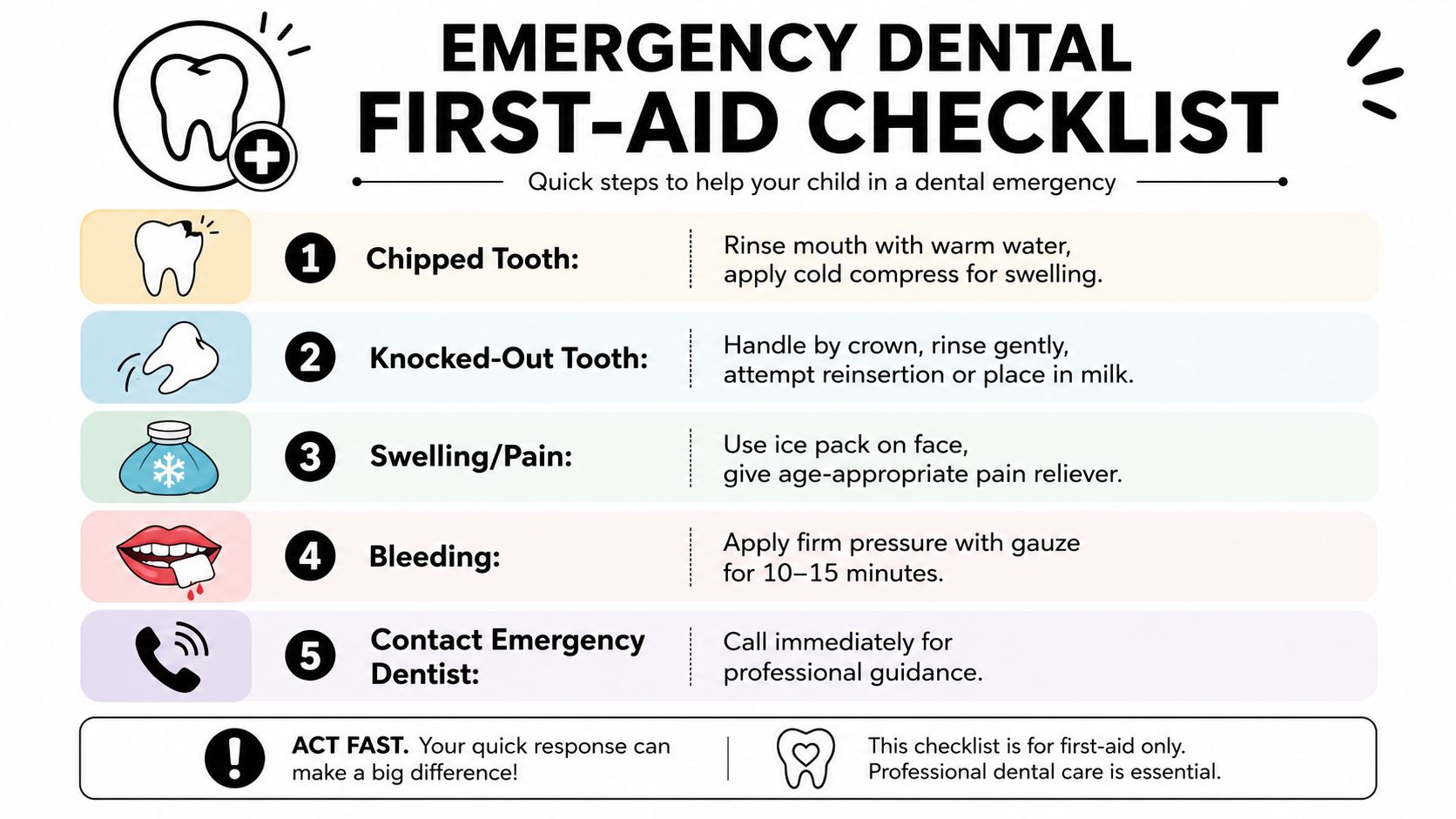
If a permanent tooth gets knocked out
This is one of the few dental situations where speed can make the difference between saving and losing the tooth. For a knocked-out permanent tooth, immediate replantation or storage in cold milk or saliva within 30 to 60 minutes is critical to save the tooth, as explained by this emergency dentistry guidance on avulsed teeth.
Do this in order:
- Find the tooth quickly. Pick it up by the crown, which is the chewing or visible part. Don't hold it by the root.
- Rinse gently if it's dirty. Use clean water briefly. Don't scrub it. Don't wrap it in tissue.
- If your child is old enough and calm enough, try placing it back in the socket. If that isn't realistic, place it in cold milk or saliva.
- Call for urgent dental care immediately.
What doesn't help is letting the tooth dry out on the counter or carrying it loose in a pocket.
A baby tooth is different. Don't try to reinsert a knocked-out baby tooth at home.
If a tooth is chipped or cracked
Some chips are cosmetic. Others are deep enough to expose the nerve or weaken the tooth badly.
- Rinse the mouth with warm water to clear away blood and debris.
- Use a cold compress on the cheek to help with swelling.
- Save any broken piece if you can find it.
- Cover a sharp edge carefully if it's cutting the tongue or lip. Dental wax can help if you have it.
- Avoid biting on that side until the tooth is examined.
A small chip with no pain can still turn into a bigger problem if the fracture line extends deeper than it looks.
If your child has a severe toothache
A true pediatric toothache often means something is happening below the surface. Food stuck between teeth can cause irritation, but deep decay, infection, or a damaged tooth can cause the kind of pain that wakes a child from sleep.
Try this:
- Rinse with warm water and have your child spit.
- Floss gently around the sore tooth in case trapped food is the trigger.
- Use a cold compress externally if the face looks puffy.
- Give an age-appropriate pain reliever if your child can safely take it.
- Do not place aspirin on the gum or tooth. It can irritate the tissue.
After you've done the basics, this short video gives a useful overview of common emergency steps for parents.
If the lip, tongue, or cheek is cut
Mouth tissues bleed more than parents expect, so this often looks worse than it is.
- Apply firm pressure with clean gauze or a clean cloth.
- Hold that pressure steadily instead of checking every few seconds.
- Use a cold compress or ice wrapped in cloth on the outside of the face.
- Seek medical care if the bleeding won't stop, the cut is deep, or the injury happened with a possible head or jaw injury.
The main mistake parents make is bouncing between too many home remedies. Clean the area, control bleeding, preserve the tooth if needed, and get professional advice.
Emergency Dentist or ER Making the Right Call
The hardest part for many parents isn't the first-aid. It's deciding where to go. A hospital ER is the right choice for a medical emergency. A dental office is the right choice for most tooth-related problems because that's where the equipment, imaging, and treatment are built for teeth, gums, and oral pain.
One sign that should push you to urgent dental action is infection. A pus-filled bump on the gums, facial swelling, or a fever with a child's toothache indicates a serious infection that needs immediate emergency dental attention, as noted in this guidance on urgent dentistry for kids.
Emergency Dentist vs. ER Guide for Parents
| Symptom | Call Your Emergency Dentist | Go to the ER |
|---|---|---|
| Severe toothache without head injury | Yes | No |
| Chipped or cracked tooth | Yes | No |
| Knocked-out permanent tooth | Yes, immediately | ER only if there is major facial injury too |
| Swelling of the gums or face from a tooth | Yes, immediately | ER if swelling affects breathing or swallowing |
| Pus-filled bump near a tooth | Yes | No |
| Lost filling or crown with pain | Yes | No |
| Bleeding from the mouth after biting lip or cheek | Usually, if mild and stops | Yes if bleeding won't stop |
| Suspected broken jaw | No | Yes |
| Tooth injury with loss of consciousness, vomiting, or confusion | No | Yes |
| Trouble breathing or swallowing | No | Yes |
A simple way to decide
Call an emergency dentist first when the problem is primarily the tooth, gum, or dental pain. Go to the ER when the problem is larger than the tooth, especially if it includes breathing trouble, uncontrolled bleeding, suspected fracture of the jaw, or signs of head trauma.
If your child can't breathe comfortably, can't swallow normally, or may have a head injury, skip the dental office and go straight to emergency medical care.
For families who need local urgent dental support, 24-hour urgent dental care in Walnut Creek can help clarify whether your child should come to the office or needs hospital evaluation first.
What usually doesn't work
What slows treatment most is going to the wrong place first. Many ERs can help with pain control and infection-related medical risk, but they usually aren't set up to treat the actual tooth problem on the spot. If the issue is a fractured tooth, pulp pain, or a tooth that needs stabilization, a dentist is generally the faster route to definitive care.
How to Find the Right Emergency Dentist for Your Child
When your child is in pain, availability matters. But availability alone isn't enough. You want a dentist who can evaluate an urgent problem efficiently, explain the situation in plain language, and care for a child who may be frightened, exhausted, or refusing to open wide.
That's why parents should ask a few direct questions when they call.
What to ask on the phone
Start with the practical points:
- Can you see children for same-day emergency care?
- Do you handle dental X-rays and urgent treatment in the office?
- How do you help anxious children stay calm during treatment?
- Are sedation options available when appropriate?
- Can you review insurance, fees, and expected treatment before starting?
A strong office won't dodge those questions. They'll answer them clearly and give you a sense of how the visit will flow.
Why speed matters with infection and swelling
Some parents hope a child can sleep off dental pain and come in later if it still hurts. That's risky when swelling is involved. Dental infections in children can become more serious within 24 to 48 hours, which is why same-day contact with a dentist is essential when significant pain or swelling appears, according to this emergency dental infection guidance.
That doesn't mean every toothache becomes dangerous. It means a child with worsening pain, visible swelling, or a broken tooth needs a real evaluation, not just pain medicine at home.
Look for a long-term fit, not just a fast appointment
A good emergency visit should also answer a bigger question. Do you trust this office with future care?
For many families, the best choice is a practice that can handle urgent care and routine visits under one roof. That makes follow-up easier if your child later needs a filling, monitoring, a new patient exam, updated dental x-rays, or preventive care to stop the problem from coming back. If you're comparing options, reviewing a local pediatric dentist in Walnut Creek can help you understand whether the office is set up for children as patients, not just emergencies as interruptions.
The right office doesn't just treat the tooth. The team also helps the child feel safe enough to come back without fear.
That's often the difference between a one-time urgent fix and a real dental home.
What to Expect at Your Child's Emergency Dental Visit
The waiting is usually harder than the visit itself. Once parents know what the appointment will look like, the tension in the room tends to drop. Children read their parent's expression first, so a predictable process helps everyone.
When you arrive, the front desk will ask what happened, when it happened, and whether the pain, swelling, or trauma has changed since you called. If your child fell, was hit, or has a broken tooth, details matter. A simple timeline helps the dental team decide what needs attention first.
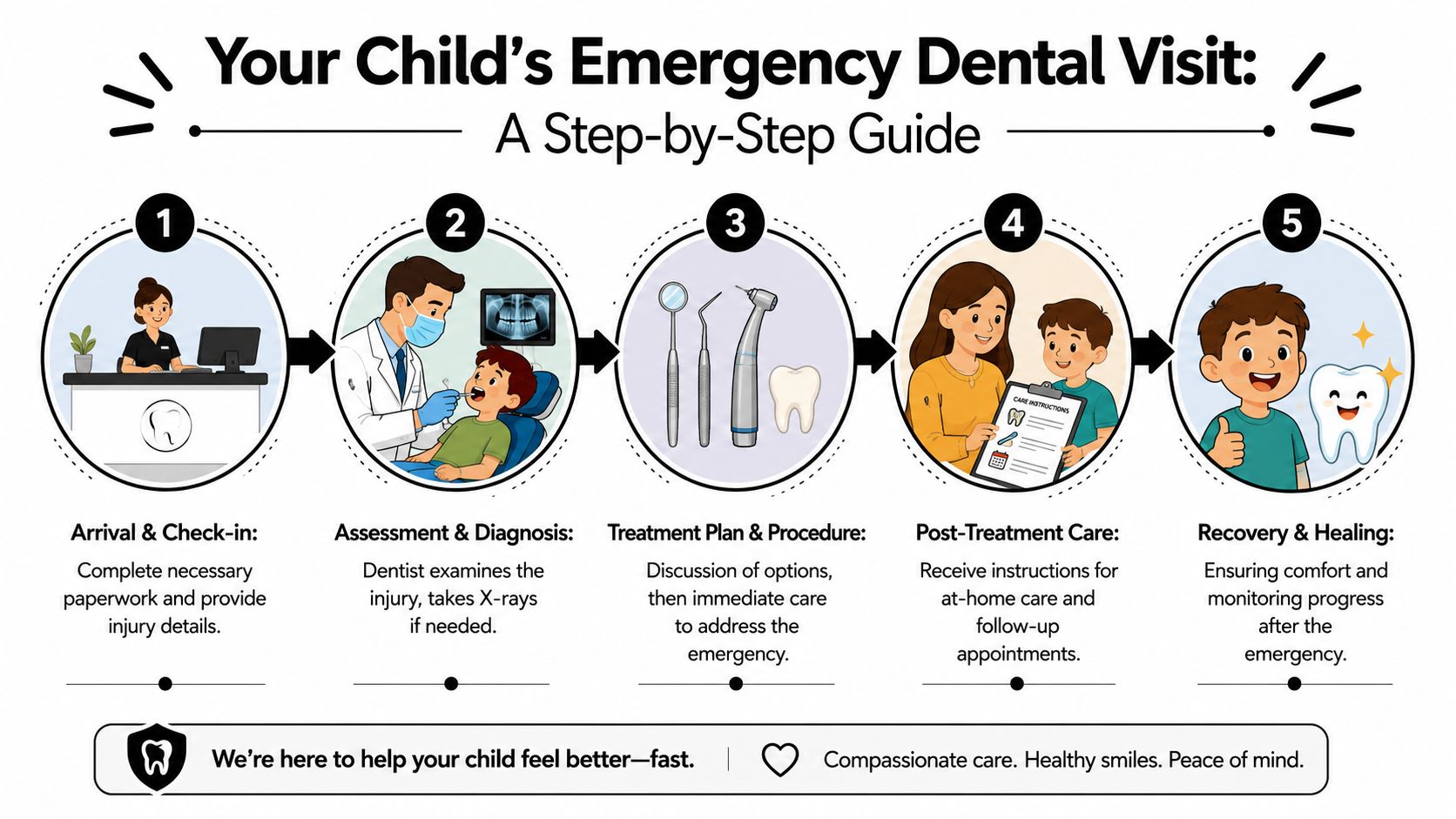
The first few minutes in the chair
The exam usually starts with a focused look at the painful or injured area, not a long routine appointment. The dentist checks the tooth, nearby gums, bite, and soft tissue. If the injury involved impact, the surrounding teeth may also be tested because the one that hurts most isn't always the only one affected.
Sometimes the next step is imaging. Dental X-rays can help show whether a tooth is cracked below the gumline, whether the root is affected, or whether swelling may be connected to infection deeper in the tooth.
How treatment decisions are made
Parents often expect treatment to begin immediately, and sometimes it does. But the best urgent care is deliberate. The dentist first decides what the problem is, then what will relieve pain safely, and then what protects long-term function.
That may involve:
- Stabilizing an injured tooth after trauma
- Smoothing or repairing a fractured tooth
- Opening and draining an infection when appropriate
- Prescribing medication when clinically indicated
- Discussing whether a tooth extraction is the healthiest option
- Scheduling follow-up restorative care
A child with significant anxiety may also need a slower pace, breaks, or comfort-focused techniques. In some cases, sedation support may be part of the discussion when appropriate and safe.
Most children do better when adults keep the language simple. “We're going to help your tooth feel better” works better than a long explanation while they're already scared.
Before you head home
You should leave with clear instructions. That includes what your child can eat, how to keep the area clean, what discomfort is normal, and what signs mean you should call again. If a tooth was repaired, monitored, or extracted, aftercare matters just as much as the procedure itself.
For families who are also looking for a long-term dentist in Walnut Creek, CA, an emergency visit often becomes the moment they decide whether this practice also fits their needs for cleaning and exams, restorative dentistry, and future smile care.
Preventing Future Dental Emergencies in Your Family
The call I like most is the one that never has to happen. In Walnut Creek, many pediatric dental emergencies often have subtle beginnings. A small cavity, a roughhousing fall that seemed minor, or a sports hit that did not look serious at first can turn into pain on a Friday night.
Once your child is comfortable again, prevention is the next practical step. The goal is simple: catch small problems while they are still easy to treat, and lower the chance that you are making another urgent decision after hours.
What lowers the odds of another emergency
Routine dental visits do more than clean teeth. They give your child a dentist who already knows their bite, past injuries, X-rays, and comfort level in the chair. That matters in an emergency because the office can make faster, safer decisions with better context.
A prevention plan that works for families usually includes:
- Regular cleanings and exams: Early decay, loose restorations, and enamel weak spots are easier to treat before they cause pain or swelling.
- A properly fitted mouthguard for sports: Store-bought guards can help, but a better fit usually means better protection and better compliance.
- Follow-up after even minor dental injuries: A bumped tooth can darken, loosen, or develop nerve problems later, even if your child feels fine that day.
- Daily habits that lower decay risk: Twice-daily brushing with fluoride toothpaste, age-appropriate flossing, and fewer frequent sugary snacks make a real difference.
- Preventive treatment when your dentist recommends it: Sealants, fluoride, and small early repairs can stop a manageable issue from becoming an urgent one.
One detail parents often miss is timing. If your child chips a tooth, takes a hit to the mouth, or starts complaining that one area “feels weird,” it is smart to call early while the problem is still developing. Waiting to “see if it settles down” is sometimes reasonable, but not if symptoms are building, the tooth is changing color, or chewing is getting harder.
Build a relationship before you need one
Families often only look for a local dentist after pain starts. That puts pressure on every decision. It is easier to act quickly when you already know which office to call, how after-hours guidance works, and whether the practice is a good fit for your child's age and anxiety level.
The same office that helps with urgent pain may also be the one you trust later for routine preventive care, fillings, crowns, cosmetic dentistry, or long-term tooth replacement needs as your family's dental needs change over time.
Children who know the office, the team, and the routine usually have a smoother emergency visit. Parents do too.
If your child has dental pain, swelling, a broken tooth, or an injury that needs prompt attention, William M. Schneider, DDS provides trusted dental care for Walnut Creek and the East Bay. From urgent evaluations and tooth extraction needs to preventive visits, restorative dentistry, cosmetic care, and long-term family dental support, the practice is here to help you act quickly and confidently. Contact the office to schedule an appointment and get clear guidance on the next best step for your child's smile.