Your tooth may look a little longer than it used to, or you may keep catching a rough edge near the gumline with your tongue. Sometimes the first clue is colder water hitting a spot that used to feel fine, or food starting to lodge where it never did before. If that sounds familiar, you're not overreacting, and you're not the only one in Walnut Creek asking what changed.
A gum is receding when the pink tissue that should sit snugly around the tooth begins to pull back and expose more of the tooth than before. That can happen without notice, and it can happen for different reasons, which is why the next step matters more than the first impression. At William M. Schneider, DDS in Walnut Creek, CA, patients often come in worried about appearance at first, then learn the more important question is whether the recession is from brushing mechanics, gum disease, or both.
When a Tooth Starts Looking Longer
A lot of people notice recession in a mirror before they ever feel pain. The tooth seems to have grown overnight, even though the tooth itself hasn't changed size. What changed is the gumline, and that shift can make the root surface more visible and more sensitive.
You might also feel a small notch near the base of the tooth, or notice that floss and food get trapped in a new place. Those little changes are easy to dismiss, especially if the area doesn't throb or swell. But gums don't usually retreat for no reason, and the pattern of what you're noticing gives useful clues.
What patients usually notice first
- A tooth that looks longer than the others.
- Cold sensitivity that used to be minor, but now catches your attention.
- Food trapping along the gumline, especially around one tooth.
- A visible root edge or a shallow dip where the gum used to cover more of the tooth.
A calm exam can sort out whether the issue is just a worn-looking margin or a sign of deeper support loss. That's the part many people skip until the problem becomes harder to manage.
Practical rule: A changing gumline deserves attention even when it doesn't hurt. Pain isn't the only sign that something needs care.
What Gum Recession Actually Means
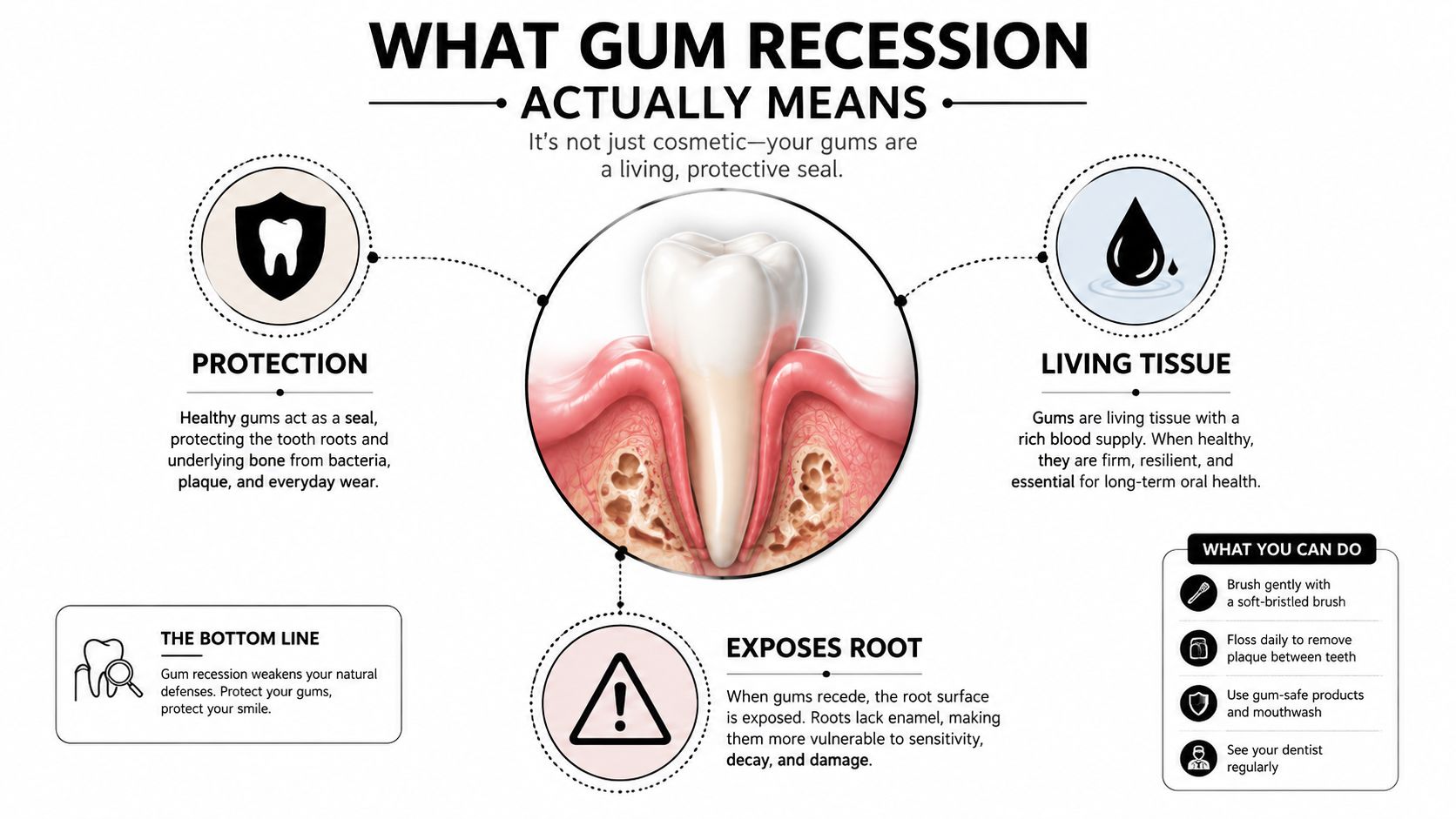
The gumline is living tissue that acts as a seal around each tooth. When that seal shifts downward, more of the tooth root becomes exposed, and the root surface is usually more vulnerable than the crown you see in the mirror. It is like a shoreline pulling back and leaving more beach uncovered.
That change matters for more than appearance. Exposed root surfaces can feel sensitive, and the gumline no longer protects the tooth quite as well as it should. Recession can also be confused with swollen gums, because swelling may make the margin look puffy while the tissue underneath is still unhealthy.
Recession is not just redness
If gums are puffy, red, or bleed easily, that points to inflammation. If they've moved downward and left the tooth looking longer, that points to recession. Sometimes both are happening at once, which is why a visual check alone doesn't tell the whole story.
The key idea is simple. Healthy gums should sit close to the tooth and help shield the root and supporting bone. When they move away, the tooth may still be alive and stable, but the protection around it is reduced.
The gumline is not decoration. It is part of the support system that keeps a tooth protected and comfortable.
The Two Pathways That Wear Down Gums
Gum recession usually fits into one of two pathways, direct mechanical trauma or indirect inflammatory tissue destruction. That distinction matters because the treatment plan changes depending on which force is doing the damage. In a clinical review of 1,152 teeth from 710 subjects, the most common etiologic factor was dental plaque accumulation (44.1%), followed closely by faulty toothbrushing (42.7%). Smoking or smokeless tobacco accounted for 7.1%, malocclusion 4.6%, and high frenal attachment 0.4% (clinical review).
Mechanical wear and inflammatory loss
Direct mechanical trauma is the simpler pathway to picture. Aggressive brushing can physically irritate or wound the gum margin, and factors like thin tissue, tooth malposition, or a tight frenum can make that margin easier to damage. Peer-reviewed reviews describe that pathway as direct trauma on a vulnerable seal (mechanistic review).
Indirect inflammatory destruction works differently. Plaque and tartar drive gum disease, and chronic inflammation can gradually damage the tissue and supporting bone that keep the gumline in place. Once the support weakens, the margin migrates downward and root exposure follows. That's why recession is often not a standalone cosmetic issue.
Why some mouths are more vulnerable
A few situations make recession easier to start or harder to stop:
- Thin gum tissue, which tears or thins more easily.
- Tooth position, especially when a tooth sits outside the main arch.
- Frenum pull, where a strong band of tissue tugs on the gumline.
- Chronic plaque buildup, which keeps inflammation active.
- Brushing pressure, especially if the bristles are stiff or the motion is harsh.
The important takeaway is that gum recession rarely comes from one thing alone. A person can have good intentions, brush every day, and still have anatomy or inflammation working against them.
| Contributing Factor | Share of Cases | How It Acts on the Gums |
|---|---|---|
| Dental plaque accumulation | 44.1% | Drives inflammation that weakens gum and bone support |
| Faulty toothbrushing | 42.7% | Repeated mechanical trauma wears on the gum margin |
| Smoking or smokeless tobacco | 7.1% | Adds tissue stress and reduces resilience |
| Malocclusion | 4.6% | Places uneven force or position stress on the gumline |
| High frenal attachment | 0.4% | Pulls on the gum margin and increases vulnerability |
Brushing Too Hard or Gum Disease How to Tell
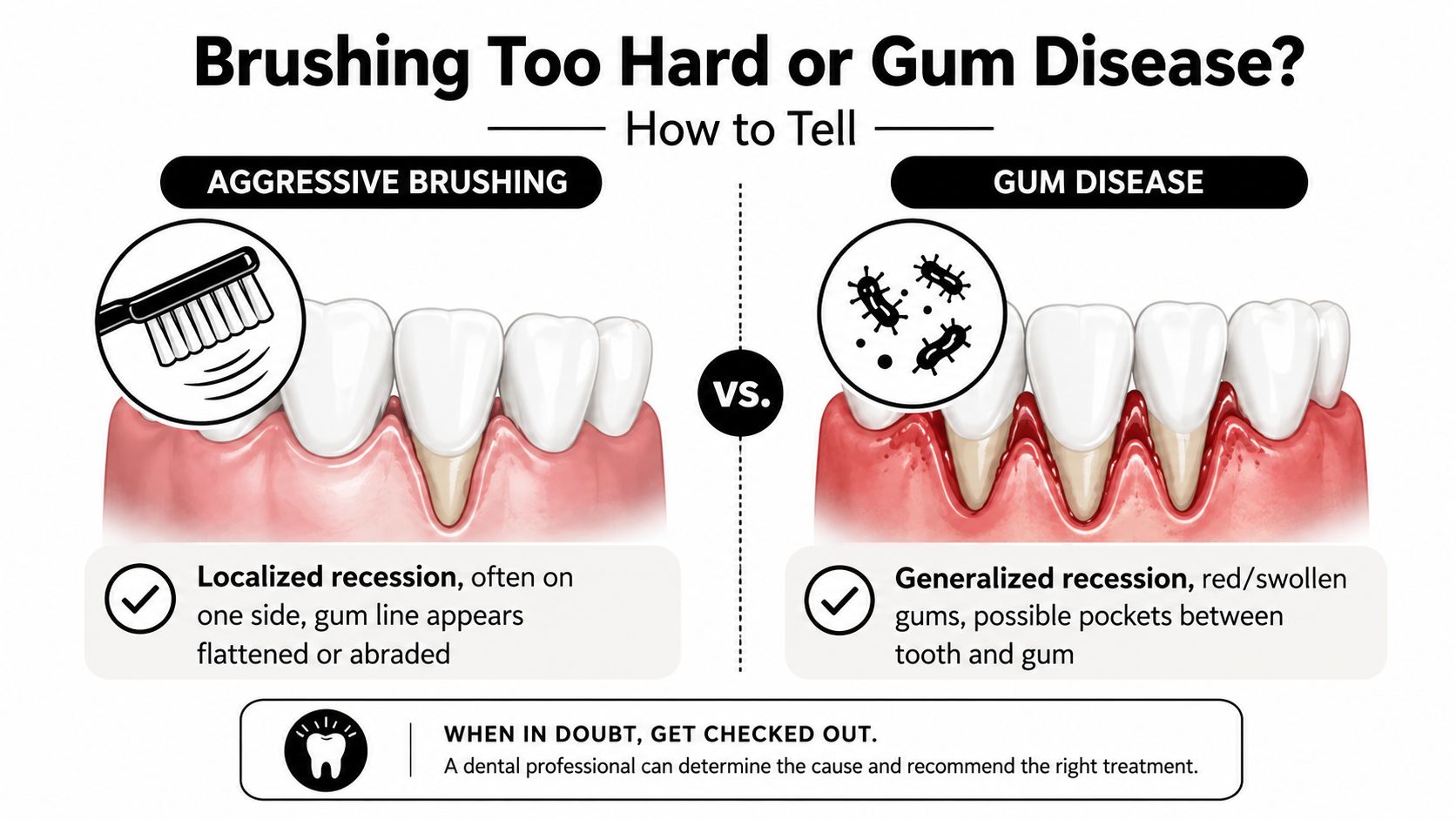
This is the question people really want answered. If the gum is receding, is it because the brush is too aggressive, or because active gum disease is already at work?
Look at the pattern, not just the habit
Brush trauma often shows up as a more localized issue. One tooth, one side, or a small stretch of gumline may look flattened or abraded, especially where a person brushes hardest. Gum disease tends to look broader, with redness, swelling, bleeding, bad taste, or changes in the spaces between the teeth.
A useful at-home clue is bleeding. Bleeding with brushing or flossing, persistent inflammation, or a lingering unpleasant taste makes simple brush trauma less likely to be the whole story. The clinical exam that sorts this out usually includes recession measurements, probing depths, attachment loss, tooth mobility, and X-rays to check bone levels (Cleveland Clinic).
Why “just brush softer” can miss the point
Some people develop recession even when their brushing is careful and consistent. That's because thin tissue, tooth position, or frenum pull can raise the risk even without obvious bad habits. The same is true when inflammation is already active, because the gumline may be losing support below the surface.
If the gums are bleeding, swollen, or pocketing around the tooth, the problem is bigger than brushing pressure alone.
Periodontal disease is a major cause of recession, and it works by destroying the gum tissue and bone that hold teeth in place (WebMD). That's why the next step isn't guessing, it's getting the right diagnosis so the right treatment starts first.
Treatment Options From Home Care to Surgical Grafting
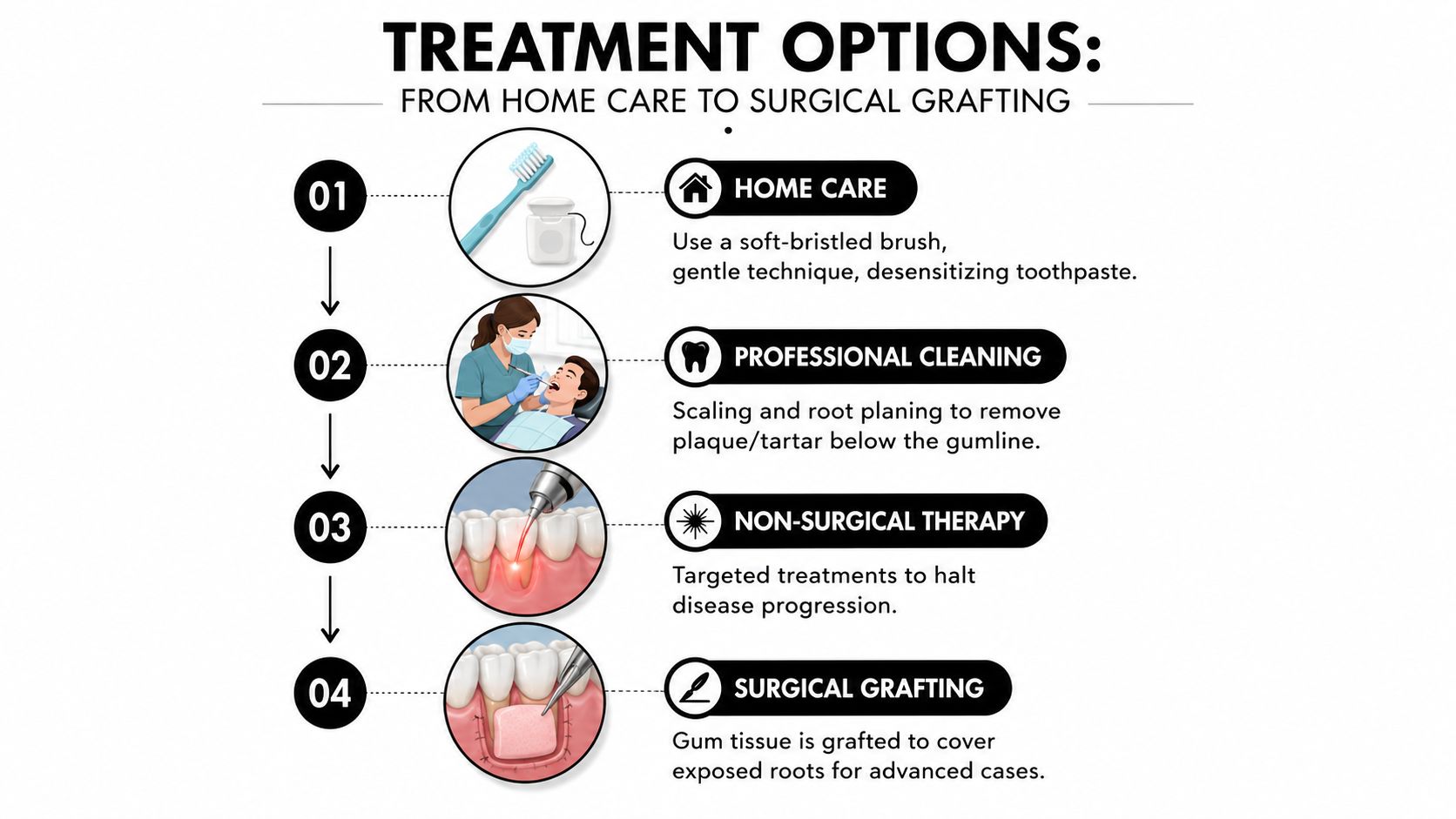
Treatment works best when it matches the cause. If the recession is mostly mechanical, the first step may be changing brushing technique and reducing ongoing irritation. If the recession is tied to gum disease, disease control comes first, because covering roots without stopping the inflammation won't solve the problem.
Start with stabilizing the daily routine
Home care often begins with a soft-bristled toothbrush, a gentler circular motion, and daily cleaning between teeth. Many patients also benefit from desensitizing toothpaste when exposed root surfaces are making cold drinks uncomfortable. Professional cleanings matter here too, because plaque control is part of keeping the gumline from getting worse.
If the issue is disease-driven, the treatment may move into deeper cleaning and periodontal therapy. That can include scaling and root planing, which removes plaque and tartar below the gumline, along with maintenance visits to keep inflammation down. A detailed overview of that kind of deep cleaning is available in our scaling and root planing procedure guide.
When grafting enters the picture
Surgical grafting is used when the goal is to cover exposed roots or thicken thin tissue around vulnerable teeth. A connective tissue graft or free gingival graft may be considered when recession is advanced, when sensitivity remains a problem, or when the gumline needs more protection for the long term. Not every case needs surgery, and that's a good thing.
The right sequence usually looks like this.
- Calm the irritation. Remove the habits or plaque buildup keeping the margin under stress.
- Stabilize the gums. Control inflammation before thinking about cosmetic changes.
- Rebuild if needed. Consider grafting when root coverage or tissue reinforcement is the goal.
Prevention Habits That Actually Protect Your Gumline
Prevention is less dramatic than treatment, but it protects more of what you already have. A soft-bristled brush and a gentle technique reduce repeated trauma, while daily flossing or another interdental cleaner helps keep plaque from sitting where the gum meets the tooth. Those two habits work best together, not separately.
Routine cleanings and exams matter just as much, because early changes are easier to catch than advanced recession. Tobacco cessation helps too, since tobacco use adds stress to the tissues that are already trying to heal. If you clench or grind, that extra force can also load the gumline and make vulnerable areas less forgiving.
Small habits with real payoff
- Use a soft brush. Hard bristles are usually unnecessary and can be too rough on the margin.
- Move gently. Circular or vibratory motion is kinder than scrubbing back and forth.
- Clean between teeth daily. Floss or interdental cleaners reduce plaque where brushes miss.
- Keep your visits regular. Cleanings and exams help spot change before it becomes obvious.
- Address tobacco and grinding. Both add stress that can work against the gumline.
The goal isn't perfection. It's lowering the daily stress on a tissue that's supposed to stay sealed and healthy.
What to Expect at Your Walnut Creek Visit
A first visit in Walnut Creek should feel organized, not rushed. You'll usually start with a conversation about what you've noticed, when it started, and whether certain teeth are sensitive, bleeding, or changing shape. Then comes a careful visual and periodontal exam, with recession measurements and probing depths to see whether the gums are pulled back or also inflamed.
Dental X-rays may be taken to check bone levels and look for support changes that can't be seen from the outside. The value of that step is simple, it helps separate a cosmetic concern from a support problem. Once the findings are clear, you should get a plain-language explanation before any treatment is recommended.
William M. Schneider, DDS is known for a comfortable approach that includes painless injection techniques, sedation options when appropriate, and clear explanations that help anxious patients feel less on edge. New patients also appreciate transparent expectations and convenient online scheduling, which makes it easier to get the process started without guesswork.
A good appointment should answer three questions, what's happening, why it's happening, and what comes next.
Warning Signs That Mean It Is Time to Call
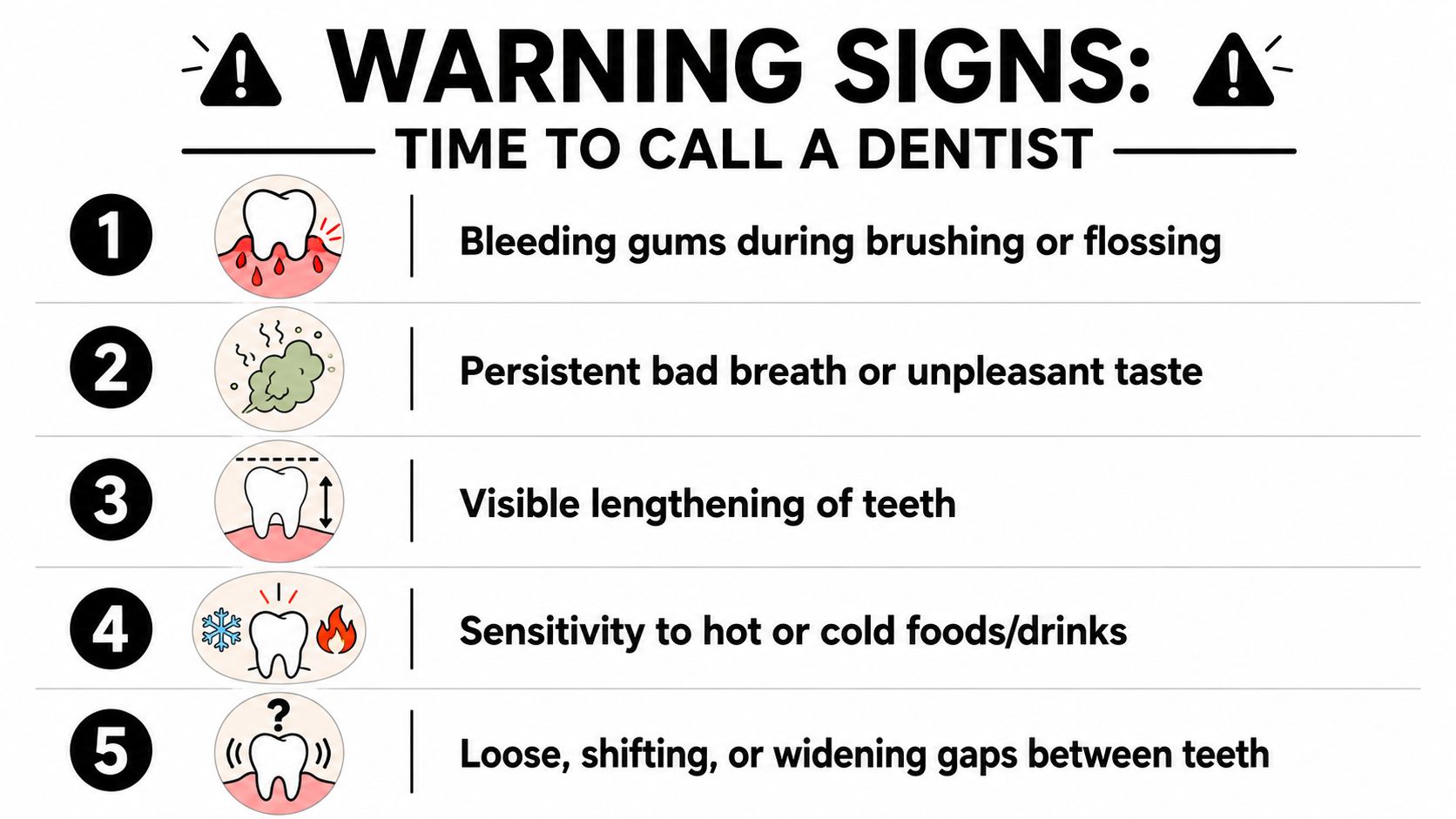
If you're seeing one sign, it's worth paying attention. If you're seeing several, the case for an exam gets stronger.
- Bleeding gums during brushing or flossing. This often points to inflammation, not just technique.
- Persistent bad breath or unpleasant taste. That can go with active plaque buildup or infection.
- Visible lengthening of teeth. This is one of the clearest signs that the gumline has moved.
- Sensitivity to hot or cold foods and drinks. Exposed root surfaces react differently than enamel.
- Loose, shifting, or widening gaps between teeth. That can signal more than surface-level recession.
A prompt exam matters because earlier-stage recession is usually simpler to manage than advanced disease. If you're in Walnut Creek or anywhere in the East Bay and you've noticed any of these signs, it's smart to get the area evaluated before the change becomes harder to reverse or stabilize. If bleeding, pocketing, or recurring swelling are part of the picture, the guidance in our periodontist referral guide for bleeding or receding gums can help you understand why a thorough gum evaluation matters.
If you've noticed a tooth looking longer, gum sensitivity, or bleeding when you brush, schedule a visit with William M. Schneider, DDS in Walnut Creek. The team can evaluate whether your gum is receding from brushing, gum disease, or a mix of both, then map out the right next step for your smile.