You may have caught yourself in the mirror lately, noticing that one tooth looks a little longer than it used to. Maybe cold water makes you flinch, or flossing around one spot feels sharper than it should. Those small changes are easy to brush off, but they're often the first clues that gum recession is starting to affect your teeth and gums.
If you're searching for a dentist near me or a dentist in Walnut Creek, CA, it helps to know that receding gums are common, and they're treatable. At William M. Schneider, DDS, patients often start with a simple question, “Is this something I need to worry about right now?” The answer depends on the cause, the amount of recession, and whether the goal is to calm sensitivity, stop progression, or cover exposed root surface.
The good news is that there's a real path forward. Some cases respond well to non-surgical care and careful monitoring, while others benefit from gum grafting or another periodontal procedure. Either way, the first step is a clear evaluation and a plan that fits your mouth, not a generic fix.
What Receding Gums Feel Like at the Dentist Near Me in Walnut Creek
A patient often comes in saying, “My tooth looks longer,” or “That one spot stings when I drink something cold.” That's usually the moment they realize this isn't just a cosmetic change. A receded gumline can expose root surface, and that exposed area is more likely to feel sensitive and vulnerable.
The change is sometimes subtle enough that people only notice it when comparing an old photo to their smile today. In other cases, they feel a small notch near the gumline with their tongue. Either way, the concern is real, because recession can affect comfort, appearance, and long-term tooth health.
Practical rule: if a tooth suddenly looks more exposed than the others, don't wait for it to “grow back.” Receded gum tissue doesn't reverse on its own, so the useful question is what needs to be stabilized or treated next.
For people looking for a cosmetic dentist near me or a dental care appointment in Walnut Creek, that usually means starting with an exam, cleaning and exams, and, when needed, dental x-rays to see whether the issue is isolated or part of something broader. A patient may only be bothered by sensitivity today, but the same area can also become harder to clean, more prone to irritation, and more difficult to maintain over time.
The reassuring part is that this doesn't automatically mean surgery. Some mouths need conservative care first, especially when the recession is mild or the main problem is discomfort. The decision starts with understanding what the gums are doing and what outcome matters most to you.
Understanding Gum Recession and How Dentists Diagnose It
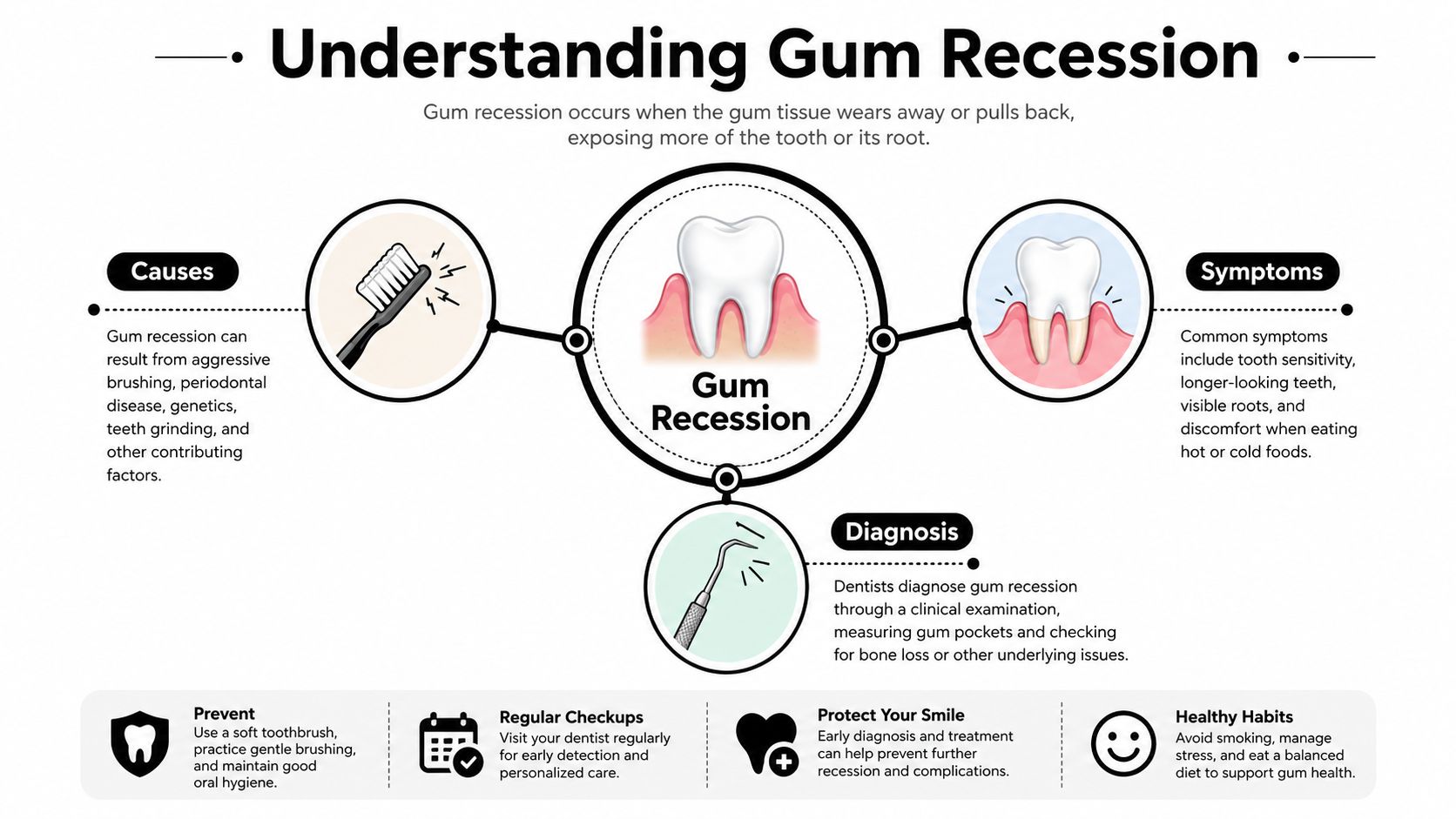
A tooth can start to look longer even though the tooth itself has not changed. Gum recession means the soft tissue margin has moved downward along the tooth, so more of the tooth and sometimes the root shows. In the mirror, that shift can be easy to miss at first, but a healthy gumline should sit snugly around the tooth and help protect the root area.
How a dentist measures it
During an exam, a dentist looks closely at the shape of the gumline, checks for exposed root surface, and measures how far the tissue has moved. That measurement helps sort recession into mild, moderate, or more advanced levels. The classification matters because the kind of treatment that can help depends on how much support is still around the tooth.
One commonly used system is the Miller classification. It helps describe how much support remains around the tooth and how predictable root coverage may be. If the surrounding bone and gum support are intact, coverage can often be more predictable than it is when support has already been reduced. That is why a careful diagnosis matters more than a quick look in the mirror.
Why recession is not the same as just “bad gums”
People often mix up gum recession with gum disease. They can overlap, but they are not the same thing. Recession describes where the gum tissue sits. Gum disease describes inflammation or infection that can damage the supporting structures around the teeth.
A thoughtful diagnostic visit looks at both. A Walnut Creek dentist may check tissue thickness, tooth position, bite forces, and the amount of support under the gums, not just the visible root exposure. That helps answer a more useful question than “Do I need a graft?” The central question is whether the mouth needs symptom control, stabilization, or root coverage.
Healthy treatment planning starts with a simple question, what is the mouth asking for right now, symptom control, stability, or root coverage?
That way, a patient does not get pushed into surgery when a conservative approach may solve the immediate problem. It also keeps care from being delayed when a tooth needs a more active solution.
Common Causes and Risk Factors Most Patients Overlook
A patient may point to brushing too hard and be partly right. That is one common piece of the picture, but gum recession usually grows out of several factors working together, which helps explain why two mouths can look similar and still need different treatment plans. A dentist looks at habits, tissue shape, tooth position, and signs of inflammation before deciding whether the goal is symptom control, stabilization, or root coverage.
The everyday drivers
Aggressive brushing, especially with a hard-bristled brush, can slowly wear gum tissue down. Plaque-related inflammation and periodontal disease can also play a role, because irritated tissue does not stay stable for long. Tooth position matters too, since teeth that sit out of line may have thinner gum support and face more stress from everyday use.
Bite forces matter as well. Clenching and grinding can put repeated pressure on the gums and supporting structures, and that strain can make recession worse in some mouths. Tobacco use is another concern, since it makes periodontal health harder to maintain.
The factors people don't always think about
Some patients have a genetic tendency toward thin tissue, which means their gums are more easily affected even when home care is decent. Hormonal changes can make the gums more sensitive, and a history of orthodontic movement can leave certain areas with less soft tissue coverage. Lip or tongue piercings can also irritate nearby gum tissue over time.
Aging plays a role too. Recession becomes more common as people get older, and a large review found prevalence estimates ranging from 40% to 100% depending on the population and measurement method, which shows how widespread the condition can be in everyday practice (review on prevalence and diagnosis). A separate epidemiologic analysis using the same source review found that recession can be common enough to affect day-to-day care planning, which is why early monitoring matters even before a patient feels major symptoms.
Those numbers matter because they show recession is not rare or cosmetic-only. It is common enough that prevention and early monitoring can make a real difference.
Non-Surgical Gum Recession Treatment That Stops the Slide
Non-surgical treatment is usually about stabilizing the problem and easing symptoms. It doesn't rebuild lost gum tissue by itself, but it can make the mouth healthier and reduce the factors that keep recession moving. That's often the right first step for mild cases or for patients who aren't good surgical candidates.
What conservative care usually targets
When plaque or residual deposits are part of the problem, a dentist may recommend scaling and root planing, which is a deeper cleaning that removes bacterial buildup below the gumline and helps smooth the root surface. If a restoration or overhang is irritating the tissue, fixing that contact point can remove the trigger. Desensitizing agents and topical products can also calm exposed-root sensitivity.
For some patients, the next step is simple behavior change. Switching to a soft-bristled brush, using a gentle technique, and avoiding heavy pressure can prevent extra wear on the gumline. If clenching or grinding is part of the picture, that also needs to be addressed so the gums aren't getting hit with the same stress every night.
For readers who want more detail on deep cleaning, the practice's scaling and root planing procedure explains how that treatment supports gum health.
When non-surgical care makes the most sense
Conservative treatment is a strong fit when the recession is mild, the main complaint is sensitivity, or the patient wants to avoid surgery for now. In some situations, orthodontic adjustment can remove a mechanical trigger, especially if a tooth sits in a position that makes the gum margin harder to protect.
Bottom line: non-surgical care is valuable when the goal is to stop further loss and make the area easier to live with.
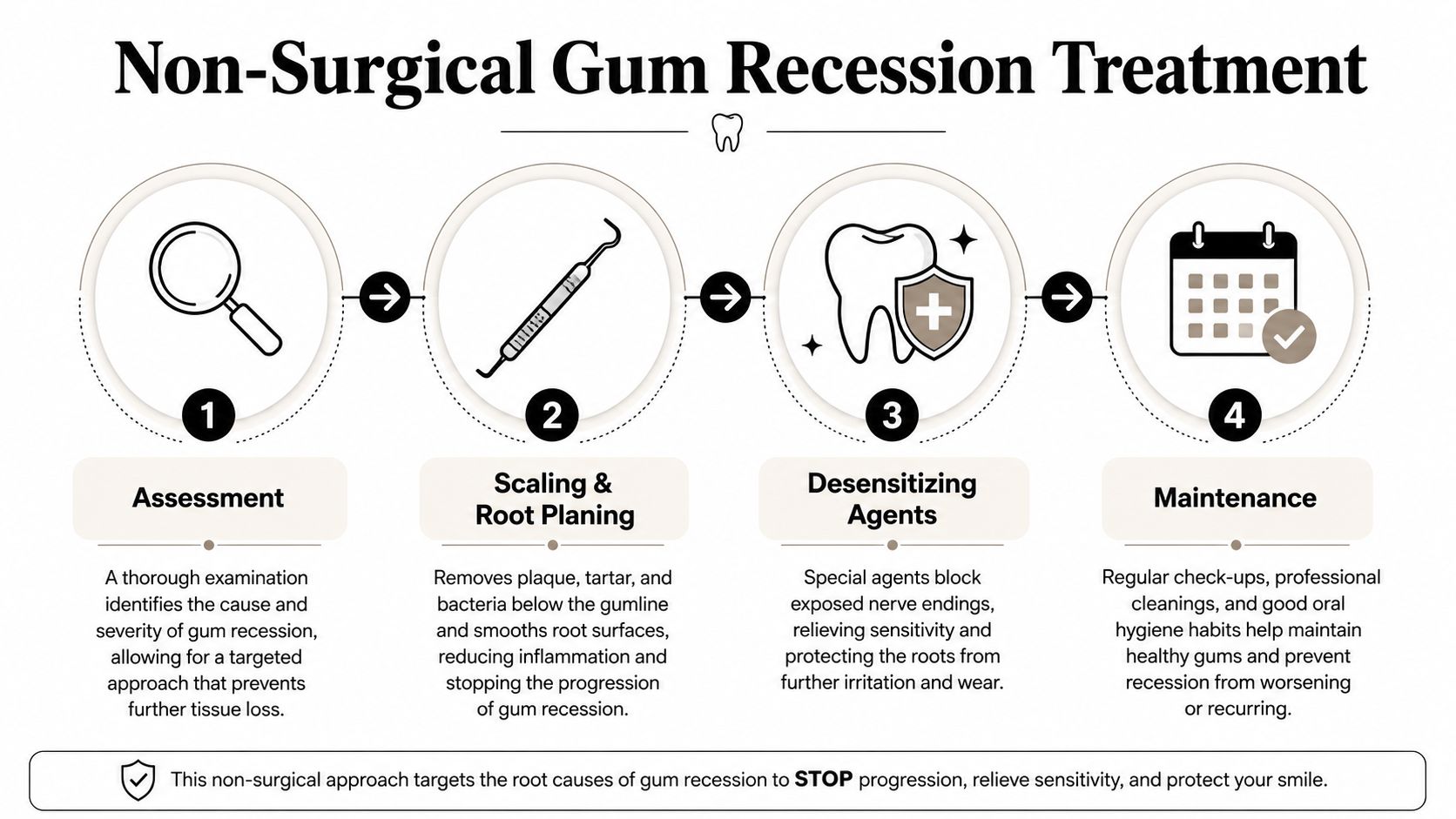
The main thing patients should understand is that this is not a wait-and-see situation without a plan. It's active maintenance, with the purpose of keeping the tissue as stable and comfortable as possible.
Surgical Gum Recession Treatment Options Compared
Once recession is more advanced, or when appearance and root exposure matter more, surgery may be the most predictable route. The strongest evidence still supports graft-based and flap-based procedures, especially when the goal is true root coverage rather than just symptom relief. A Cochrane review identifies subepithelial connective tissue grafts, coronally advanced flap techniques, and guided tissue regeneration among the main evidence-based options for localized and multiple recession defects (Cochrane review).
Comparing Surgical Options for Gum Recession Treatment
| Procedure | Best For | Recovery | Predictability |
|---|---|---|---|
| Connective tissue graft | Exposed roots where the goal is the most predictable coverage | Healing is usually more involved because tissue is harvested and placed | Often considered the most predictable root-coverage approach |
| Free gingival graft | Thickening thin tissue and improving band of attached gum | Donor and recipient sites both need healing | Useful for tissue quality more than cosmetic root coverage |
| Tunnel technique or pinhole approach | Selected patients wanting a less invasive surgical path | Often marketed as a lighter recovery, but candidacy is specific | Less established than classic grafting in long-term comparative data |
| Regenerative procedures | Cases where the goal includes encouraging attachment support | Recovery depends on the defect and materials used | Can be valuable in the right defect, but case selection matters |
A connective tissue graft is often the most predictable choice when the goal is root coverage. A free gingival graft is different, because it's used more to thicken and strengthen tissue than to primarily hide the root. That's an important distinction, and it's where many patients get confused.
Minimally invasive options can be appealing, especially when someone wants a smaller surgical experience. Still, the decision should be based on defect type, tissue thickness, and the amount of coverage needed, not marketing language. That's the point of a careful periodontal consultation.
For patients comparing options in one place, the practice's gum grafts and beyond modern solutions for healthier smiles resource can help frame the discussion before treatment is scheduled.
What to Expect During Treatment and Recovery
The day of treatment is usually more straightforward than people expect. If you're anxious, sedation may be discussed, and gentle numbing helps keep the area comfortable while the procedure is being done. At William M. Schneider, DDS, patients who are nervous often appreciate the office's comfort-focused approach, including careful injection technique and sedation options when appropriate.
During the appointment
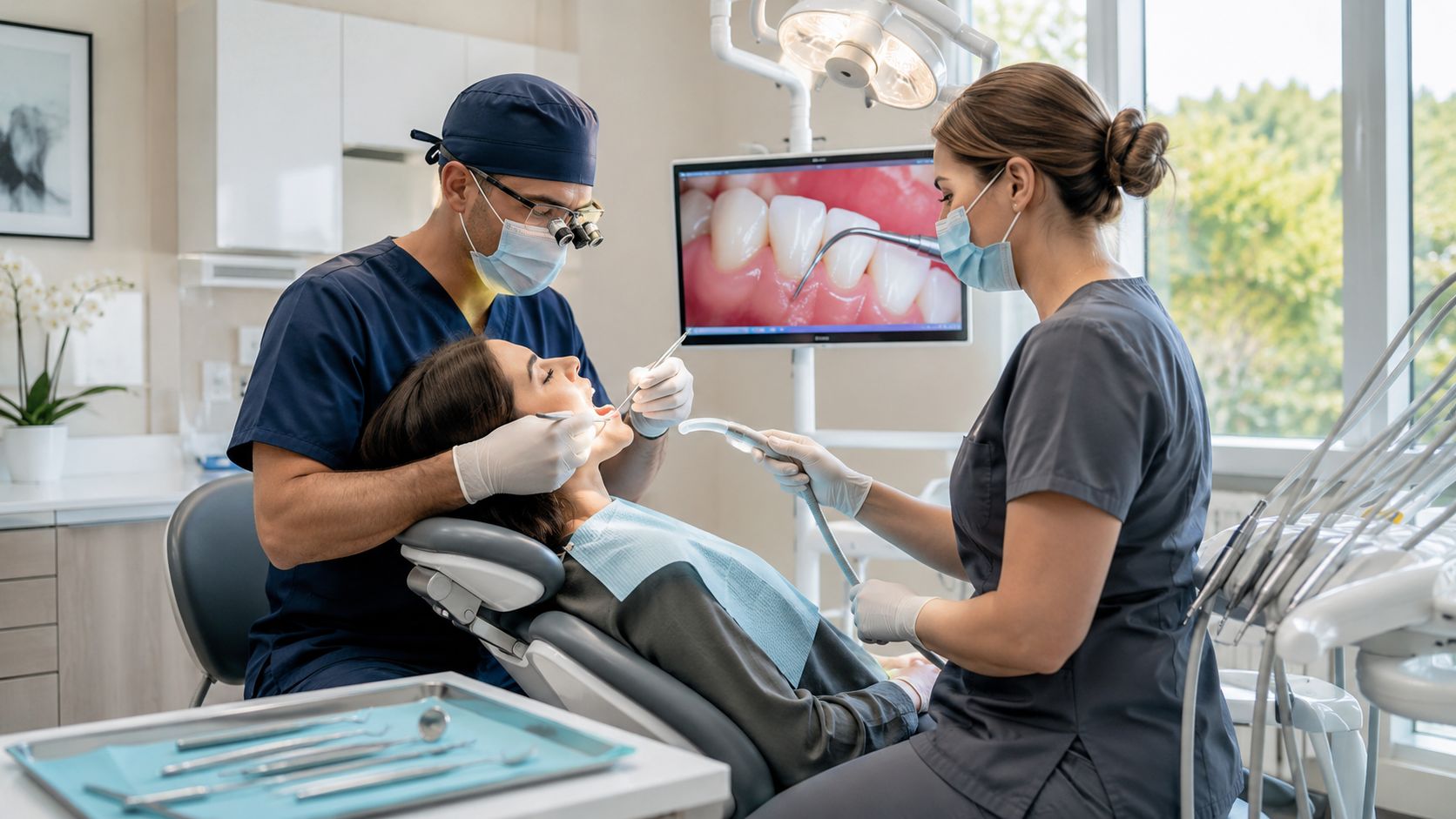
A grafting visit is typically planned carefully around the tooth or teeth that need coverage. The dentist may prepare the site, place grafting material or tissue, and secure it so the area can heal without constant irritation. If orthodontic or restorative work is part of the overall plan, that usually comes before or after the periodontal phase depending on what the tooth needs.
The donor site, when one is used, can feel tender for a short time, so patients are often given clear home-care instructions before they leave. That usually includes a softer diet, careful cleaning, and avoiding pressure on the treated area.
The first days after
Swelling, mild soreness, and sensitivity are common early on. Most patients do best when they follow directions closely, keep the area clean without scrubbing it, and avoid habits that tug on the healing tissue. The goal is to protect the graft so it can mature into stable gum tissue.
What healing usually feels like over time
The grafted area doesn't look finished right away. It usually needs time to settle, blend, and mature. Progress is often measured less by how fast it looks “normal” and more by how steadily the tissue calms down and becomes easier to maintain.
A patient who understands those milestones tends to feel much calmer during recovery. The job after treatment is consistency, gentle care, and follow-up visits that confirm the tissue is healing as planned.
Costs, Insurance, and How to Prevent Recession From Returning
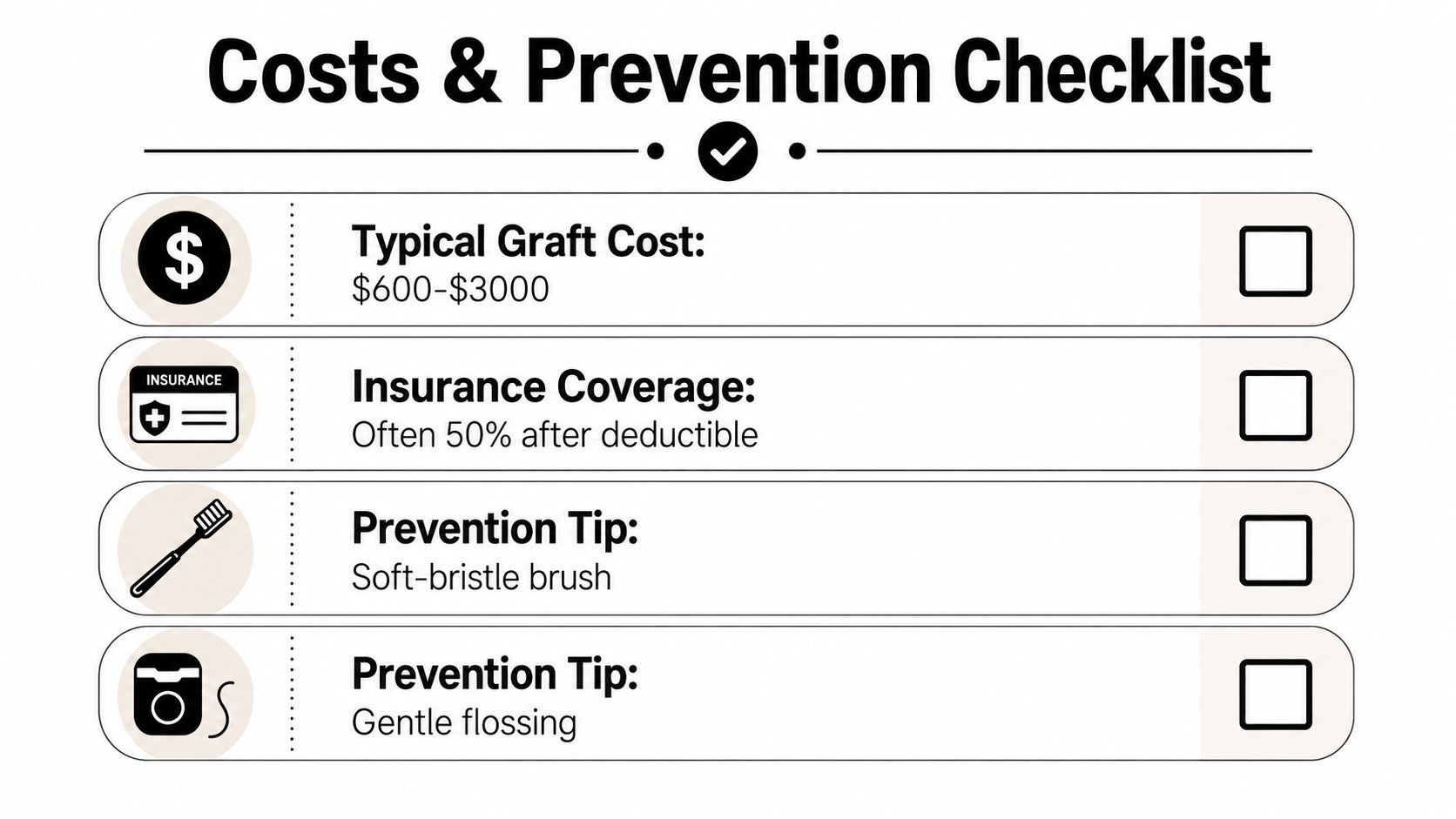
Cost questions are normal, and they matter. Gum recession treatment can vary depending on how many teeth are involved, whether surgery is needed, and what kind of periodontal repair is planned. The budget question is usually not just the procedure itself, but how much ongoing prevention will be needed to keep the problem from coming back.
What shapes the investment
Dental insurance often classifies grafting as a periodontal procedure, and some plans may cover part of it after deductible and plan review. A Walnut Creek office can also talk through payment options, especially when treatment is being coordinated with crowns, implants, or other restorative work.
How to keep the gums stable afterward
Prevention is mostly about reducing the same stress that caused the recession in the first place. That means using a soft-bristle brush, brushing gently, and keeping up with regular periodontal monitoring. If clenching is part of the problem, a night guard can help protect the tissues from repeated force.
Smoking cessation matters too, because gum tissue heals better when tobacco is removed from the picture. Routine cleaning and exams also help catch small changes early, before they become more expensive to treat.
A long-term relationship with a local dentist helps because the mouth doesn't stay static. If a crown, implant, or orthodontic adjustment is needed later, those decisions can be made with the gumline in mind rather than after the damage has already progressed.
Gum Recession Treatment Questions Patients Ask Most
Can receding gums grow back on their own?
No. Gum recession can be stabilized and covered in some cases, but the lost tissue doesn't regenerate on its own.
How do I choose between a graft and a pinhole procedure?
That depends on your defect type, tissue thickness, and how much root coverage you want. The most predictable root-coverage procedures are still graft-based or flap-based, so the choice should be made after a clinical exam, not from a marketing label.
What if the recession mostly bothers me cosmetically?
That's still a valid reason to seek care. Treatment can be matched to the goal, whether that's comfort, appearance, or protecting exposed root surface.
When should I call a dentist sooner rather than later?
If a tooth is getting more sensitive, looks longer, or seems to be changing quickly, it's smart to be evaluated promptly. A mild problem is easier to plan for than a more advanced one.
How does this fit with implants or cosmetic dentistry?
Gum health comes first when the tissue needs support. Once the gums are stable, restorative work like implants or cosmetic treatment can be planned more safely around them.
If you're noticing longer-looking teeth, sensitivity, or a gumline that's changing, William M. Schneider, DDS can evaluate the area and help you decide whether you need monitoring, non-surgical care, or a periodontal referral for root coverage. Visit William M. Schneider, DDS to request an appointment in Walnut Creek, and get a clear treatment plan built around comfort, stability, and long-term oral health.