You wake up with a sore jaw. Breakfast feels oddly tiring to chew. By midafternoon, the tightness has spread into your temples, and that click near your ear is back again. If that sounds familiar, it makes sense that you're searching for a TMJ specialist in San Francisco, CA and trying to determine who can provide effective help.
For many people in the Bay Area, TMJ pain isn't just a dental nuisance. It affects sleep, concentration, eating, and day-to-day comfort. The hard part is that jaw pain can feel vague at first, then slowly become part of normal life. It shouldn't.
Dr. Schneider serves patients from Walnut Creek and the broader Bay Area who want a careful, diagnosis-first approach to jaw pain. His advanced training in general dentistry in San Francisco gives local patients a practical reason to look beyond city limits when they want focused care, clear explanations, and a treatment plan that fits the underlying cause of the problem.
Finding TMJ Relief in the San Francisco Bay Area
Some patients put off treatment for months because they aren't sure whether the problem is their teeth, their bite, stress, headaches, or something deeper in the joint. They may try softer foods, over-the-counter pain relievers, or just avoid opening wide. Those steps can sometimes ease a flare-up, but they rarely answer the core question. Why is the jaw hurting in the first place?
That's where focused TMJ evaluation matters. A patient searching for a TMJ specialist in San Francisco, CA usually isn't looking for a generic exam. They're looking for someone who takes jaw pain seriously, listens carefully, and separates muscle-related strain from joint-related dysfunction.
Why Bay Area patients often need a more focused exam
TMJ problems can be frustrating because the symptoms don't always stay in one place. Pain can show up at the jaw, around the ear, in the face, or as repeated tension headaches. Some people notice clenching at night. Others notice a jaw that shifts, catches, or gets tired with chewing.
In practice, the biggest mistake is assuming every click needs the same treatment, or that every sore jaw means the bite must be aggressively adjusted. Neither is true. Good care starts by slowing down and identifying the pattern.
Practical rule: The right TMJ treatment depends on whether the pain is coming mostly from the muscles, the joint, nighttime grinding, bite strain, or a combination of those factors.
Why Walnut Creek can be the right choice for San Francisco area patients
Patients across the Bay often want care that feels personal, not rushed. Walnut Creek offers that advantage for many families and professionals who would rather have a thorough consultation than a one-size-fits-all recommendation. Dr. Schneider's San Francisco-based advanced training supports that regional connection and makes his office a sensible option for patients seeking an experienced Bay Area provider for jaw pain.
This also matters if your TMJ symptoms overlap with other dental needs. In some cases, jaw strain appears alongside worn teeth, old dental work, missing teeth, or bite instability. A practice that also provides restorative dentistry, crowns, Invisalign, and broader dental care can look at the whole picture instead of treating the jaw in isolation.
What Are TMJ Disorders and Their Common Symptoms
The temporomandibular joint, or TMJ, works a bit like a door hinge with a sliding component. It helps your lower jaw open, close, and move smoothly as you talk, chew, yawn, and swallow. When that system gets irritated, overloaded, or out of balance, the result is often called temporomandibular disorder, or TMD.
TMD can involve the joint itself, the muscles that control jaw movement, or both. That distinction matters. UCSF notes that temporomandibular disorders can involve both the jaw joint and the muscles that control jaw movement, and that care often requires diagnostic services plus a mix of surgical and non-surgical treatment, sometimes including relaxation techniques and biofeedback.
A simple way to understand the problem
If a door hinge is aligned, lubricated, and used gently, it opens and closes smoothly. If it's strained, shifted, or forced over and over, it may creak, stick, or become painful. The jaw works similarly, except it's more complex because muscles on both sides must coordinate every time you use it.
That's why TMJ symptoms can feel inconsistent. One person may mainly feel facial soreness and tension headaches. Another may notice clicking without much pain. Someone else may have pain only after chewing or only in the morning after nighttime clenching.
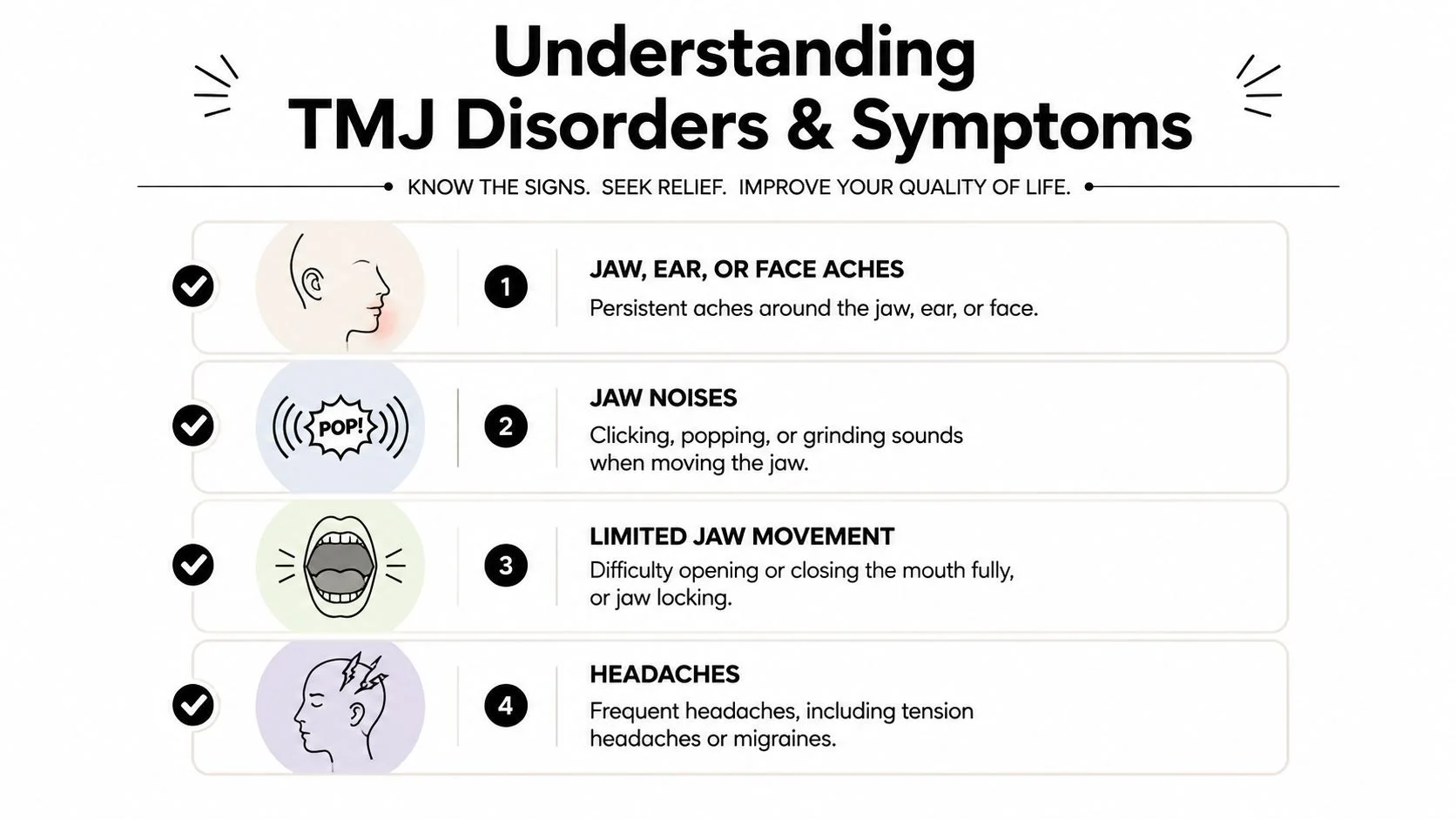
Common symptoms patients notice
You don't need every symptom on this list to have a TMJ disorder. Many patients have only a few signs, but those signs keep repeating.
- Jaw soreness or fatigue that shows up when chewing, talking a lot, or waking up in the morning
- Clicking or popping sounds when opening or closing the mouth
- Pain near the ear even when the ear itself isn't the source of the problem
- Headaches or temple tension that seem tied to jaw use or clenching
- Facial tightness across the cheeks or along the sides of the face
- Limited opening or the feeling that the jaw doesn't move smoothly
- Jaw locking or catching during wide opening or while eating
- Pain with chewing especially with firmer foods
- Tooth sensitivity or wear that can go along with grinding and clenching
What tends to work and what usually doesn't
When patients first notice symptoms, they often try to push through them. That usually doesn't help. Repeatedly chewing tough foods, testing the joint to see if it still clicks, or forcing the mouth wider can keep irritated tissues irritated.
What tends to help early on is reducing overload. That may include softer foods for a short period, avoiding gum chewing, and addressing clenching habits. The key is not self-diagnosing the exact cause. The key is recognizing that persistent jaw symptoms deserve a proper exam.
Jaw pain is real even when X-rays from a routine dental visit or a quick glance at the bite don't provide the full answer.
How a TMJ Specialist Diagnoses Your Pain
A useful TMJ diagnosis doesn't begin with treatment. It begins with pattern recognition. When jaw pain has been present for a while, the important questions are often simple: When does it hurt, what triggers it, what relieves it, and is the source more likely muscular, joint-related, or both?
That's why the first visit should feel more like a structured investigation than a sales pitch. The exam needs to connect symptoms with function.
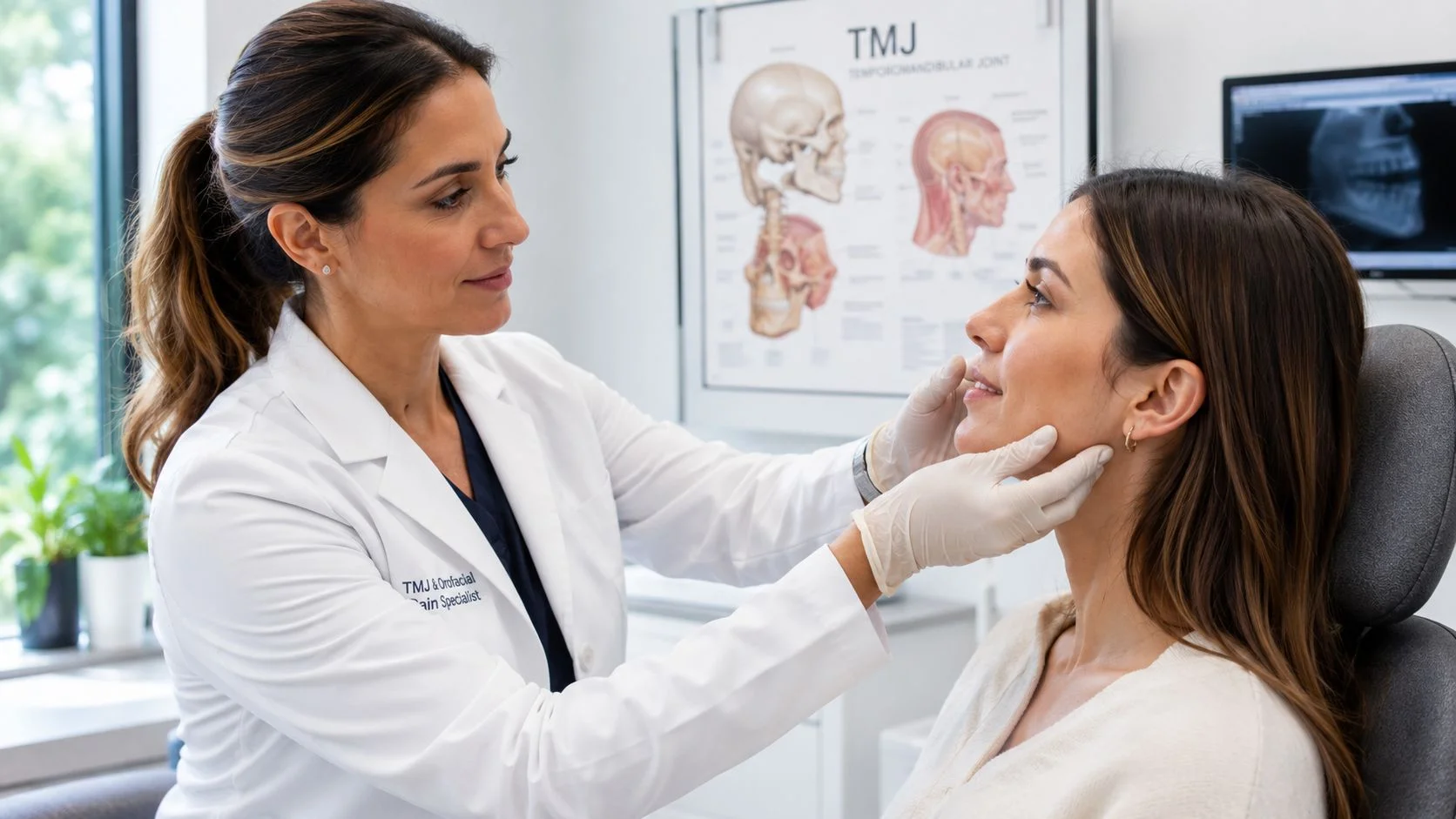
What a careful TMJ workup includes
A solid evaluation usually includes several parts working together:
| Part of the exam | What it helps reveal |
|---|---|
| Symptom history | Whether pain is linked to chewing, waking, stress, headaches, or locking |
| Joint and muscle exam | Tenderness, joint sounds, restricted motion, and muscle overuse |
| Bite and tooth wear review | Signs of grinding, clenching, or uneven loading |
| Imaging when needed | Structural details that can't be confirmed by exam alone |
A history matters more than many patients expect. Morning soreness can suggest nighttime loading. Pain with chewing can point to muscle strain, joint irritation, or both. A history of worn teeth, fractured restorations, or daytime clenching adds another layer.
Why 3D imaging can change the conversation
Basic exams are helpful, but they don't always tell the full story in complex cases. UCSF's TMJ treatment information notes that advanced 3D imaging is a key differentiator because it allows evaluation of the joint's bony anatomy in three dimensions, which is especially useful when symptoms suggest internal derangement or degenerative changes that a basic exam might miss.
That matters because not all TMJ pain looks the same from the outside. Two patients may both report clicking and headaches, yet one has mostly muscular overload while the other has structural joint changes that deserve a different treatment plan.
What a diagnosis should tell you
By the end of a meaningful consultation, you should understand more than the label “TMJ.” You should know:
- Whether the muscles are heavily involved
- Whether nighttime grinding appears to be a driver
- Whether the joint itself needs closer attention
- Whether bite instability or worn teeth may be contributing
- What the first conservative step should be
If that clarity is missing, treatment often becomes trial and error. That's when patients waste time with approaches that don't match the source of the pain.
A custom plan only makes sense after the diagnosis becomes specific.
Your Personalized Path to TMJ Pain Relief
Most patients don't need an aggressive starting point. They need a plan that reduces strain, protects the joint, and gives the muscles a chance to settle down. In many cases, the most effective first move is also the most conservative.

Conservative care comes first
When clenching or grinding is a major factor, occlusal splint therapy is often a practical first-line option. A San Francisco TMJ practice explains that a custom-made night guard can reduce parafunctional forces from bruxism and decrease muscle hyperactivity during sleep, helping relax the jaw muscles and prevent further damage.
That's an important distinction. A well-made appliance isn't just a generic guard to put between the teeth. The fit, bite relationship, and intended use matter. For patients dealing with nighttime clenching, a custom night guard for teeth grinding may be part of care when the exam supports it.
What may be included in a real treatment plan
TMJ treatment often works best when it combines more than one type of support. Depending on the diagnosis, a plan may include:
- Oral appliance therapy to reduce clenching load during sleep
- Home care changes such as avoiding gum, limiting very chewy foods, and reducing extreme jaw opening
- Muscle-focused strategies including jaw rest, heat, and specific movement guidance
- Stress-related habit awareness for patients who clench during work or driving
- Restorative follow-up when worn teeth, unstable bite contacts, or damaged dental work are part of the problem
- Orthodontic planning in select cases where bite alignment contributes to ongoing strain
What usually doesn't solve the problem by itself
A few things commonly disappoint patients. One is buying an over-the-counter boil-and-bite guard and expecting it to function like a custom appliance. Another is chasing repeated short-term relief without checking whether the bite, muscles, and joint are being overloaded night after night.
Some patients also assume that if the jaw clicks, surgery must be the answer. That's rarely the first thought. UCSF describes TMJ care as multidisciplinary and involving both non-surgical and surgical options when appropriate, which reflects how these cases are managed in serious clinical settings. Conservative steps usually deserve attention first.
Long-term relief often depends on the bigger dental picture
If grinding has flattened teeth, cracked fillings, or strained older crowns, then protecting the jaw may also involve restoring function. This is one area where broader dental experience matters. A practice such as William M. Schneider, DDS can evaluate whether crowns, bite stabilization, Invisalign, or other restorative measures belong in the plan after the TMJ diagnosis is clear.
Clinical judgment matters: The best TMJ treatment is the one that matches the cause, not the one that sounds the most advanced.
How to Choose the Right Specialist in the Bay Area
If you're comparing providers, don't focus only on who mentions TMJ on a website. Focus on how they think. Jaw pain responds best to clinicians who diagnose carefully, explain clearly, and avoid rushing into a one-size-fits-all fix.
Questions worth asking before you book
A few questions can quickly tell you whether a practice takes TMJ care seriously:
- What is your process for diagnosing TMJ pain if symptoms could be muscular, joint-related, or bite-related?
- Do you use advanced imaging when the case calls for it, or is every patient treated from a basic visual exam alone?
- What are your first-line treatment options for clenching, grinding, and muscle overload?
- How do you decide when a night guard is appropriate and what type of appliance to use?
- Can you also manage related dental issues such as worn teeth, unstable restorations, or bite changes?
- How do you explain treatment trade-offs so patients understand what each option can and cannot do?
What strong TMJ care usually looks like
The right provider doesn't promise the same result to every patient. They listen for triggers, examine the muscles and joints, and explain whether the plan is aimed at symptom control, joint protection, bite support, or a mix of all three.
A good fit also means the office experience matters. TMJ patients are often already tense before they arrive. They need calm communication, gentle exams, and a provider who doesn't dismiss symptoms that have been brushed off elsewhere.
Why Bay Area credentials and practical range both matter
For patients searching “TMJ specialist San Francisco CA,” location matters, but so does training and treatment range. A dentist with advanced training in San Francisco and a practice in Walnut Creek can be a strong option for East Bay and San Francisco patients who want regional expertise without feeling like they're being pushed through a high-volume system.
That combination can be especially helpful when TMJ symptoms overlap with general dentistry, cosmetic concerns, restorative needs, or even sleep-related issues. The jaw doesn't exist separately from the rest of the mouth. Your provider shouldn't treat it that way either.
Your First TMJ Consultation in Walnut Creek
The first visit should feel straightforward. You check in, meet a friendly team, and spend time discussing what you've been feeling, when it started, what seems to make it worse, and what kind of relief you've already tried.

What the appointment is like
During the consultation, Dr. Schneider reviews your symptoms, examines jaw movement, checks the muscles and bite, and looks for signs of grinding or uneven strain. If your case suggests that jaw tension is tied to broader dental issues, that can be discussed at the same visit so you understand the full picture.
Patients who feel nervous about dental treatment often ask about comfort options early, and that's a good idea. If anxiety has kept you from seeking help, you can learn about sedation dentistry in Walnut Creek and whether it makes sense for your situation.
The office experience should leave you with answers, not more uncertainty. You should know what may be causing the pain, what the first treatment step is, and what kind of follow-up makes sense.
For a closer look at the practice, this short video can help you get familiar before your appointment.
If you've been trying to ignore jaw pain, clicking, headaches, or clenching, this is the point to stop guessing. A focused consultation can turn a frustrating pattern into a clear plan.
If you're ready to talk with William M. Schneider, DDS about jaw pain, teeth grinding, bite strain, or related dental concerns, schedule a consultation and take the next step toward comfortable, confident function.