Gum disease treatment is a staged process that begins with professional plaque and tartar removal, may add targeted medication in selected cases, and can progress to surgery only when non-surgical care doesn't control the disease. For perspective, 42% of U.S. adults aged 30 and older have periodontitis, while about 8% have severe periodontitis. CDC data summarized in clinical guidance shows why gum treatment is a common part of long-term dental care, not a niche procedure.
Maybe you've noticed blood on your toothbrush, a persistent taste or odor, gums that look lower than they used to, or a tooth that feels different when you bite. Gum disease can be painless, so waiting for severe discomfort isn't a reliable way to decide whether you need care. If you're searching for a dentist near me, a dentist in Walnut Creek, CA, or a comfortable local practice for an evaluation, the right first step is a thorough examination rather than guessing whether you need a routine cleaning, deep cleaning, or something more advanced.
Gum Disease Treatment in Walnut Creek Explained
A patient may first notice a small streak of blood after brushing. Another may focus on bad breath that returns soon after brushing, even with careful home care. These signs can feel embarrassing, but they're common reasons people schedule a dental visit, and they don't automatically mean surgery or tooth loss is ahead.
What is gum disease treatment? It's a planned series of steps used to control inflammation, remove the bacterial buildup that drives it, and protect the gums and bone supporting the teeth. For gingivitis, the Scottish Dental Clinical Effectiveness Programme treatment guidance emphasizes personalized oral hygiene instruction and professional mechanical plaque removal. Periodontitis requires a longer-term plan, beginning with risk-factor control and removal of deposits above the gumline, followed by cleaning below the gumline when needed. Surgery is considered only if earlier treatment doesn't adequately control the disease.
Treatment is matched to the condition
The first appointment usually focuses on understanding what's happening. A dentist assesses gum tissues, measures periodontal pockets, reviews relevant health factors, and may use dental x-rays to evaluate supporting bone. That information matters because red gums from gingivitis call for a different approach than deep pockets, attachment loss, or loose teeth associated with periodontitis.
Treatment isn't designed only to make the gums look less swollen. The broader aims are to stabilize the gums, preserve natural teeth, reduce infection, and create a maintenance plan that fits your daily life. The European Federation of Periodontology published its formal evidence-based guideline for stage I to III periodontitis in July 2020, reflecting the modern emphasis on staged care and supportive maintenance.
A local dental home can simplify long-term care
At William M. Schneider, DDS in Walnut Creek, patients can receive personalized assessments, explanations in plain language, and comfort support for dental anxiety, including sedation options when appropriate. Continuity matters because gum health can change alongside restorative needs, preventive exams, cosmetic dentistry, or urgent dental concerns.
Modern periodontal care is intended to be predictable and manageable. You don't have to decide on your own whether you need a standard cleaning, scaling and root planing, a tooth extraction, or another service. A careful evaluation gives you a clear starting point.
Understanding Gum Disease and Its Warning Signs
Gum disease begins with plaque, a sticky bacterial film that forms on teeth. When brushing and cleaning between teeth don't remove enough of it, the surrounding gum tissue can become inflamed. This early stage, called gingivitis, may cause redness, puffiness, tenderness, or bleeding.
Gingivitis and periodontitis aren't the same condition. Gingivitis affects the gum tissue and can often be controlled with improved home care and professional plaque removal. Periodontitis involves damage to the structures that attach the gums and bone to the teeth. Without treatment, pockets can become deeper and harder to clean.
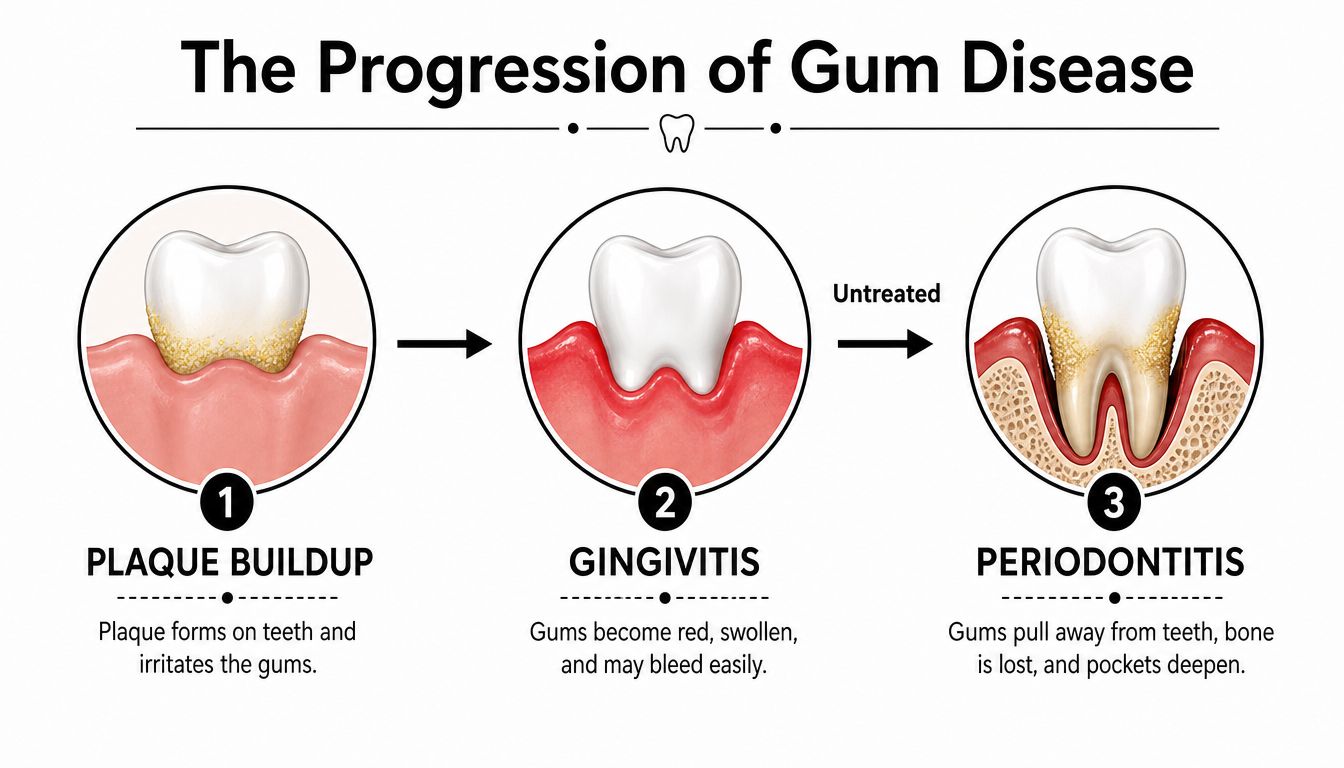
How pockets change the cleaning problem
Think of healthy gum tissue like a sweater cuff snug around a wrist. When inflammation and tissue damage loosen that attachment, the gum edge can pull away from the tooth and form a pocket. Food debris, plaque, and tartar can collect in that space, where a toothbrush can't reach effectively.
In a healthy mouth, periodontal pocket depth is usually 1 to 3 millimeters. Mayo Clinic's periodontitis diagnosis and treatment guidance notes that pockets deeper than 4 mm may indicate periodontitis, while pockets deeper than 5 mm can't be cleaned well with routine care. This is why a dentist may recommend scaling and root planing instead of an ordinary polishing appointment.
Signs that deserve an evaluation
Look for changes that persist or keep returning:
- Bleeding: Gums bleed during brushing or flossing, rather than only after an isolated hard brushing session.
- Inflammation: Gums look red, swollen, or feel tender.
- Breath changes: Bad breath or an unpleasant taste continues despite regular cleaning.
- Recession: The gumline appears lower, making teeth look longer or roots more sensitive.
- Tooth movement: A tooth feels loose or your bite doesn't feel the way it used to.
- Risk factors: Smoking, diabetes, hormonal changes, genetics, and some medications can increase susceptibility.
Early gum disease can be quiet. Reviewing gum disease risk factors and arranging a new patient exam can help you act before the condition becomes more complicated.
Comparing Preventive Cleaning and Deep Cleaning
A routine preventive cleaning and scaling and root planing both remove deposits, but they're not interchangeable. A preventive cleaning is intended for teeth and gums that are healthy or have mild inflammation. It generally focuses on visible tooth surfaces and the gumline above the pocket.
Scaling and root planing, often called deep cleaning, addresses active periodontitis. Scaling removes plaque and tartar above and below the gumline, including deposits down toward the bottom of the pocket. Root planing smooths the root surfaces, making it easier for the gums to heal and reattach. The American Dental Association's MouthHealthy explanation describes these as the two parts of the non-surgical procedure.
Periodontal maintenance is different again. It's a prescribed recall plan after active periodontal therapy, with visits designed to monitor the gums, clean areas where disease remains vulnerable, and reinforce home care. The appropriate interval depends on findings and risk, not on an automatic schedule that suits everyone.
The practical comparison
| Service | Targets | Frequency | Best For |
|---|---|---|---|
| Preventive cleaning | Plaque and deposits on accessible tooth surfaces and around the gumline | Based on routine examination findings | Healthy gums or mild inflammation |
| Deep cleaning, or scaling and root planing | Deposits and bacterial toxins below the gumline, plus rough root surfaces | Staged according to pocketing and disease findings | Active periodontitis with areas that routine care can't reach |
| Periodontal maintenance | New biofilm, residual vulnerable areas, gum measurements, and home-care needs | A personalized ongoing recall schedule | Patients who've completed active periodontal treatment |
A scaling and root planing procedure may be completed by sections of the mouth so treatment remains focused and comfortable. The same patient may receive routine preventive cleanings at one point, deep cleaning if disease develops, and periodontal maintenance afterward. Matching intensity to severity avoids both undertreatment and unnecessary treatment.
How Active Gum Disease Treatment Works
Active periodontitis treatment starts with more than a cleaning appointment. The clinician first identifies the factors that make inflammation harder to control, then removes the deposits that keep the infection active.
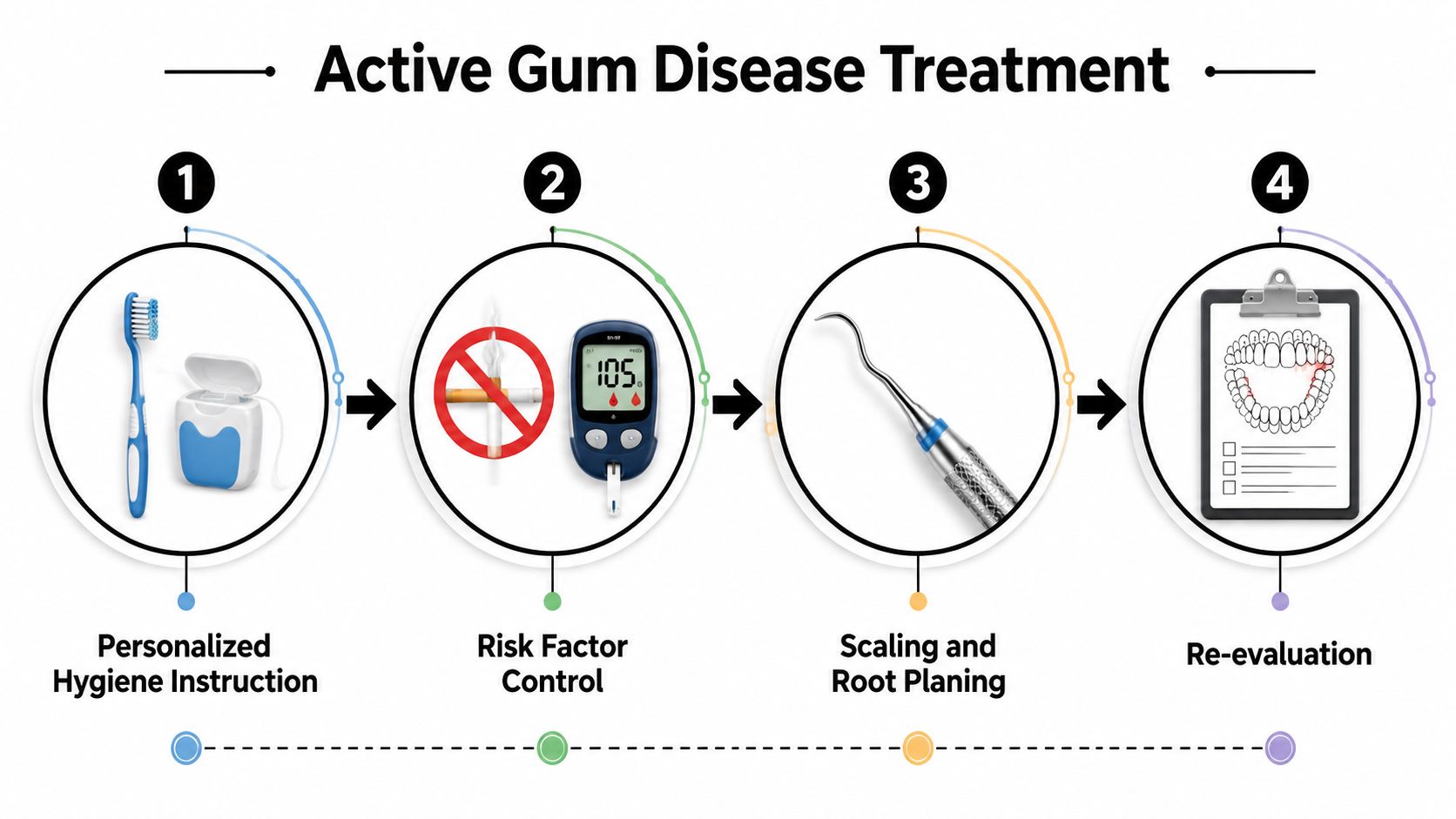
Step 1 begins with personal risk control
Personalized oral hygiene instruction may cover brushing angle, cleaning between teeth, and tools that fit your mouth. Risk-factor control can include support for smoking cessation and coordination around diabetes management. Hormonal changes, medications, dry mouth, and other health details may also affect the treatment plan.
The next stage is mechanical disruption of the biofilm. Ultrasonic instruments can loosen calculus and disrupt deposits, while fine hand instruments help clean root surfaces and areas that require careful tactile control. Periodontal treatment guidance identifies scaling and root planing as the core technical treatment for active periodontitis.
Step 2 removes what home care can't reach
Local anesthesia is typically used so the gums are numb while the dentist or hygienist works above and below the gumline. Cleveland Clinic's overview of tooth scaling and root planing explains that plaque and tartar are removed from both areas before the root surfaces are smoothed.
Antibiotics aren't a replacement for this work. Systemic antibiotics are reserved for selected situations, such as refractory disease, severe generalized disease, aggressive periodontitis, or certain immunocompromised patients. Recent evidence describes only modest average attachment improvement from SRP alone, around 0.5 mm, and supports antibiotics as an adjunct rather than a substitute for debridement. The cited periodontal guideline provides the clinical context for that approach.
Step 3 uses medication selectively
Antimicrobial rinses or locally placed medication may be considered when specific pockets or inflammation patterns justify them. Routine systemic antibiotics don't have strong support for general periodontal management and have only a minimal effect on periodontitis, as discussed in this recent evidence review.
Treatment is staged and re-evaluated. The clinician checks how the gums respond, whether pockets have improved, and whether home care is controlling new plaque before deciding whether maintenance or further treatment is appropriate.
What to Expect During Gum Treatment
Your first visit usually begins with conversation, not instruments. You'll discuss bleeding, sensitivity, bad breath, medical conditions, medications, smoking, diabetes, and any concern about discomfort. An exam may include gum measurements, tooth mobility checks, bite observations, dental x-rays, and digital images that help reveal changes in supporting bone.
That assessment distinguishes gum disease treatment from a standard cleaning. A routine cleaning may be appropriate when there's no evidence of active periodontitis. If deeper pockets or subgingival deposits are present, the clinician may recommend scaling and root planing, which cleans below the gumline and smooths the root surfaces.
How the appointment is organized
Scaling and root planing is often divided by quadrant or another practical section of the mouth. This lets the clinician focus on thorough instrumentation while keeping the visit manageable. The number of appointments depends on the findings, the treatment plan, and your comfort needs.
Local anesthesia numbs the treatment area. Topical numbing gel may be used before the anesthetic, and you can request pauses so the team can check how you're doing. Patients with dental anxiety may discuss sedation options when appropriate, along with instructions for arranging transportation or preparing for the visit.
Comfort matters: Tell the dental team what makes treatment stressful before the appointment. Clear explanations, agreed-upon signals, breaks, and appropriate anesthesia can make a clinical procedure feel much more manageable.
After active treatment, the gums need time to heal before the clinician makes final decisions. A follow-up reassessment checks pocket depths, inflammation, bleeding, recession, mobility, and your ability to maintain the areas at home. The result is a maintenance plan based on your findings, not a generic calendar.
Why Follow-Up Care Protects Your Results
Periodontitis isn't usually managed with one deep cleaning and then forgotten. The bacteria that contribute to gum inflammation can recolonize areas that remain difficult to clean, especially where attachment loss has changed the shape of the gumline. That's why professional guidance describes periodontitis as requiring lifelong treatment and maintenance care.
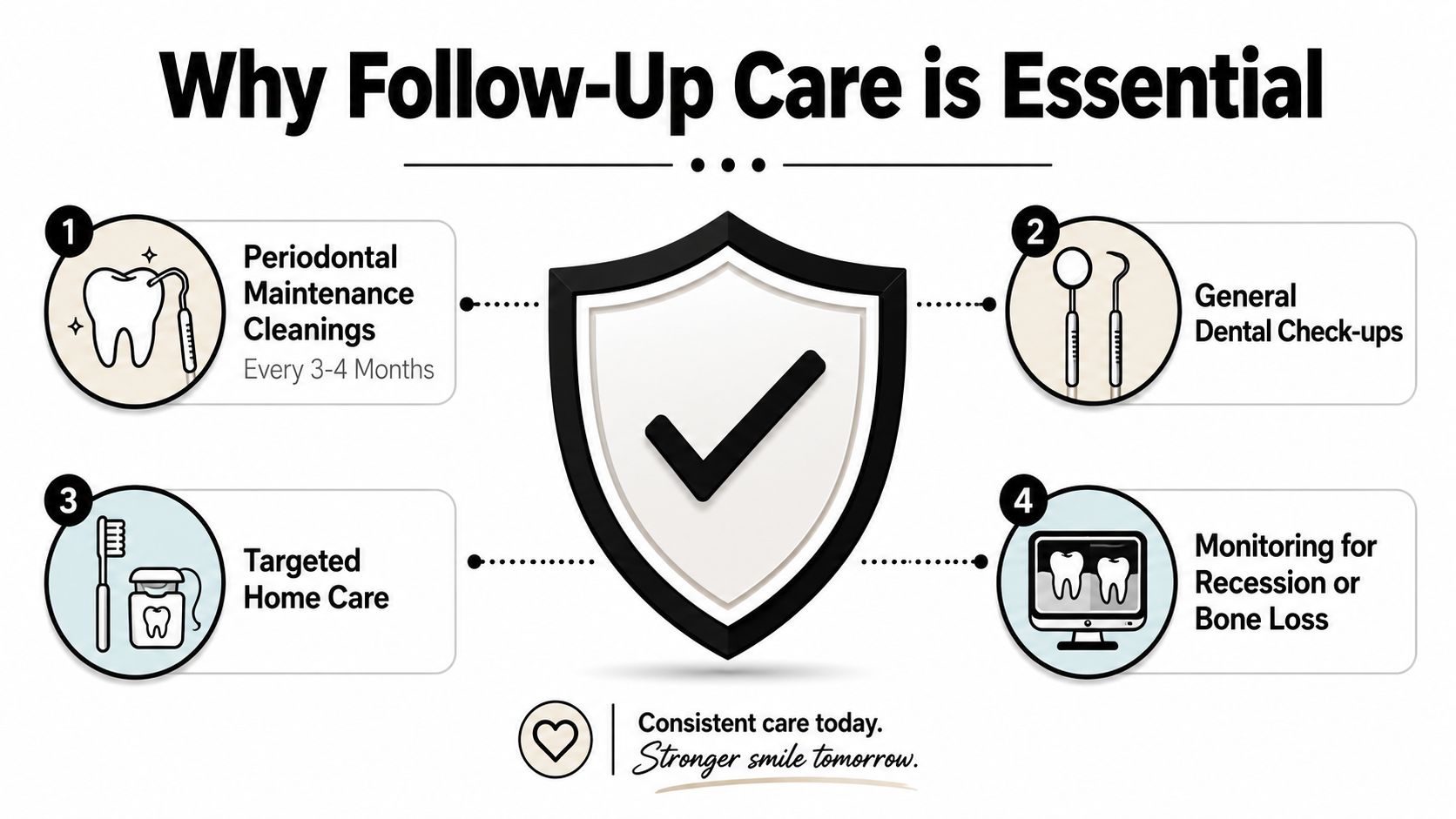
Maintenance catches small changes early
Periodontal maintenance visits monitor the areas that previously showed disease, remove new biofilm, and reinforce the techniques that keep inflammation down. The schedule may be more frequent for patients with attachment loss or higher risk. Current guidance highlights supportive periodontal care every few months in appropriate cases, rather than assuming that semiannual cleanings fit everyone.
Daily care remains essential. Your clinician may recommend a soft-bristled toothbrush, an interdental brush for open spaces, floss where contacts are tight, or a water flosser when it better suits your gum architecture. The best tool is the one you can use correctly and consistently around your actual teeth, bridges, crowns, or implants.
A long-term dental home coordinates more than gum care
Gum stability supports future preventive, restorative, cosmetic, and emergency treatment. If you need a crown, root canal, bridge, dental implants near me, or a cosmetic service such as teeth whitening, the surrounding gums and bone need careful consideration. A stable periodontal foundation also helps the team identify recession, inflammation, or bone changes before they complicate restorative work.
Routine dental exams and x-rays can identify problems that don't hurt yet. If swelling, severe pain, trauma, or a broken tooth appears suddenly, an emergency dentist can assess the urgent problem while the broader practice continues managing your oral health.
For patients in Walnut Creek and the East Bay, choosing a consistent dental office can make follow-up easier. You're more likely to have records, treatment findings, comfort preferences, and maintenance needs considered together.
When Surgery and Restorative Care May Help
Surgery isn't the starting point for most gum disease treatment. It enters the conversation when non-surgical therapy and careful maintenance haven't controlled specific problems, such as deep pockets that remain, persistent inflammation, bone defects, exposed roots, or worsening tooth mobility.
The decision depends on the tissue response, not on a single symptom. A reassessment may show that some areas healed well while others remain difficult to access. In that situation, periodontal surgery can provide improved access for cleaning, reduce selected pockets, or address a defect that non-surgical instrumentation can't correct.
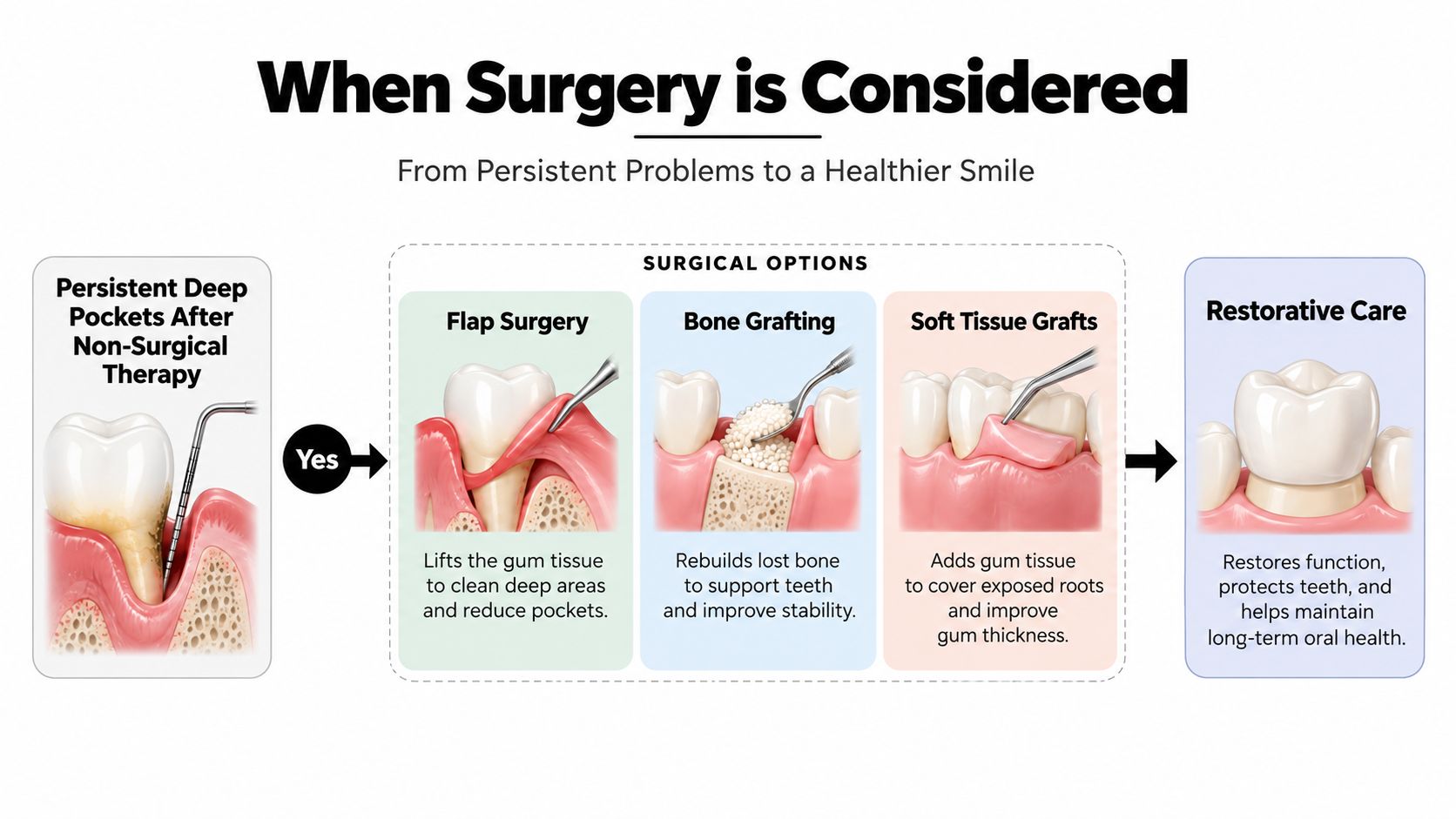
Procedures are chosen for a specific problem
Flap surgery may lift the gum tissue so the clinician can see and clean root surfaces more directly. Regenerative treatment may use bone grafting materials or membranes when the defect and anatomy make regeneration a reasonable option. Soft tissue grafting can help cover exposed roots or reinforce areas affected by recession, while crown lengthening may reshape gum and supporting tissue for a restorative or functional purpose.
These procedures don't eliminate the need for daily plaque control. Surgery works best as part of a continuing plan that includes home care and periodontal maintenance.
A tooth affected by advanced disease may eventually need restorative attention, especially if it can't be predictably maintained. Depending on the situation, the discussion may include a tooth extraction followed by a bridge, crown, denture, or dental implant. Implant placement should be planned around healthy, stable periodontal tissues rather than treated as an isolated replacement decision.
At a Walnut Creek consultation, the most useful next step is a personalized sequence: diagnose the condition, control active inflammation, reassess healing, and then decide whether maintenance, periodontal surgery, or restorative dentistry is appropriate. If you're searching for a cosmetic dentist near me, dental implants, tooth extraction, or gum disease treatment, the same careful evaluation helps keep the plan focused on long-term function and health.
William M. Schneider, DDS provides personalized gum disease evaluations, scaling and root planing, preventive care, restorative dentistry, dental implants, and anxiety-support options for patients in Walnut Creek. Visit William M. Schneider, DDS to request an appointment and take the next step toward a comfortable, long-term dental care plan.